

Elizabeth Cotten picking style is one of the most loved sounds in folk guitar: a steady, rolling bass with a sweet melody floating on top, played by a left handed woman who held a right handed guitar upside down. She wrote Freight Train as a child, put the guitar away for decades, and was only heard by the wider world in her sixties. This post covers her life, how her playing worked, four step by step lessons with original tab in C, an easy and a full study, and a free printable practice sheet.
Quick answer: what is Elizabeth Cotten picking style? It is alternating bass fingerpicking: one part of the hand keeps a steady bass on beats 1, 2, 3 and 4, switching between two strings, while another part picks a simple melody on the higher strings. Because she played left handed on an upside down guitar, her fingers picked the bass and her thumb picked the melody. Most of us reverse that: thumb on the bass, fingers on the tune.
Who was Elizabeth Cotten?
Elizabeth Cotten was born Elizabeth Nevills near Chapel Hill, North Carolina, in 1893 by most accounts (a few sources give 1892 or 1895). Friends and family called her Libba. She was naturally left handed, and she taught herself first on her brother’s banjo and then on the guitar, simply turning the instrument over rather than restringing it.
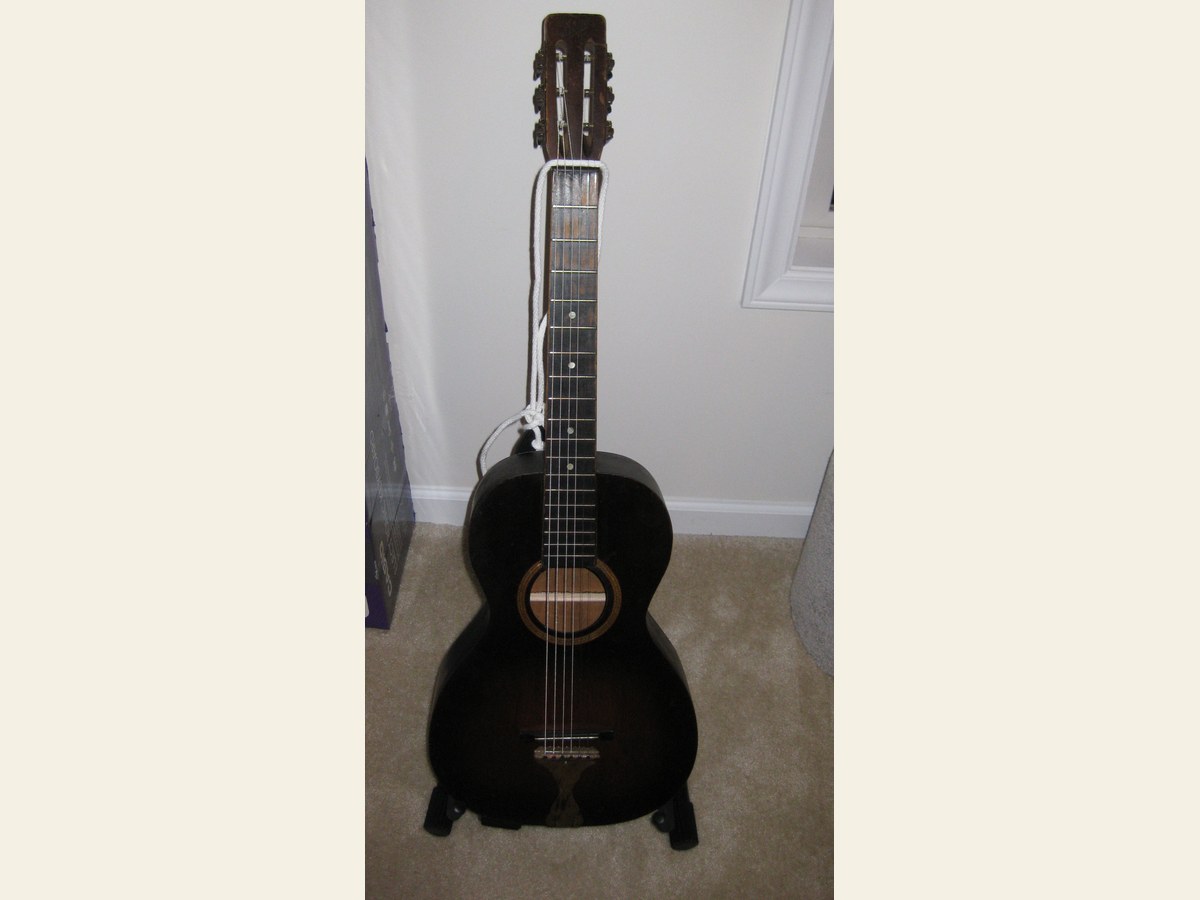
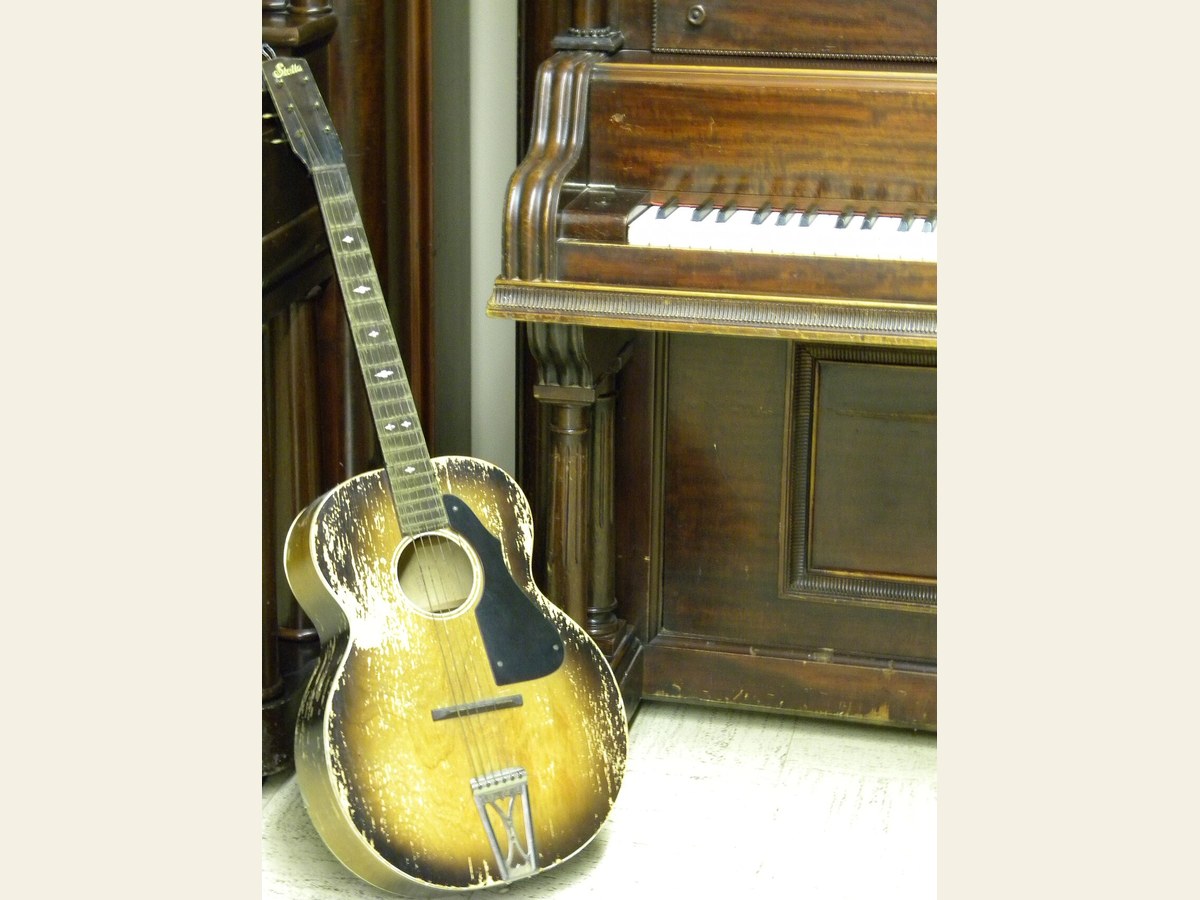
She left school at about nine to work as a domestic helper. At around 12 she was earning a dollar a month, and with her mother’s help she saved for her first guitar, a Stella that cost $3.75. Stella guitars were cheap, tough and sold widely by mail order, which is why some sources call it a Sears guitar. Both can be true.
As a child of about 12 she wrote Freight Train, inspired by the trains she heard rolling past near her home. She also made up her own tunes and learned the songs around her. Then, as a young woman, she largely stopped. Her church frowned on worldly music, she married Frank Cotten, raised a daughter and worked, and the guitar stayed in the corner for decades apart from the odd church performance.
Freight Train, the Seegers and a career at 60
Later in life she moved to Washington, D.C. While working in a department store she found a lost little girl and returned her to her mother. The girl was Peggy Seeger and the mother was the composer Ruth Crawford Seeger, who soon hired Elizabeth as a housekeeper. She was now working inside one of the most important folk music families in America.
One day the family heard her playing a guitar in the house. Mike Seeger began recording her at home in 1957 and 1958, and Folkways released the results as Folksongs and Instrumentals with Guitar. The album is now in the Library of Congress National Recording Registry, and the Library of Congress essay on Freight Train tells the full story.
Around the same time Freight Train became a skiffle hit in Britain, but the writing credit was given to other people. It took years of effort before the credit was restored to her. From her sixties onwards she toured folk festivals and colleges, and her songs were covered by Peter, Paul and Mary, Bob Dylan, Joan Baez, the Grateful Dead, Taj Mahal and many more.
The honours came late but they came. She received a National Heritage Fellowship from the National Endowment for the Arts in 1984, and the NEA biography of Elizabeth Cotten is one of the best short accounts of her life. She won a Grammy in 1985, aged about 90, for Elizabeth Cotten Live! She died in Syracuse, New York, on 29 June 1987, and in 2022 she was inducted into the Rock and Roll Hall of Fame for her musical influence.
Elizabeth Cotten picking style explained
Think of the picking hand as two players sharing one guitar. The bass player plays the root of the chord on beat 1, a different chord note on beat 2, the root or another bass note on beat 3, and back on beat 4. That steady pulse is the engine. The melody player adds notes on top, sometimes together with a bass note (a pinch) and sometimes in between.
Her version was unusual. Holding a right handed guitar upside down, the bass strings sat nearest the floor, under her fingers, and the treble strings sat on top, under her thumb. So her fingers kept the alternating bass and her thumb played the tune. This left handed upside down guitar approach is why her phrasing has a slightly different lilt from other folk players.
Another detail matters for your sound. Many later fingerstyle players palm mute the bass so it thumps. Elizabeth Cotten let her bass ring openly against the melody, so the whole guitar sounds warm and full. When you practise these exercises, rest your palm away from the strings and let everything sustain.
You do not need to turn your guitar over. For most students, the best way to learn how to play like Elizabeth Cotten is the standard method: the thumb takes the bass on the 6th, 5th and 4th strings and the index and middle fingers take the melody on the top three strings. You get the same feel, and the skills carry over to almost every fingerstyle song.
Lesson 1: thumb only alternating bass
Hold a C chord. Your thumb plays the 5th string at fret 3 (C) on beat 1, the 4th string at fret 2 (E) on beat 2, then the 5th string again and the 4th string again. In bar 2 the thumb drops to the 6th string at fret 3 (a low G) on beat 3. Move your ring finger across for that note, or keep it simple and repeat bar 1.
      1   &   2   &   3   &   4   &      1   &   2   &   3   &   4   &
e  |..................................|..................................|
B  |..................................|..................................|
G  |..................................|..................................|
D  |..........2...............2.......|..........2...............2.......|
A  |..3...............3...............|..3...............................|
E  |..................................|..................3...............|
      T       T       T       T                          low G
Say “bass, bass, bass, bass” out loud as you play. Set a metronome to 60 and keep going for two full minutes without stopping. If the thumb drifts or speeds up, the melody will never sit right later, so this is the most important minute of your practice. If you are new to fingerpicking, check that your guitar is in tune first with my guide to tuning a guitar by ear.
Lesson 2: the pinch on beat 1
Now add a melody note with your index or middle finger at the same moment as the first bass note. This is called a pinch. Here the melody note is the 2nd string at fret 1 (C), played together with the thumb on beat 1. Everything else stays exactly the same.
      1   &   2   &   3   &   4   &      1   &   2   &   3   &   4   &
e  |..................................|..................................|
B  |..1...............................|..1...............................|
G  |..................................|..................................|
D  |..........2...............2.......|..........2...............2.......|
A  |..3...............3...............|..3...............................|
E  |..................................|..................3...............|
      pinch                              pinch
Keep the pinch soft and even with the bass. A common mistake is to stop the thumb for a split second when the finger plays. Go slowly and listen for four even bass notes in every bar.
Lesson 3: melody notes between the beats
This is where Elizabeth Cotten picking style starts to sound like her. The melody now lands on the “and” after some beats, so it floats between the bass notes. The line below is an original phrase written for this lesson, not the Freight Train melody, but it uses the same kind of movement.
      1   &   2   &   3   &   4   &      1   &   2   &   3   &   4   &
e  |..............0...................|..3...........................0...|
B  |..1...........................1...|..............1...................|
G  |..................................|..................................|
D  |..........2...............2.......|..........2...............2.......|
A  |..3...............................|..3...............................|
E  |..................3...............|..................3...............|
Count “1 and 2 and 3 and 4 and” and play the thumb on the numbers only. The fingers fill some of the “and” counts. If it falls apart, take away one melody note at a time until it works, then add them back. Your fingertips may get sore on the C chord at first; my article on sore fingertips from guitar explains what is normal.
Lesson 4: changing to G7
The same idea works on every chord. For G7 the thumb alternates between the 6th string at fret 3 (G) and the open 4th string (D). The melody sits on the top strings, here using the F on the 1st string at fret 1, which gives G7 its pull back to C.
      1   &   2   &   3   &   4   &      1   &   2   &   3   &   4   &
e  |..1...........................1...|..............1...................|
B  |..............0...................|..0...............................|
G  |..................................|..............................0...|
D  |..........0...............0.......|..........0...............0.......|
A  |..................................|..................................|
E  |..3...............3...............|..3...............3...............|
      G7: thumb on 6th and 4th strings
Practise switching between two bars of C and two bars of G7 without stopping the thumb. The change is where most beginners stumble, so move your fretting fingers early, on beat 4 of the last bar.
The study: easy and full versions
Now put it all together in an eight bar study over a Freight Train style progression in C: C, C, G7, G7, C, C7, F, F. The tune is original, written for this lesson, so it teaches the Elizabeth Cotten Freight Train guitar feel without copying her song. Start with the easy version, where the melody is only the pinch on beat 1 of each bar.
Easy version
      1   &   2   &   3   &   4   &      1   &   2   &   3   &   4   &
e  |..................................|..0...............................|
B  |..1...............................|..................................|
G  |..................................|..................................|
D  |..........2...............2.......|..........2...............2.......|
A  |..3...............................|..3...............................|
E  |..................3...............|..................3...............|
      C                                  C
      1   &   2   &   3   &   4   &      1   &   2   &   3   &   4   &
e  |..1...............................|..................................|
B  |..................................|..0...............................|
G  |..................................|..................................|
D  |..........0...............0.......|..........0...............0.......|
A  |..................................|..................................|
E  |..3...............3...............|..3...............3...............|
      G7                                 G7
      1   &   2   &   3   &   4   &      1   &   2   &   3   &   4   &
e  |..................................|..................................|
B  |..1...............................|..................................|
G  |..................................|..3...............................|
D  |..........2...............2.......|..........2...............2.......|
A  |..3...............................|..3...............................|
E  |..................3...............|..................3...............|
      C                                  C7
      1   &   2   &   3   &   4   &      1   &   2   &   3   &   4   &
e  |..1...............................|..................................|
B  |..................................|..1...............................|
G  |..........2...............2.......|..........2...............2.......|
D  |..3...............................|..3...............................|
A  |..................3...............|..................3...............|
E  |..................................|..................................|
      F                                  F
For the F chord, the thumb alternates between the 4th string at fret 3 (F) and the 5th string at fret 3 (C). A small four string F shape on the top four strings is enough; you do not need a full barre. To finish the progression, go back to C, then G7, then C, using the bars you already know.
Full version
      1   &   2   &   3   &   4   &      1   &   2   &   3   &   4   &
e  |..............0...................|..3...........................0...|
B  |..1...........................1...|..............1...................|
G  |..................................|..................................|
D  |..........2...............2.......|..........2...............2.......|
A  |..3...............................|..3...............................|
E  |..................3...............|..................3...............|
      C                                  C
      1   &   2   &   3   &   4   &      1   &   2   &   3   &   4   &
e  |..1...........................1...|..............1...................|
B  |..............0...................|..0...............................|
G  |..................................|..............................0...|
D  |..........0...............0.......|..........0...............0.......|
A  |..................................|..................................|
E  |..3...............3...............|..3...............3...............|
      G7                                 G7
      1   &   2   &   3   &   4   &      1   &   2   &   3   &   4   &
e  |..0...........................0...|..................................|
B  |..............1...................|..............1...................|
G  |..................................|..3...........................3...|
D  |..........2...............2.......|..........2...............2.......|
A  |..3...............................|..3...............................|
E  |..................3...............|..................3...............|
      C                                  C7
      1   &   2   &   3   &   4   &      1   &   2   &   3   &   4   &
e  |..1...........................1...|..............1...................|
B  |..............1...................|..1...........................1...|
G  |..........2...............2.......|..........2...............2.......|
D  |..3...............................|..3...............................|
A  |..................3...............|..................3...............|
E  |..................................|..................................|
      F                                  F
The full version adds the off beat melody notes. Learn it two bars at a time, then join them. Aim for a relaxed tempo where the bass never hesitates. Speed is not the goal with this music; the feeling of a train rolling steadily along is.
Decorations: hammer ons and rolled chords
She often dressed her lines with small hammer ons and rolled chords. In the first bar below, the thumb plays the open 4th string and a finger hammers on to fret 2 straight away. In the second bar, roll the C chord from the bass up, so the notes spill out one after another, then let it ring.
      1   &   2   &   3   &   4   &      1   &   2   &   3   &   4   &
e  |..............................0...|..0...............................|
B  |..1...............................|..1...............................|
G  |..................................|..0...............................|
D  |..........0...2...........2.......|..2...............................|
A  |..3...............................|..3...............................|
E  |..................3...............|..................................|
                  h                      roll the C chord, let it ring
Open G and open D tunings
Not all of her music was in standard tuning. Some of her instrumentals, such as Spanish Flang Dang, are usually played in open G, and Vastopol in open D. Open tunings make the alternating bass easier, because whole chords ring under one finger. My guide to drop, open and alternate guitar tunings shows how to set them up.
Try the exercises from this lesson in standard tuning first. Once your thumb is truly independent, open G is a great next step, and you will hear why her instrumentals sound so full. Stretch your hands before longer sessions; these stretches and hand exercises for guitar players take only a few minutes.
Which guitar for this style?
She played modest guitars, and you do not need anything special. A small bodied steel string acoustic, or a parlour guitar like the Stella in the photo, suits Elizabeth Cotten picking style perfectly because the bass is clear and the trebles are sweet. A nylon string guitar also works well for beginners because it is kinder to the fingertips; see the different types of nylon string guitars.
Download the practice sheet
The free sheet puts Elizabeth Cotten picking style on one A4 page: the thumb exercises, the pinch, the off beat melody, the G7 change, the full eight bar study, a tempo log and a practice plan. Print it, keep it on your music stand, and tick off each tempo as you reach it.
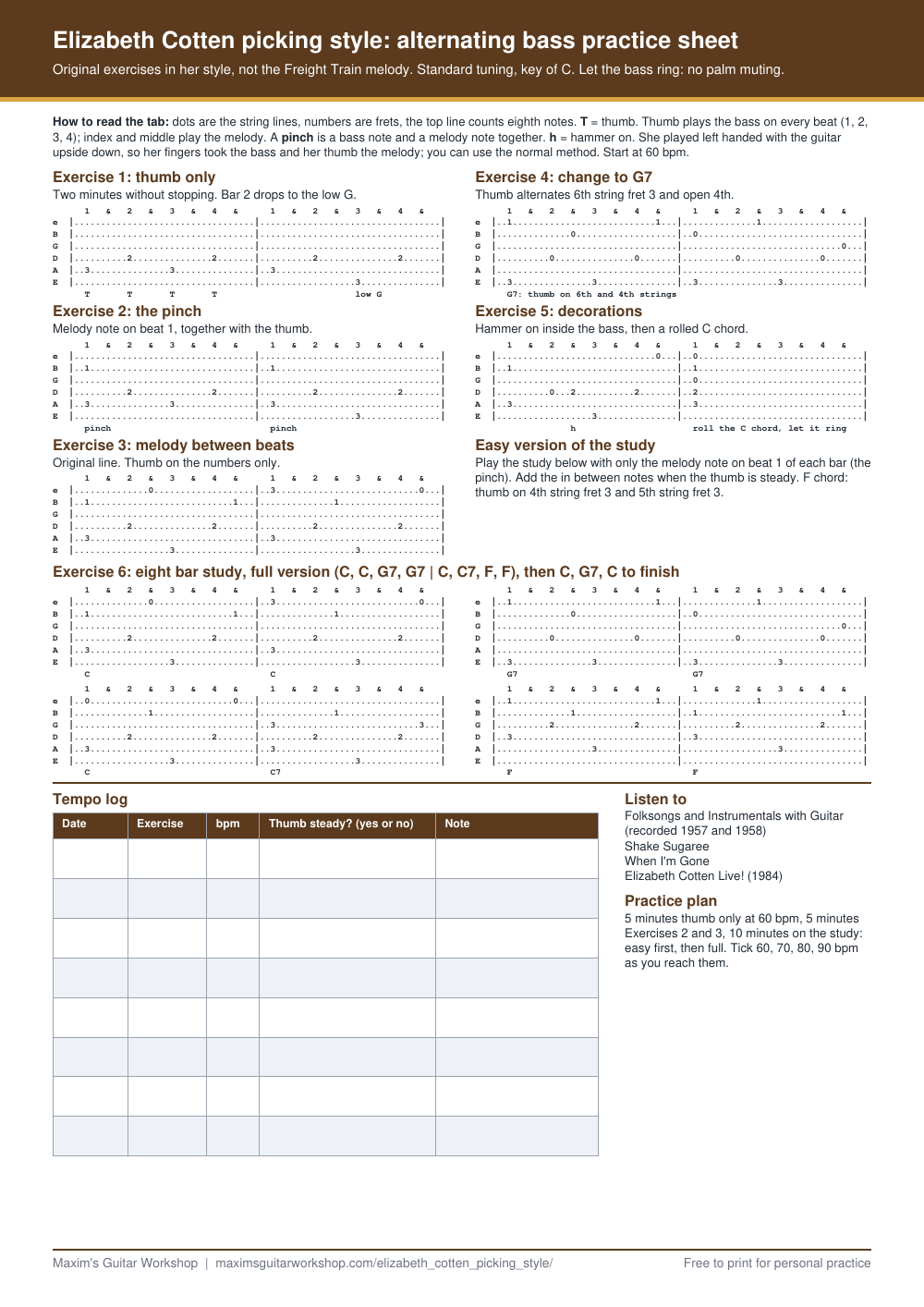
Download the free Elizabeth Cotten picking style practice sheet (PDF)
Essential listening
Listen before you play. Her recordings are gentle and unhurried, and the best way to absorb the feel is to hear it many times.
- Folksongs and Instrumentals with Guitar (Folkways, recorded 1957 and 1958): the home recordings that started it all, including Freight Train.
- Shake Sugaree (Folkways): later recordings with her family.
- When I’m Gone (Folkways): more songs and instrumentals.
- Elizabeth Cotten Live! (1984): the Grammy winning concert album.
- Spanish Flang Dang and Vastopol: instrumentals in open tunings.
Elizabeth Cotten FAQ
Did Elizabeth Cotten play left handed?
Yes. She was left handed and played a right handed guitar turned upside down, without changing the strings. That meant the bass strings were at the bottom, under her fingers.
How old was she when she wrote Freight Train?
She wrote it as a child of about 12, inspired by the trains near her home in North Carolina.
What is cotten picking?
Cotten picking is the name many players use for her style of alternating bass fingerpicking with a melody on top, played with an open, ringing bass.
Do I need to play upside down to learn her style?
No. Play with your thumb on the bass and your fingers on the melody. You will get the same rhythm and feel, and it is easier to find lessons and songs that use this method.
What tuning did she use for Freight Train?
Standard tuning, usually in the key of C. She used open G and open D for some instrumentals.
Is Elizabeth Cotten picking style good for beginners?
Yes. It is one of the best first fingerstyle approaches because it teaches thumb independence slowly and musically. Start with Lesson 1 and do not rush the thumb.
Elizabeth Cotten’s legacy
Her influence runs through the whole folk revival and beyond. Players learned Freight Train as their first fingerstyle tune, and her songs passed into the hands of famous folk and rock artists. Her playing sits in the same rural roots as the country and blues traditions; read more in my posts on the history of blues guitar and country music and the guitar.
She also proved that it is never too late. She came back to music in her sixties and was still touring and winning awards in her nineties. If you love acoustic roots players, you might also enjoy my lessons on Clarence White guitar technique and Hubert Sumlin guitar technique.
For guitarists today, Elizabeth Cotten picking style is a lesson in patience and independence: keep the thumb steady, keep the melody simple and let the guitar ring. Master those three things and every fingerstyle song becomes easier. For the opposite end of the speed scale, see our lesson on Shawn Lane technique.
If you are newer to the guitar and want a structured path to playing pieces like these, my online beginner course starts from the very first chord.
Sources
- National Endowment for the Arts, Elizabeth Cotten, National Heritage Fellow
- Library of Congress, National Recording Registry essay on Freight Train and Other North Carolina Folk Songs and Tunes
- Rock and Roll Hall of Fame, Elizabeth Cotten
- Smithsonian Folkways, Elizabeth Cotten
- Wikipedia, Elizabeth Cotten