If you came here hunting for one neat inventor of the blues guitar, I have bad news and better news. The history of blues guitar does not start with a single named genius. The better news is a timeline full of techniques you can practise: thumb independence, knife slide intonation, amp dynamics, and phrasing that talks back to a singer.
The earliest named blues guitarists we can study on record appear in the mid 1920s. The music itself is older. W.C. Handy’s Tutwiler story around 1903 gives a written glimpse of a guitarist pressing a knife on the strings. Sylvester Weaver’s 1923 OKeh sides give hard discographic proof.
This piece walks the history of blues guitar era by era, as technique laboratories rather than a progress myth.
How to read this history of blues guitar timeline
Eras overlap. Geography and markets often matter more than tidy decades. “Earliest” may mean written account, commercial recording, national sales, or oral lineage.
African American roots, work songs and spirituals (circa 1865 to 1900 and beyond)
Most players in this layer are anonymous. Field recordings preserve field hollers, work songs, spirituals, ring shouts, fife and drum, and songster repertoires. Banjo often precedes guitar’s dominance. African-derived practices met American contexts: melisma, bent and microtonal blue notes, call and response, rhythmic flexibility, improvisation, and direct first-person expression.
Guitar was not yet the defining blues instrument in surviving documentation. The lasting gift is the expressive model: a voice that instruments learn to imitate.
Student takeaway: Sing a phrase, answer it on guitar. Bend into pitch centres.
Early rural, Delta and country blues (circa 1900 to 1935)
Here the acoustic guitar becomes a portable band. Open tunings, bottleneck or knife slide, thumb-and-finger accompaniment, and a percussive right hand turn one player into rhythm section and lead.
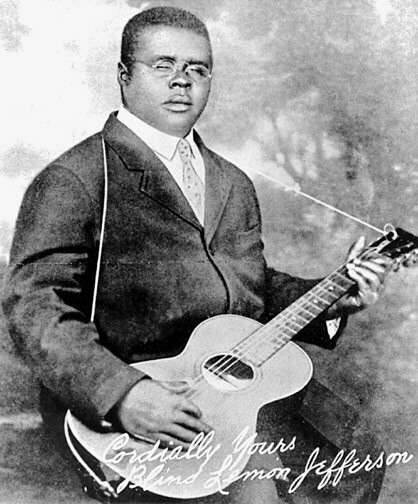
Charley Patton sat at the centre of Delta oral lineage and Paramount discography. Son House paired intense vocals with bottleneck. Blind Lemon Jefferson became the first country-blues guitar star with national reach. Robert Johnson recorded in 1936 to 1937; the crossroads story is largely later mythmaking.
Student takeaway: Practise open-tuning slide intonation. Keep a thumb pulse as drum.
Classic and urban blues: how guitar reached the race record market (1920 to 1929)
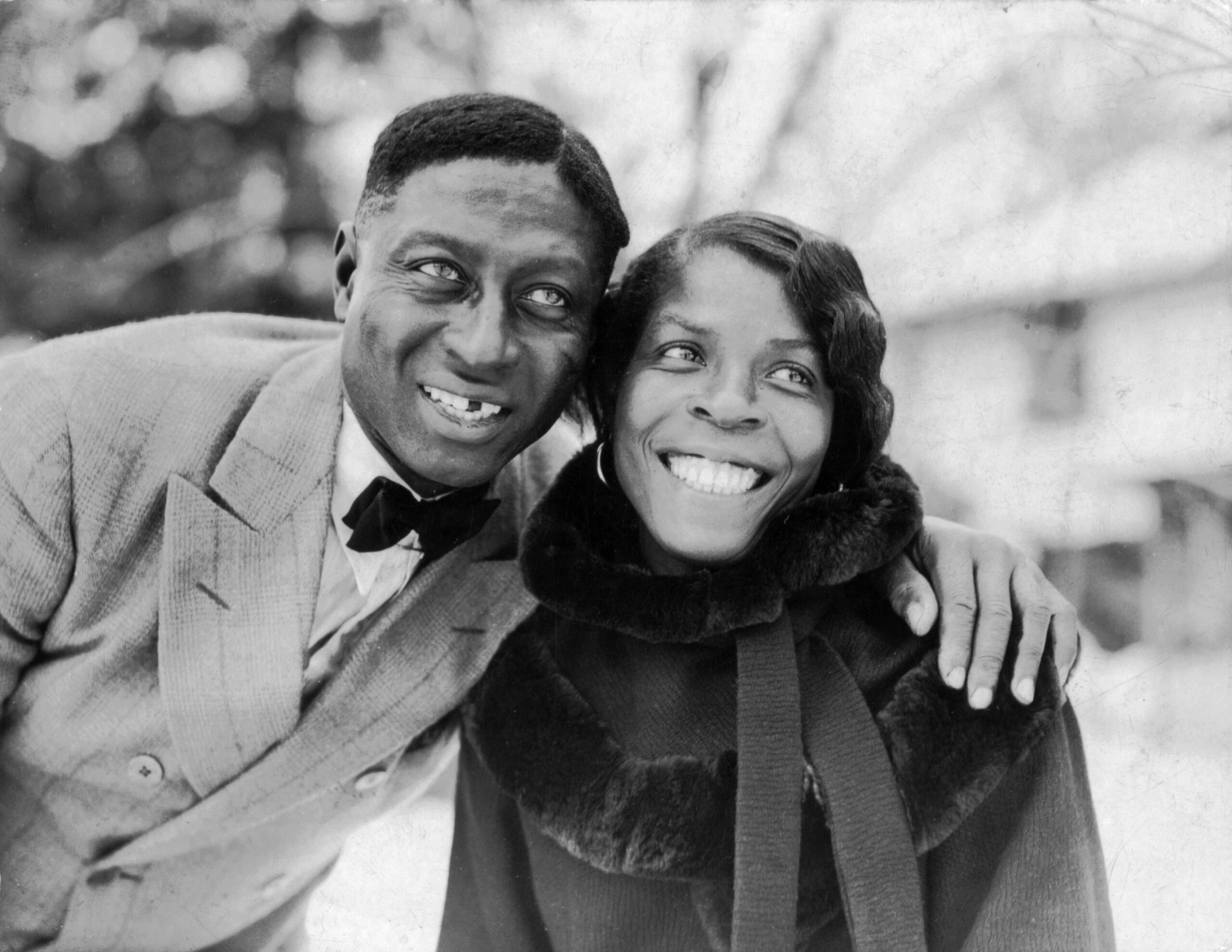
Mamie Smith’s “Crazy Blues” (1920) opened the commercial blues boom. On 24 October 1923, Sylvester Weaver became the first guitarist documented backing a blues singer on record. Lonnie Johnson bridged blues and jazz, while Memphis Minnie stood as a woman lead guitarist and star.
Student takeaway: Accompany a singer with restraint. Practise voice-leading in chords and ragtime bass motion.
Piedmont and East Coast fingerstyle (mid 1920s to 1940s, revival later)
Parallel to Delta intensity, the Virginia-to-Carolinas-to-Georgia corridor developed a different right hand. Blind Blake, Blind Boy Fuller, Reverend Gary Davis, and Blind Willie McTell defined it on record. Alternating-thumb bass with syncopated treble melody creates a ragtime or stride-piano feel.
Student takeaway: Drill thumb independence. Learn one Blake or Davis piece slowly for coordination.
Chicago electric and post-war band blues (circa 1940 to 1965)
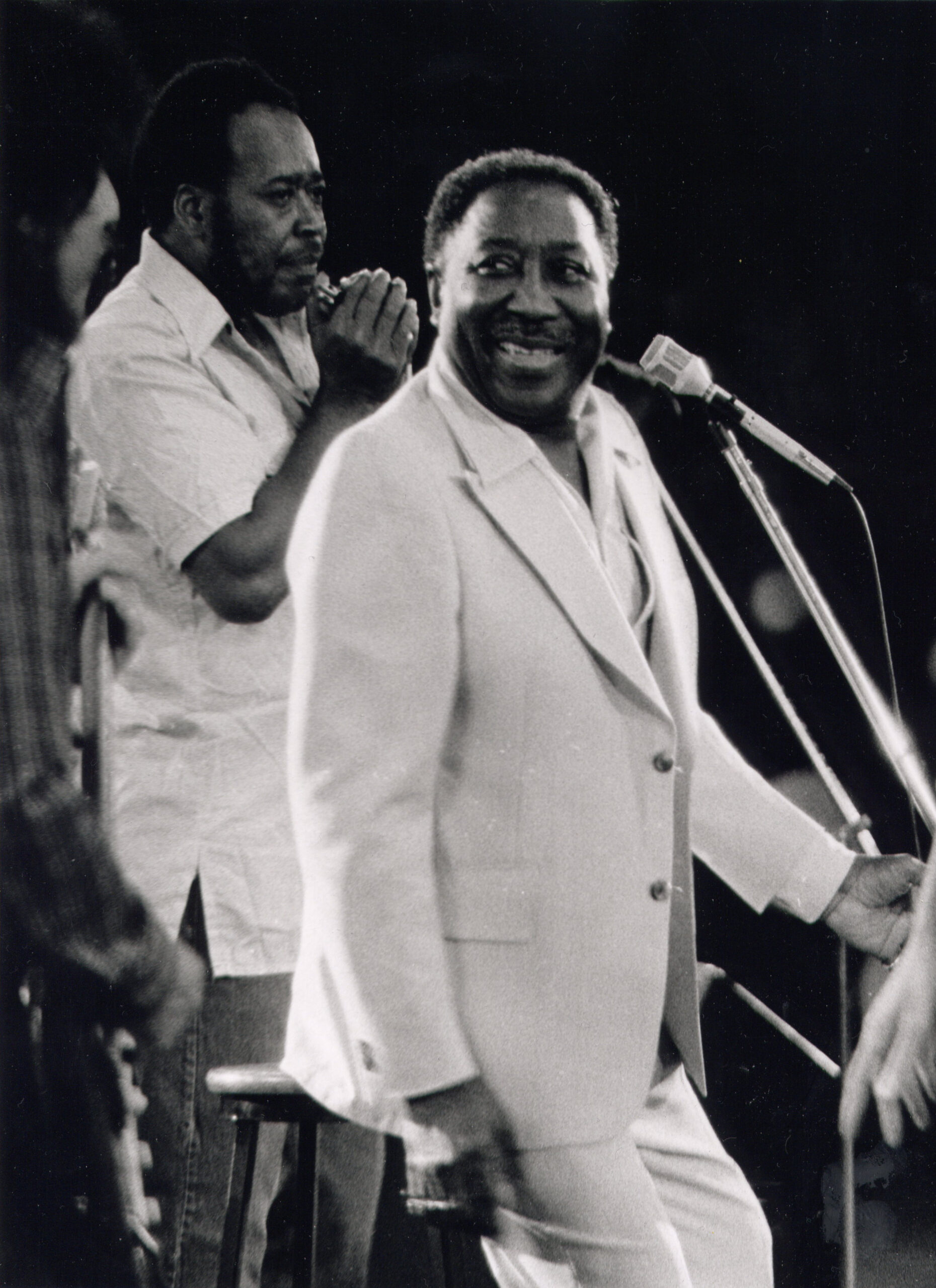
Amplification was not a fashion statement. South Side clubs and house parties were loud. Guitar became a sustain and overdrive instrument. Muddy Waters moved to Chicago in 1943 and electrified Delta vocabulary for urban rooms. Jimmy Rogers, Hubert Sumlin, Elmore James, Buddy Guy, Otis Rush, and Magic Sam pushed attack, jagged fills, feedback, and West Side fire.
British bands did not create Chicago blues; they later re-exported attention to living Black innovators.
Student takeaway: Practise dynamics with the volume knob. Use call and response with harp or second guitar.
Texas, West Coast and jump: single-string electric lead (circa 1935 to 1960)
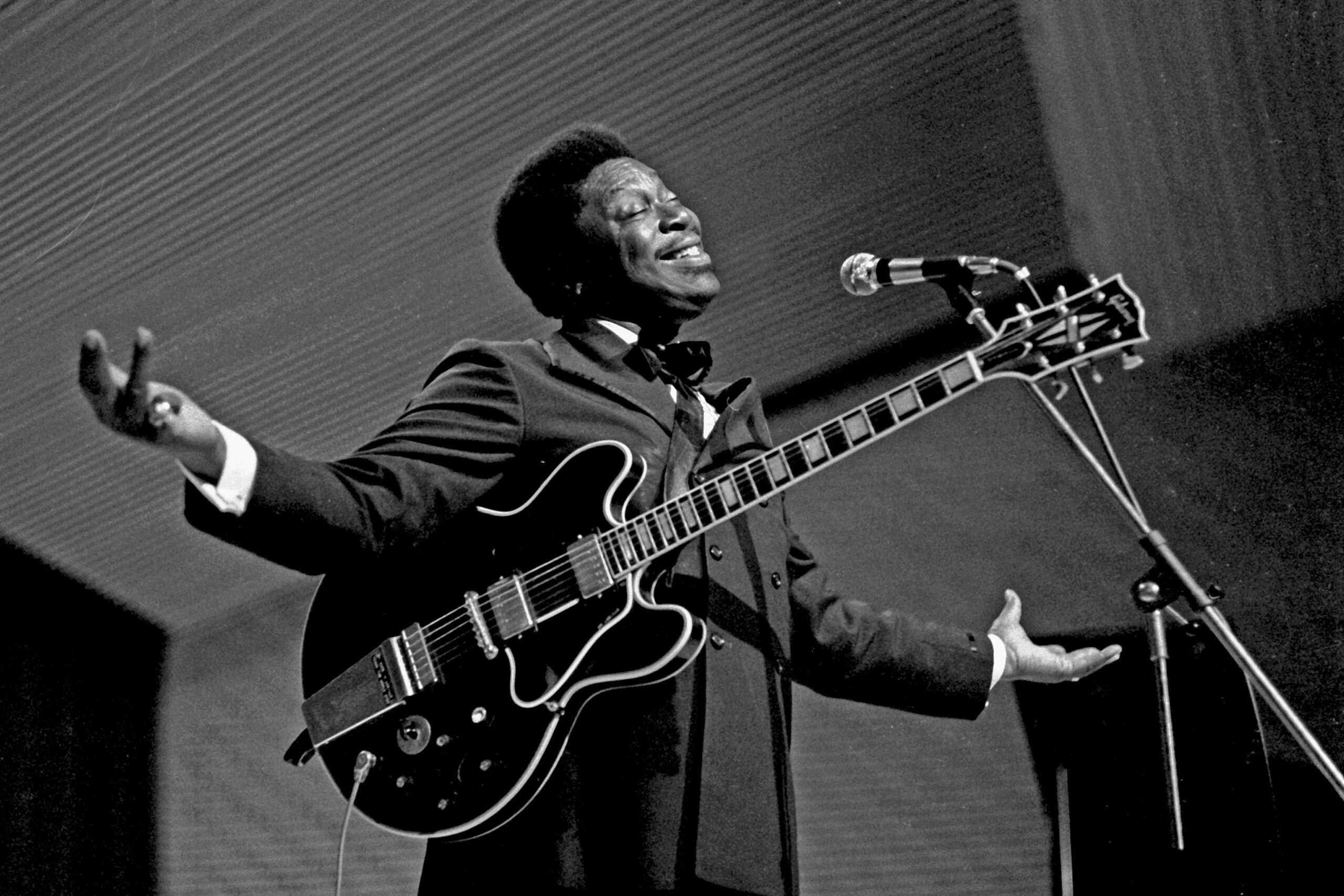
If Chicago taught band volume, Texas and the West Coast taught horn-like melody on electric guitar. T-Bone Walker modelled electric blues lead guitar for generations. Lightnin’ Hopkins kept a flexible speech-rhythm Texas country and electric hybrid. Freddie King cut “Hide Away.” B.B. King made Lucille a talking guitar.
Student takeaway: Target notes with vibrato. Connect phrases like a sax player.
British blues boom and rock crossover (circa 1958 to 1968)
Skiffle drawing on Lead Belly, Muddy’s 1958 UK electric tour, dedicated R&B clubs, Alexis Korner, John Mayall’s Bluesbreakers, the Yardbirds, the Rolling Stones, the Animals, and Cream built a transmission path. Repertoire treated Chess and Delta 78s as textbooks.
British players did not invent electric blues. They were passionate students and popularisers who sometimes flattened Black pop history. Student takeaway: Transcribe a Bluesbreakers solo and its Chicago source.
Blues rock in the 1960s and 1970s (circa 1966 to 1979)
Extended improvisation, high gain, feedback, dual-lead harmony, and slide in rock contexts pulled blues forms into new settings. Key guitarists include Jimi Hendrix, Duane Allman, Dickey Betts, Johnny Winter, Peter Green, Led Zeppelin, and Rory Gallagher.
Distinguish homage, adaptation, and appropriation with specific song histories. Student takeaway: Keep rock energy without abandoning call-and-response phrasing.
Modern blues: Stevie Ray Vaughan through today (circa 1983 to present)
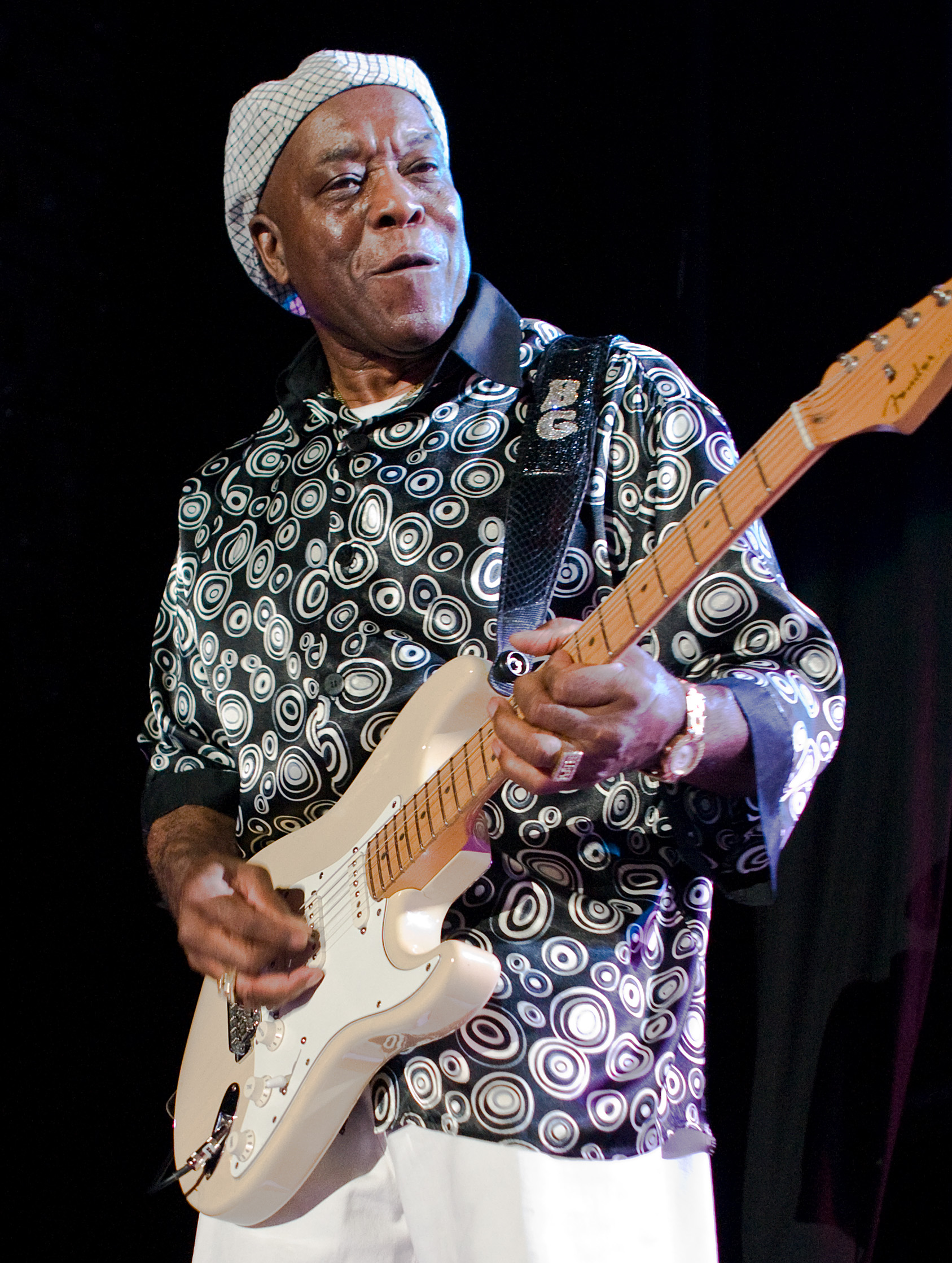
Stevie Ray Vaughan and Texas Flood (1983) mainstreamed Texas electric blues for rock audiences. He synthesised Albert King, Hendrix, Buddy Guy, Freddie King, and Albert Collins. Late-career Buddy Guy, Derek Trucks, Gary Clark Jr., Eric Gales, Keb’ Mo’, Joe Bonamassa, and Christone “Kingfish” Ingram populate the broader field.
Technology shifted to digital recording, YouTube pedagogy, signature amps and pedals, global touring, festivals, streaming playlists, and crossovers with rock, soul, and hip hop. Student takeaway: Build tone with hands and amp before pedal stacks.
Continuity themes that never really left
- Call and response: vocal and guitar, guitar and harmonica, phrase and answer.
- Blue notes and microtonal inflection: bends, slides, neutral thirds; guitar imitating voice.
- AAB lyric shapes and twelve-bar variants: a framework, not a prison.
- Bottleneck, knife, and steel slide across rural, electric, and rock traditions.
- Guitar as portable band: solo rural, amplified small combo, and rock power trio.
- Migration and market: South to North and West; race records to streaming.
- Myth versus working musician: authenticity costumes and Johnson legends.
Treat those as practice priorities, not trivia.
FAQ
Was Robert Johnson the first blues guitarist?
No. That is a myth. Many major guitar blues artists precede him on disc and in oral history.
Did W.C. Handy invent the blues?
Overstated. He popularised and orchestrated blues forms commercially; he did not create the vernacular practice.
Who was the first blues guitarist on record?
For commercial blues guitar accompaniment, Sylvester Weaver with Sara Martin on 24 October 1923. That is a recording first, not a claim about the whole living tradition.
Is Piedmont just soft Delta blues?
No. It is a parallel East Coast language built on alternating-thumb ragtime fingerstyle.
Did British bands invent electric blues?
No. They studied, covered, and popularised it. Credit the Chicago and Texas sources first.
Soft next step
If one era above snagged your ear, bring that era into a lesson. We can unpack a groove, a slide tuning, or a call-and-response phrase without turning history into homework. Book a Free Consultation, or check the Tuition Fee page when you are ready. No pressure; just pick a layer and play it.