
Eddie Hazel guitar style is lead guitar played like a soul singer: slow bends that cry, wide vibrato, long pauses and a wash of fuzz and wah. His ten minute solo on Funkadelic’s Maggot Brain is still one of the most talked about guitar performances of the 1970s. This post covers his life, his years with George Clinton, how his phrasing works, six original exercises with tab, an honest tone sheet and a free printable phrasing study.
Quick answer: what is Eddie Hazel guitar style? He played lead guitar like a soul singer, with slow bends, wide vibrato and long pauses, coloured by fuzz and wah. On Maggot Brain he improvised in E minor pentatonic in one take, and George Clinton added the echo afterwards in the mix.
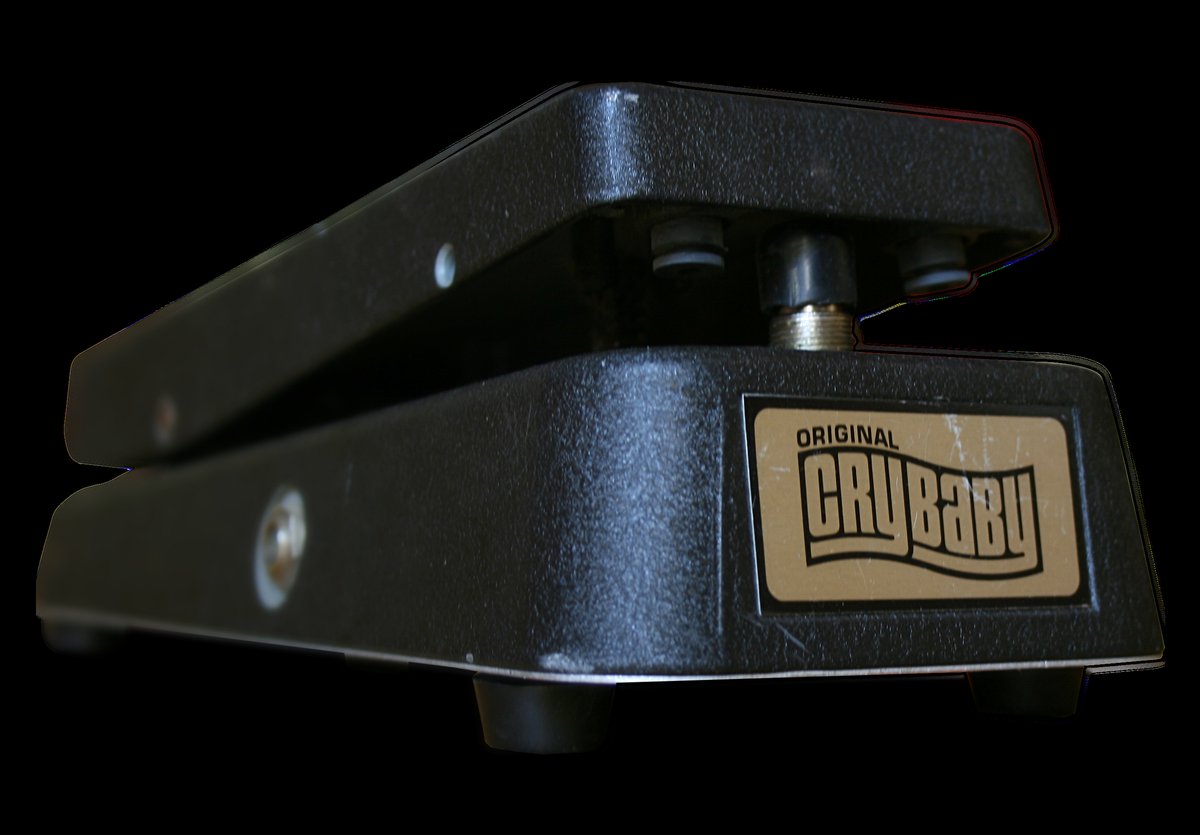
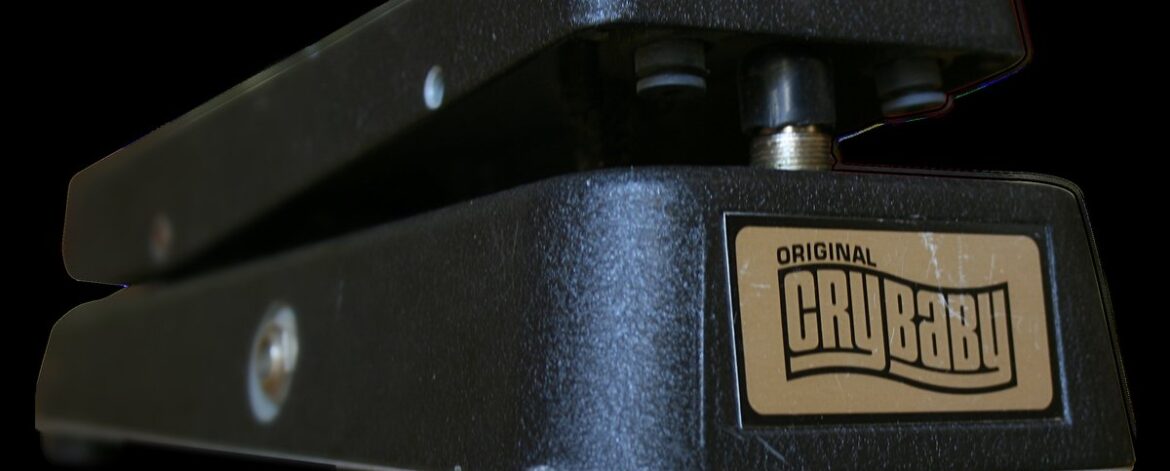
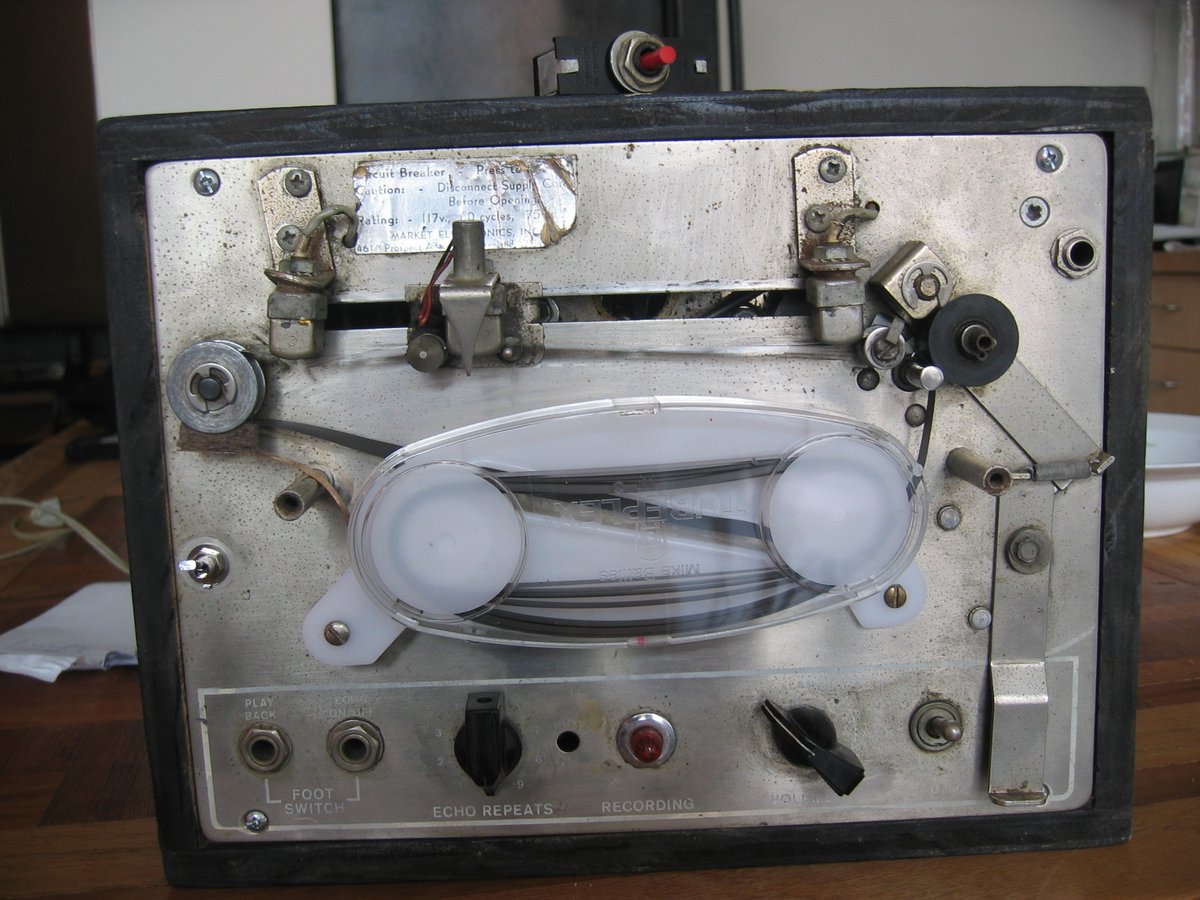
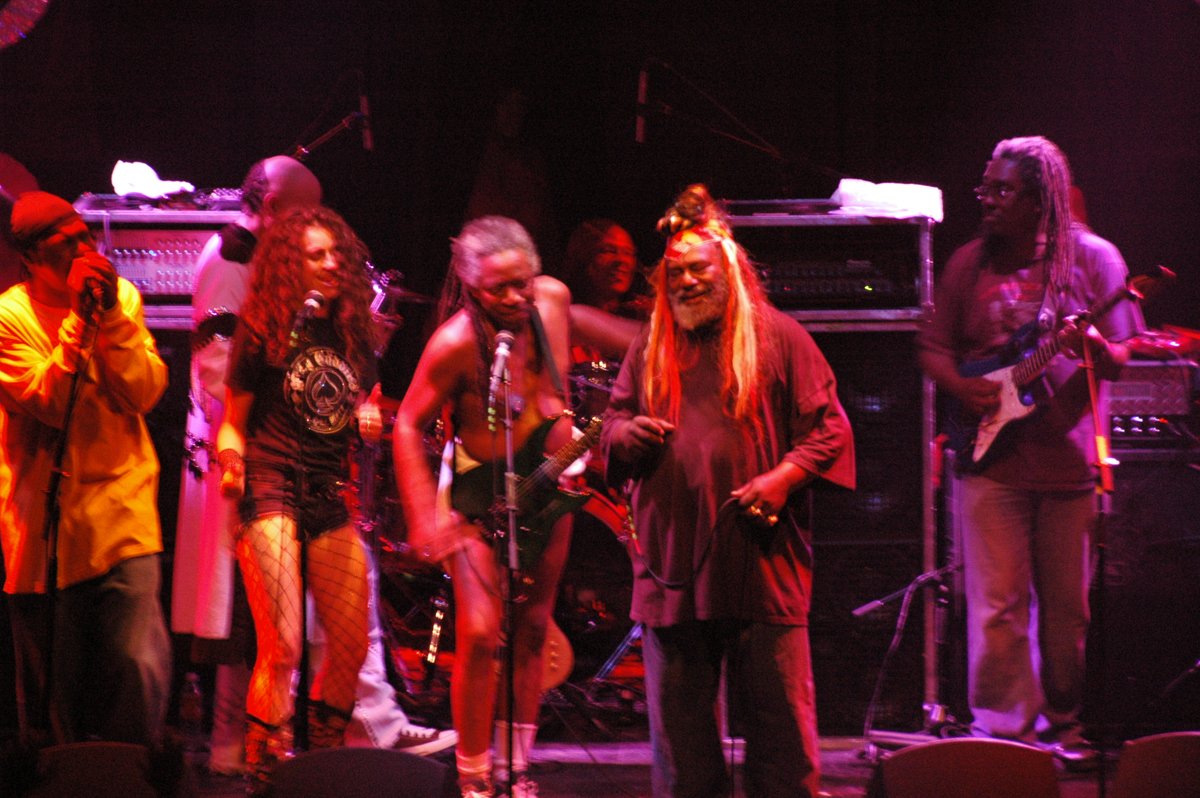
I teach guitar in Darwin, and I flag my own teaching opinions as mine. This is the fifth post in my series on influential guitarists who deserve more attention, after Clarence White guitar technique, Wilko Johnson guitar technique, Franco Luambo guitar style and Hubert Sumlin guitar technique. There is no free licensed photo of Eddie Hazel himself, so the pictures here show the kind of gear he used and the band that carried on after him.
Who was Eddie Hazel?
Edward Earl Hazel was born on 10 April 1950 in Brooklyn, New York, according to Wikipedia. His mother, Grace Cook, moved the family to Plainfield, New Jersey, to keep him away from the drugs and crime of the city. He sang in church as a boy, and his first guitar was a Christmas present from his older brother. He taught himself to play.
At 12 he met the bassist Billy “Bass” Nelson, and the two became a team. Nelson has said that Hazel found his direction once he heard Jimi Hendrix. NPR’s look at Maggot Brain at 50 says he had also been listening to Hendrix, Sly Stone and Cream records that George Clinton gave him.
In 1967 the Parliaments had a hit with (I Wanna) Testify. Clinton hired Nelson for the touring band, and Nelson recommended Hazel. His mother at first said no, because he was only 17. He joined anyway that year, as part of the first permanent backing band for the Parliaments, according to the Chicago Reader. On a late 1967 tour the band met the drummer Tiki Fulwood in Philadelphia.
Funkadelic and P Funk
Contract problems stopped Clinton using the Parliaments name, so around 1969 the backing band became its own act, Funkadelic, signed to Westbound Records. Tawl Ross joined on rhythm guitar and Bernie Worrell on keyboards. The first three albums were Funkadelic (1970), Free Your Mind… and Your Ass Will Follow (1970) and Maggot Brain (1971). Consequence says Hazel wrote about half of Free Your Mind, including the title track.
Maggot Brain was the last album by the original line up, and it made Hazel the Funkadelic guitarist people still talk about. Hazel and Nelson left in late 1971 after a pay dispute with Clinton; Consequence says Clinton had held back the musicians’ pay, fearing it would go on drugs. Away from Funkadelic, Hazel worked with the Temptations, contributing to the albums 1990 (1973) and A Song for You (1975).
He came back for Standing on the Verge of Getting It On (1974), where he has writing credits on all the songs, many of them credited to his mother, Grace Cook. Later in 1974 he was arrested after an incident on a flight and on a drug charge, and served time in prison. While he was away, Clinton brought in Michael Hampton, a teenager who had impressed him by playing Maggot Brain, according to the Premier Guitar P Funk roundtable.
After prison his role shrank as Hampton and Garry Shider took more of the guitar work, though he still appears on later records such as Let’s Take It to the Stage (1975) and Hardcore Jollies (1976). His 1977 solo album, Game, Dames and Guitar Thangs (also listed as Games, Dames and Guitar Thangs), came out on Warner Bros with Clinton, Bootsy Collins, Worrell and others, and includes covers of California Dreamin’ and I Want You (She’s So Heavy).
He kept turning up on P Funk records into the 1980s, and Consequence says a 1983 live recording shows him sharing Maggot Brain on stage with Hampton and Blackbyrd McKnight. Eddie Hazel died on 23 December 1992 in Plainfield, aged 42, of internal bleeding and liver failure. Maggot Brain was played at his funeral.
Maggot Brain: the one take solo
The song Maggot Brain was recorded in 1971 at United Sound Systems in Detroit and runs for just over ten minutes, according to the Wikipedia entry on the song. It is credited to Hazel and Clinton, and opens the album, which came out in July 1971. The band on the track was Hazel on lead, Ross on rhythm guitar, Nelson on bass, Worrell on keyboards and Fulwood on drums, with Clinton’s spoken opening.
The story goes that George Clinton told him to play as if he had just been told his mother had died. Some tellings, including Rolling Stone, add a twist, that halfway through he should imagine she was alive after all. Clinton wrote in his 2014 memoir that he “could see the guitar notes stretching out like a silver web.”
Most accounts agree it was done in one take. Afterwards Clinton faded most of the band out of the mix, leaving the guitar almost alone, and added the famous echo himself. “I Echoplexed it back on itself three or four times,” he said. So the echo you hear is a studio layer, not a pedal Hazel stomped on while playing. Accounts also differ on where the title came from, so I will not pick one.
Greg Tate summed up the Maggot Brain guitar solo for NPR: “There’s a cry in every note.” Vernon Reid calls it a masterwork. You can hear it from the official Funkadelic channel below.
Eddie Hazel guitar style explained: bends, vibrato and space
In my reading of the sources, Eddie Hazel guitar style comes down to five ingredients: the guitar as a voice, one simple scale, singing bends and vibrato, space and dynamics, and effects used for expression. None of it depends on speed, which is good news if you are learning Eddie Hazel guitar technique.
The guitar as a voice
“I wanted to make the guitar an extension of my singing. My style is really like solo vocalist guitar,” Hazel said in a Guitar Player interview quoted on George Clinton’s official site. In my teaching, that is the most useful sentence in this whole post. Phrase in breaths, the way a singer does. If you could not sing the line in one breath, it is probably too long.
One scale, played deeply
The Maggot Brain solo sits in E minor pentatonic, as Fender’s article on the track points out. That is the first scale most rock players learn. Hazel’s genius was not in fancy notes but in how long he held them and how he shaped them. If the box is new to you, start with my guide to the modes of the minor pentatonic scale, and my post on the key of G and E minor explains the key itself.
Bends that cry, vibrato that sings
Fender describes the solo as circling, swelling, retreating and squalling. Listen for whole step bends held for a long time, wide and slow vibrato, and slow releases back down. The bends are in tune, which is why they hurt so good. My post on rock guitar techniques today covers bending and vibrato basics if you need a refresher.
Space and dynamics
The solo is slow, improvised and exposed, because Clinton pulled most of the band out of the mix. Rests are part of the phrase. Within a single phrase he gets softer and louder, which is something you can practise with your picking hand alone. My guide to the history of blues guitar shows where this kind of crying, vocal phrasing comes from.
Play the melody, go off, come back
Clinton had a rule for P Funk guitarists, which Michael Hampton describes in the Premier Guitar roundtable: play the singer’s melody, go off and do your psychedelic thing, then come back to the melody. In my view this is the secret structure of a great long solo. Exercise 4 below is built on it.
Fuzz and wah as expression
Fender says fuzz and wah were used heavily on Maggot Brain, and Premier Guitar’s roundtable says Hazel learned wah, Big Muff and phaser pedals from the start. He did not use the wah only for fast funk scratching. Rocking it slowly through a held note makes the note “speak”, almost like a vowel.
The rhythm side
He was also a sharp rhythm player. Blackbyrd McKnight told Premier Guitar that Hazel played rhythm with his fingers as well as the pick, a habit he picked up from his grandmother, while Tawl Ross supplied much of the rhythm chunk on the early records. Guitar World’s 1970s funk guitar masterclass has a Parliament style example with wah and E9 chords, and my post on the basics of syncopation helps with funk rhythm.
How to play like Eddie Hazel, step by step
These exercises teach the ingredients of his phrasing. They are not a transcription of Maggot Brain, and no exact settings from the session are known. All six use the E minor pentatonic box at the 12th fret, in standard tuning: E string 12 and 15, A 12 and 14, D 12 and 14, G 12 and 14, B 12 and 15, high e 12 and 15.
How to read the tab: dots are the string lines and numbers are frets. The top line counts eighth notes. b means bend a whole step (target pitch in brackets), r means release the bend, p means pull off and ~ means wide, slow vibrato. Pick every note unless marked. Start around 60 bpm with one click per beat, and only move the metronome up when every bend is in tune and every rest is counted.
The vamp to play over
This original backing figure is a plain E minor chord picked one note at a time. A friend, a looper or a drone track can play it while you practise the exercises.
      1   &   2   &   3   &   4   &      1   &   2   &   3   &   4   &
e  |..................0...............|..................0...............|
B  |..............0.......0...........|..............0.......0...........|
G  |..........0...............0.......|..........0...............0.......|
D  |......2.......................2...|......2.......................2...|
A  |..................................|..................................|
E  |..0...............................|..0...............................|
      Let ring, pick down on every note
Exercise 1: bend and match
Play the B string 12th fret (a B note), then bend the G string 14th fret up a whole step until it matches that B. Bar 2 does the same with the high e 12th fret (an E) and a B string 15th fret bend. Add vibrato only once the bend is in tune.
      1   &   2   &   3   &   4   &      1   &   2   &   3   &   4   &
e  |..................................|..12..............................|
B  |..12..............................|..................15..............|
G  |..................14..............|..................................|
D  |..................................|..................................|
                      b(B) ~~~~                          b(E) ~~~~
Exercise 2: cry and hold
Bend the B string 15th fret up a whole step and hold it with slow, wide vibrato for most of the bar. In bar 2, release the bend slowly back to 15, pull off to 12 and land on the G string 14th fret with vibrato.
      1   &   2   &   3   &   4   &      1   &   2   &   3   &   4   &
e  |..................................|..................................|
B  |..15..............................|..15..............12..............|
G  |..................................|..........................14......|
D  |..................................|..................................|
      b...... ~~~~~~~~                   r slowly        p       ~~~
Exercise 3: sing, then breathe
Bars 1 and 3 are short phrases; bars 2 and 4 are silence. Count the rests out loud. This is the guitar as a singer idea in its simplest form.
      1   &   2   &   3   &   4   &      1   &   2   &   3   &   4   &      1   &   2   &   3   &   4   &      1   &   2   &   3   &   4   &
e  |..15......12......................|..................................|..................................|..................................|
B  |..................15......12......|..................................|..................................|..................................|
G  |..................................|..................................|..14......12......................|..................................|
D  |..................................|..................................|..................14..............|..................................|
                      b       ~~~        (rest, breathe)                                    ~~~~~~~            (rest, breathe)
Exercise 4: theme, go off, come back
Bar 1 is a simple theme. Bars 2 and 3 wander away, higher and then lower. Bar 4 plays the theme again, note for note. Then make up your own go off bars, and always come back.
      1   &   2   &   3   &   4   &      1   &   2   &   3   &   4   &      1   &   2   &   3   &   4   &      1   &   2   &   3   &   4   &
e  |..........12......................|..15......12..............12......|..................................|..........12......................|
B  |..12..............15......12......|..................15..............|..................................|..12..............15......12......|
G  |..................................|..................................|..................14......12......|..................................|
D  |..................................|..................................|..14......12......................|..................................|
      THEME                              GO OFF                             GO OFF (low)                       THEME AGAIN
                      b                  b               b                                                                     b
Exercise 5: wah sweep on a held bend
Bend the B string 15th fret up a whole step and hold it. In bar 1, rock the wah slowly from heel to toe over the whole bar; in bar 2, go from toe back to heel. Keep the bend in tune while your foot moves. No wah? Roll the guitar’s tone control slowly instead.
      1   &   2   &   3   &   4   &      1   &   2   &   3   &   4   &
e  |..................................|..................................|
B  |..15..............................|..15..............................|
G  |..................................|..................................|
D  |..................................|..................................|
      b.......held............           b.......held............
      wah: heel......to toe              wah: toe......to heel
Exercise 6: leave room for the echo
With a delay on (see the tone sheet below), play three notes and stop. Let the repeats answer you for the rest of the bar. This copies the effect of the echo Clinton added in the mix.
      1   &   2   &   3   &   4   &      1   &   2   &   3   &   4   &
e  |..12..............................|..................................|
B  |......15..12......................|..................................|
G  |..................................|..14..12..........................|
D  |..................................|..........14......................|
                      (echo answers)                     (echo answers)
Look after your hands
Long bends and wide vibrato are hard on fingertips and wrists. Keep sessions short, rest between exercises, and stop if anything hurts. My guide to sore fingertips from guitar covers building up calluses safely.
Gear and tone
Fender calls him a devoted Stratocaster player; he owned at least one late 1950s sunburst Strat and later CBS era models. Premier Guitar’s roundtable says he started on a big body Gretsch before moving to a Strat, and that he sounded like himself on any guitar. He probably used a Strat on Maggot Brain, but nobody has documented the exact guitar. My Stratocaster vs Telecaster comparison explains what a Strat brings.
Bandmates remember Marshall amps, plus wah, fuzz and phaser pedals; Clinton says he bought Hazel two Marshalls. Gear lists online name exact pedal models, but they trace back to an article that can no longer be read, and the Pedalboard Archive marks those models as unverified. So the exact models on Maggot Brain are not documented. My post on understanding tube amps explains how a Marshall style valve amp breaks up.
Tone sheet: honest starting points
No source gives the session settings, so treat these as starting points for your own gear, not his settings.
- Guitar: a single coil, Strat type guitar on the neck or middle pickup suits the sound he is best known for, but any guitar works.
- Amp: clean to light break up, so the fuzz does most of the work. Turn the gain down if notes smear.
- Fuzz: start with the fuzz control around halfway and the level no louder than the pedal turned off. Roll the guitar volume back a little to clean it up.
- Wah: slow sweeps on held notes, or park it part way open for a vocal, nasal tone.
- Delay (the studio layer): about 350 to 450 ms, two to four audible repeats, mix low enough that the dry note stays in front.
- Reverb: a little to a moderate amount.
- Phaser (optional): slow rate, low depth.
Free printable Maggot Brain phrasing study (PDF)
The free sheet puts Eddie Hazel guitar style on one A4 page: the vamp, all six exercises in tab, the tone sheet, a tempo log and a short listening list. Print it, keep it on your music stand, and write your tempo down each session. Only move the metronome up when every bend is in tune.
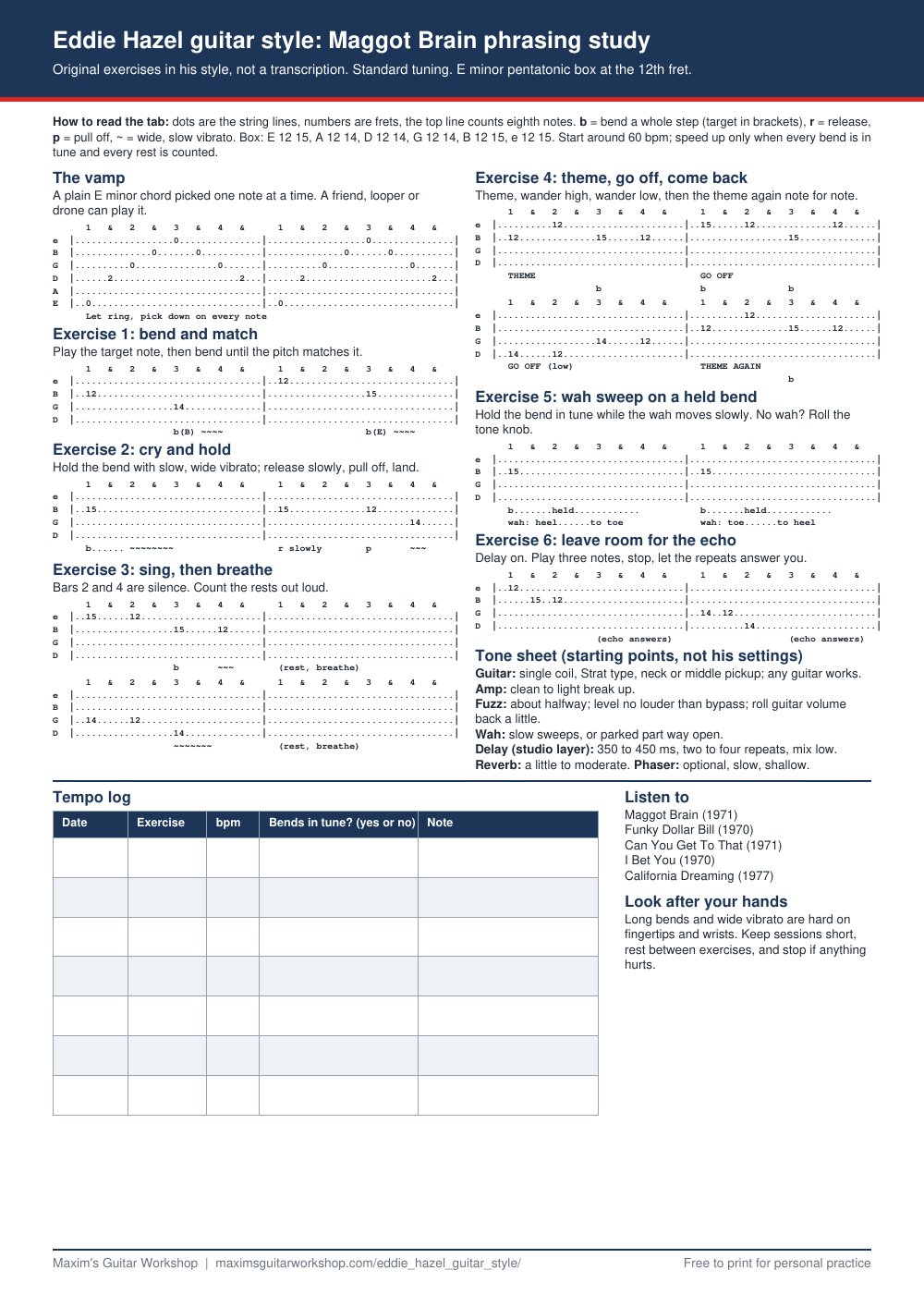
Download the free Eddie Hazel guitar style phrasing study (PDF)
Essential listening
Listening matters more than any tab with this music. Start with Maggot Brain above, then work through these.
- Maggot Brain (1971): the one take solo, with the band faded down.
- Funky Dollar Bill (1970): a key track picked out by Rolling Stone.
- Can You Get To That (1971): the gentler side of the Maggot Brain album.
- I Bet You (1970): heavy fuzz from the first Funkadelic album.
- Free Your Mind… and Your Ass Will Follow (1970): the title track he helped write.
- Comin’ Round the Mountain (1976): later P Funk guitar.
- California Dreaming (1977): from his solo album.
Eddie Hazel’s legacy
Hazel was inducted into the Rock and Roll Hall of Fame in 1997 as a member of Parliament Funkadelic, after his death, alongside 15 other members. Rolling Stone ranked him No. 43 in its 2003 list of the greatest guitarists, No. 83 in 2011 and No. 29 of 250 in 2023, and in 2008 it placed Maggot Brain No. 60 among the greatest guitar songs.
The tributes keep coming. Ween recorded A Tear for Eddie in 1994, J Mascis played the solo on Mike Watt’s 1995 cover, and Nels Cline, Warren Haynes and Mike McCready have played it live. Flea, who told Guitar World in 1990 that Hazel was right up there with Hendrix, put his own Maggot Brain on his 2026 solo album Honora.
For guitarists today, Eddie Hazel guitar style is a lesson in feeling over flash: one scale, a few notes, and every one of them sung. In my teaching, his music fixes a common problem, which is players who rush. Spend time with these exercises and the record, and your bends will start to cry. For a jazz player who made the guitar sing like a horn, see our guide to Grant Green guitar style.
If you are newer to the guitar and want a structured path to playing expressive lead lines like these, my online beginner course starts from the very first chord.
Eddie Hazel FAQ
What scale is Maggot Brain in?
E minor pentatonic.
Was Maggot Brain recorded in one take?
Yes, according to most accounts, with Clinton fading most of the band out afterwards.
What did George Clinton tell Eddie Hazel?
Reportedly to play as if he had just heard his mother had died. Some tellings add that she then turned out to be alive.
What guitar did Eddie Hazel play?
Mostly Stratocasters, including a late 1950s sunburst. The exact guitar on Maggot Brain is not documented.
What effects are on Maggot Brain?
Fuzz and wah from Hazel. The echo was added by Clinton in the mix.
When did Eddie Hazel die?
On 23 December 1992, aged 42.
Is Eddie Hazel in the Rock and Roll Hall of Fame?
Yes. He was inducted in 1997 as a member of Parliament Funkadelic.
Can a beginner learn Eddie Hazel guitar style?
Yes, at a slow tempo. If you can play the minor pentatonic box and bend a string a little, you can start on exercises 1 and 3 today. In tune bends and wide vibrato take longer, and there is no deadline for sounding like him.
Sources
- NPR, Eric Deggans, Maggot Brain at 50, 22 July 2021
- Rock and Roll Hall of Fame, Parliament Funkadelic
- Premier Guitar, Parliament Funkadelic: a funk guitar roundtable, 8 March 2016
- Fender, One Track Mind: Eddie Hazel and Maggot Brain
- Rolling Stone Australia, 250 greatest guitarists, Eddie Hazel
- George Clinton official site, Eddie Hazel
- Chicago Reader, Peter Margasak, 6 March 2012
- Consequence, Icons of Rock: Eddie Hazel, 9 July 2011
- Pedalboard Archive, Eddie Hazel 1970
- Guitar World, 1970s funk guitar masterclass
- Rolling Stone 2003 and 2011 guitarist lists (French Wikipedia)
- Wikipedia: Eddie Hazel, Maggot Brain (song), Maggot Brain (album)