
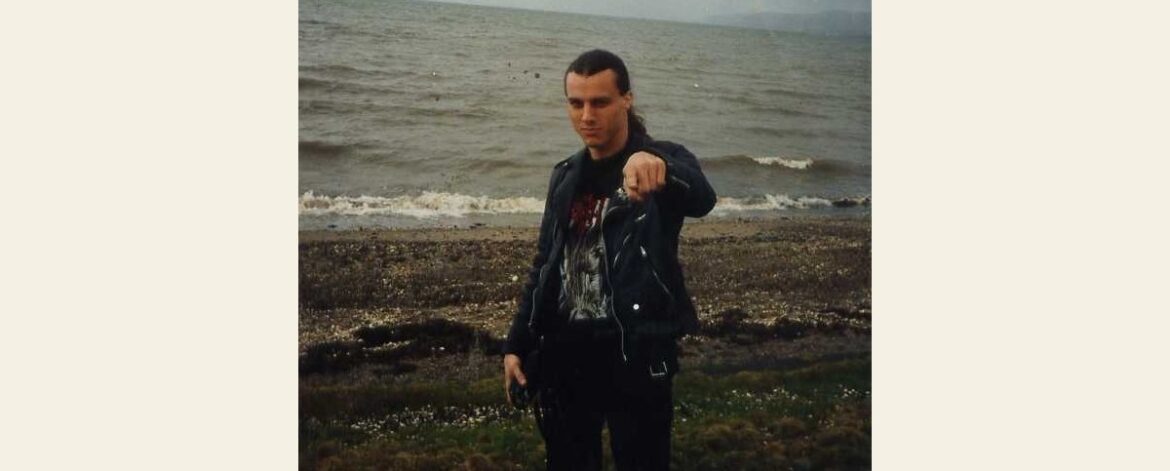
Chuck Schuldiner riffs shaped an entire genre. As the founder, guitarist and singer of Death, he took the raw speed of thrash, added chromatic darkness and tremolo picking, and later turned it into something melodic and progressive. This post covers his life, how his riffs worked, his gear, six original drills in his style and a free one page practice PDF.
Quick answer: how do you play Chuck Schuldiner riffs? Start with tight tremolo picking on the low E string, then build riffs from notes one fret apart (chromatic clusters), tritone stabs and palm muted chugs. Later Death songs add melodic tremolo lines and two guitar harmonies. Death tuned to D standard by the 1990s, but you can practise every drill here in standard tuning.
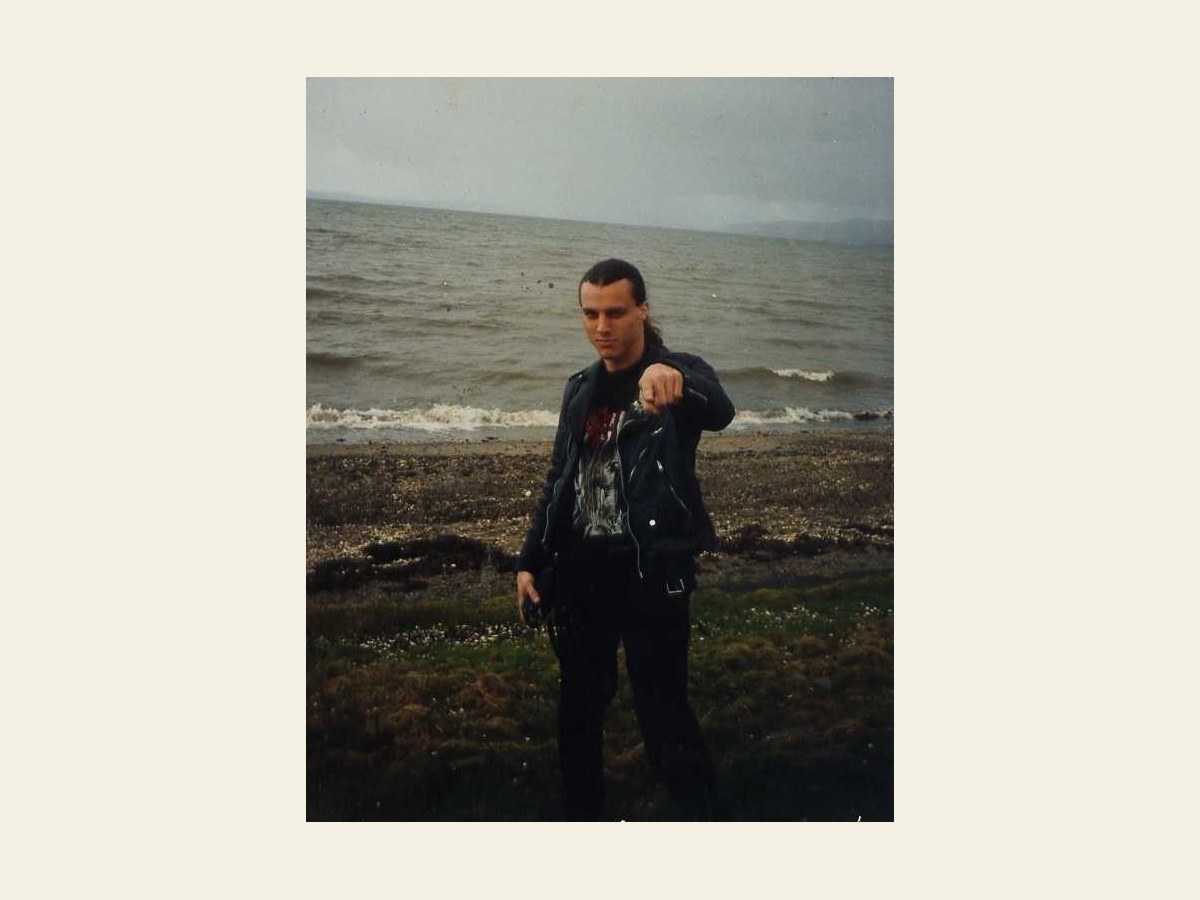
Who was Chuck Schuldiner?
Charles Michael Schuldiner was born on Long Island, New York, on 13 May 1967. His family moved to Florida the following year. He began playing guitar at about nine, not long after the death of his older brother, and although he had a few lessons he was essentially self taught, learning by ear from records.
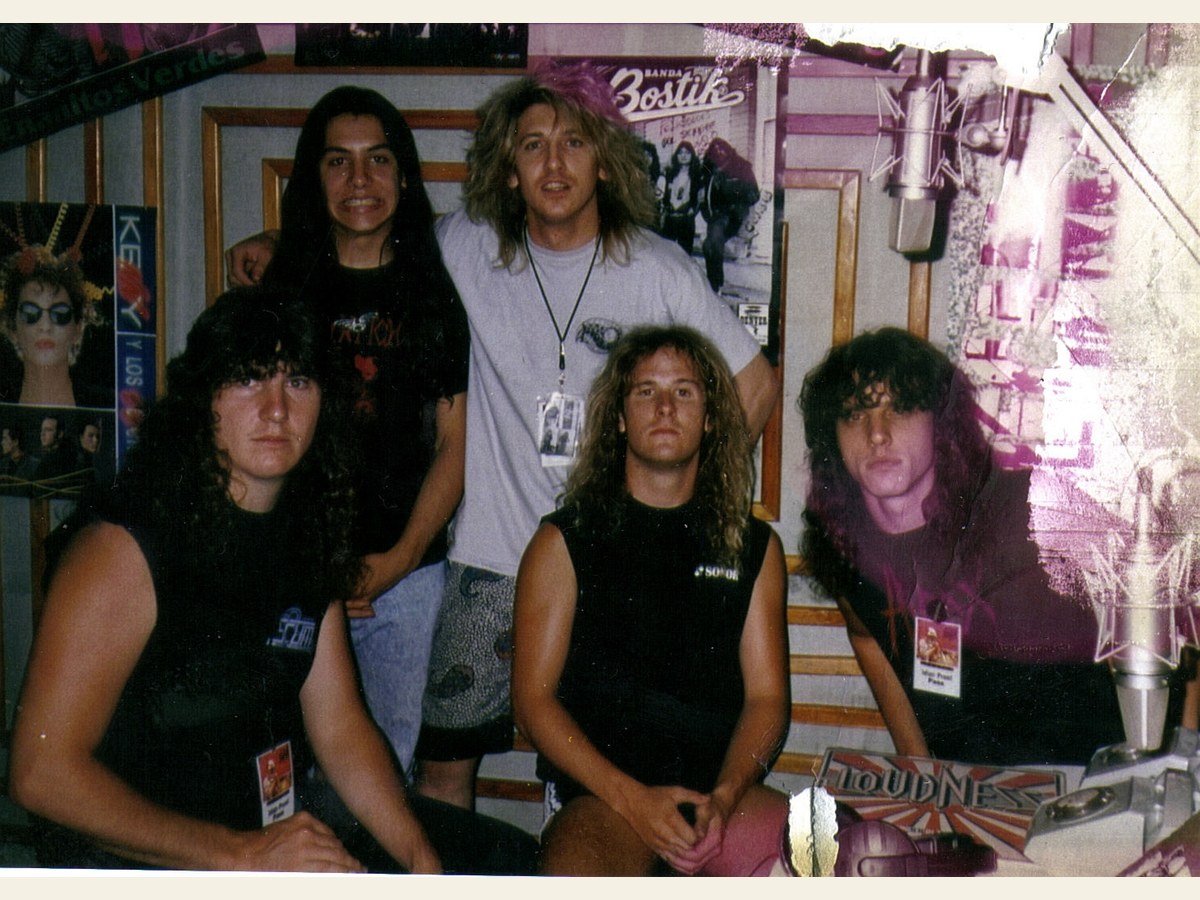
In 1983, at 16, he formed a band called Mantas, which soon became Death. Line ups changed constantly. He became the singer almost by accident after the drummer, who had been singing, left; he later said he took the job “against my free will”. From then on the band was really his: he wrote the songs, played guitar, sang and chose the musicians.
He is often called the father of death metal, and Guitar World ranked him No. 20 on its 2004 list of the greatest metal guitarists. The Guitar World feature on Chuck Schuldiner covers how his music grew from album to album.
In 1999 he was diagnosed with a brain tumour. Fans and fellow musicians raised money for his treatment, but he died on 13 December 2001, aged 34.
The albums
Death’s records trace a clear path from raw to refined, and they are the best way to study his guitar technique in order:
- Scream Bloody Gore (1987): fast, raw, early death metal.
- Leprosy (1988): heavier, tighter riffs.
- Spiritual Healing (1990): longer songs and more melody.
- Human (1991): the turn toward progressive, technical playing.
- Individual Thought Patterns (1993): complex riffs and bright solos.
- Symbolic (1995): perhaps his most melodic album.
- The Sound of Perseverance (1998): the final Death album.
- The Fragile Art of Existence (1999): with his other band, Control Denied.
Chuck Schuldiner guitar technique explained
His riffs grew from thrash metal, but he pushed the darkness further. The main tools are tremolo picking, chromatic movement, the tritone and palm muting. Tremolo picking means fast alternate picking on a single note or a melody, so the notes blur into a buzz. In death metal tremolo picking this buzz becomes a texture as much as a rhythm.
Chromatic means moving by one fret at a time. Chromatic death metal riffs often sit on the low E string and crawl between frets 0, 1, 2 and 3. The flat second (fret 1 above an open E) sounds especially menacing. The tritone, the interval of three whole tones, adds even more tension. To understand why these sounds feel so dark, read my posts on consonant vs dissonant intervals and the difference between tonal and atonal music.
From Human onwards, Chuck Schuldiner riffs became more melodic and more unusual in rhythm, and the solos used more of the scale. On Symbolic and The Sound of Perseverance, tremolo picked melodies and harmonised guitars are everywhere. He played the harmony parts separately on two guitars rather than using a harmoniser effect.
Tuning matters for the sound. In a 1990s interview he said Death had been tuned in D “for years” and that D tuning was perfect for the band. That means every string is a whole step lower than standard. The tab in this post uses fret numbers, so it works in standard tuning or D standard.
Gear
His best known guitar was a B.C. Rich Stealth, a pointed solid body. On the first two albums he used a Boss distortion pedal for gain. From Individual Thought Patterns on, he was known for using Marshall Valvestate amps, which are solid state, not valve amps, despite the name. If you want to know more about the difference, see my guide to understanding tube amps.
The lesson from his gear is that the hands make the sound. A tight, moderate amount of gain with the mids not scooped out keeps tremolo notes and palm mutes clear. Too much gain turns chromatic riffs into mush.
Drill 1: tremolo picking on one note
Everything starts here. Play the open low E in sixteenth notes with strict alternate picking: down, up, down, up. Palm mute lightly. Keep the pick movement small and let the motion come from the wrist, not the whole arm.
      1   e   &   a   2   e   &   a   3   e   &   a   4   e   &   a
D  |..................................................................|
A  |..................................................................|
E  |..0...0...0...0...0...0...0...0...0...0...0...0...0...0...0...0...|
      PM                              down up down up
Start slowly with a metronome and keep every note even. When it is steady, try a minute without stopping. Tremolo picking is an endurance skill as much as a speed skill.
Drill 2: the chromatic cluster
Now move the tremolo between frets 0, 1, 2 and back to 1, four picks each. This tiny shape is the seed of many chromatic death metal riffs. Make sure the change of fret lands exactly with a down stroke.
      1   e   &   a   2   e   &   a   3   e   &   a   4   e   &   a
D  |..................................................................|
A  |..................................................................|
E  |..0...0...0...0...1...1...1...1...2...2...2...2...1...1...1...1...|
      PM all
This is also a great left hand and right hand sync exercise. If it feels clumsy, my easiest chromatic guitar exercise builds the same coordination in three levels.
Drill 3: tritone stab and palm muted walk
The opening chord stacks the open E, A string fret 1 and D string fret 2. Let it ring, then walk up the low E string with palm muted eighth notes and finish with the chord again. It is a short, original riff, but it shows how Chuck Schuldiner riffs mix ringing dissonance with tight muting.
      1   &   2   &   3   &   4   &      1   &   2   &   3   &   4   &
D  |..2...............................|..................2...............|
A  |..1...............................|..................1...............|
E  |..0...............0...0...1...1...|..2...2...3...3...0...............|
      ring            PM                 PM              ring
Drill 4: tremolo melody
Later Death songs put melodies under tremolo picking. Here four notes are picked four times each on the A string, then the same idea moves to the D string. Do not palm mute: let the melody sing.
      1   e   &   a   2   e   &   a   3   e   &   a   4   e   &   a
D  |..................................................................|
A  |..2...2...2...2...3...3...3...3...5...5...5...5...3...3...3...3...|
E  |..................................................................|
      tremolo, no PM
      1   e   &   a   2   e   &   a   3   e   &   a   4   e   &   a
D  |..2...2...2...2...4...4...4...4...5...5...5...5...4...4...4...4...|
A  |..................................................................|
E  |..................................................................|
      tremolo, no PM
Listen for the melody, not the picking. If the four notes do not sound like a tune, the picking is too loud or uneven.
Drill 5: power chord chugs
This drill uses E5, G5 and F5 power chords, each followed by two palm muted low notes. Play every note with a down stroke at first. For a true gallop, play the two muted notes twice as fast, as two sixteenth notes.
      1   &   2   &   3   &   4   &      1   &   2   &   3   &   4   &
D  |..................................|..................................|
A  |..2...............2...............|..5...............3...............|
E  |..0.......0...0...0.......0...0...|..3.......3...3...1.......1...1...|
      E5                                 G5              F5
Drill 6: two guitar harmony
Line A climbs the G string. Line B plays the same rhythm a third higher on the B string. Learn both, then record one and play the other over it, or practise with a friend. This is the sound of many later Death songs, and it is how to play like Chuck Schuldiner without a harmoniser.
      1   &   2   &   3   &   4   &
e  |..................................|
B  |..................................|
G  |..4...4...5...5...7...7...9...9...|
      line A
      1   &   2   &   3   &   4   &
e  |..................................|
B  |..3...3...5...5...7...7...8...8...|
G  |..................................|
      line B, a third above
Endurance plan
Tremolo picking tires the forearm quickly, so build stamina in short rounds:
- Play Drill 1 for one minute, then rest for thirty seconds.
- Do four rounds.
- When all four rounds feel relaxed, raise the metronome by 4 bpm.
- If your forearm burns or your shoulder lifts, stop and rest.
Warm up first and never play through pain. My guide to guitar injuries and how to prevent them explains the warning signs, and my guitar practice routine for rock and metal shows how to fit drills like these into a week.
Common mistakes
The most common mistake is playing too loose. Chuck Schuldiner riffs work because every chromatic step and every palm mute lands exactly in time. If your picking hand and fretting hand drift apart even slightly, the riff turns into noise. Slow down until they lock together again.
The second is too much gain. Many players hear death metal and turn everything up, but the clarity of Chuck Schuldiner riffs comes from controlled distortion and accurate muting. Try turning your gain down by a third; if the riff sounds weaker, the problem is usually the hands, not the amp.
The third is copying the speed before the feel. As a death band guitarist he was famous for heaviness, but also for groove and melody. Practise each drill at a tempo where you can nod your head to it. Once the feel is there, Chuck Schuldiner riffs at any tempo will sound like music, not just exercise.
Download the practice PDF
The free PDF puts all six drills, the endurance plan, a tempo log and a short listening list on one A4 page. Print it and tick off a line each day.
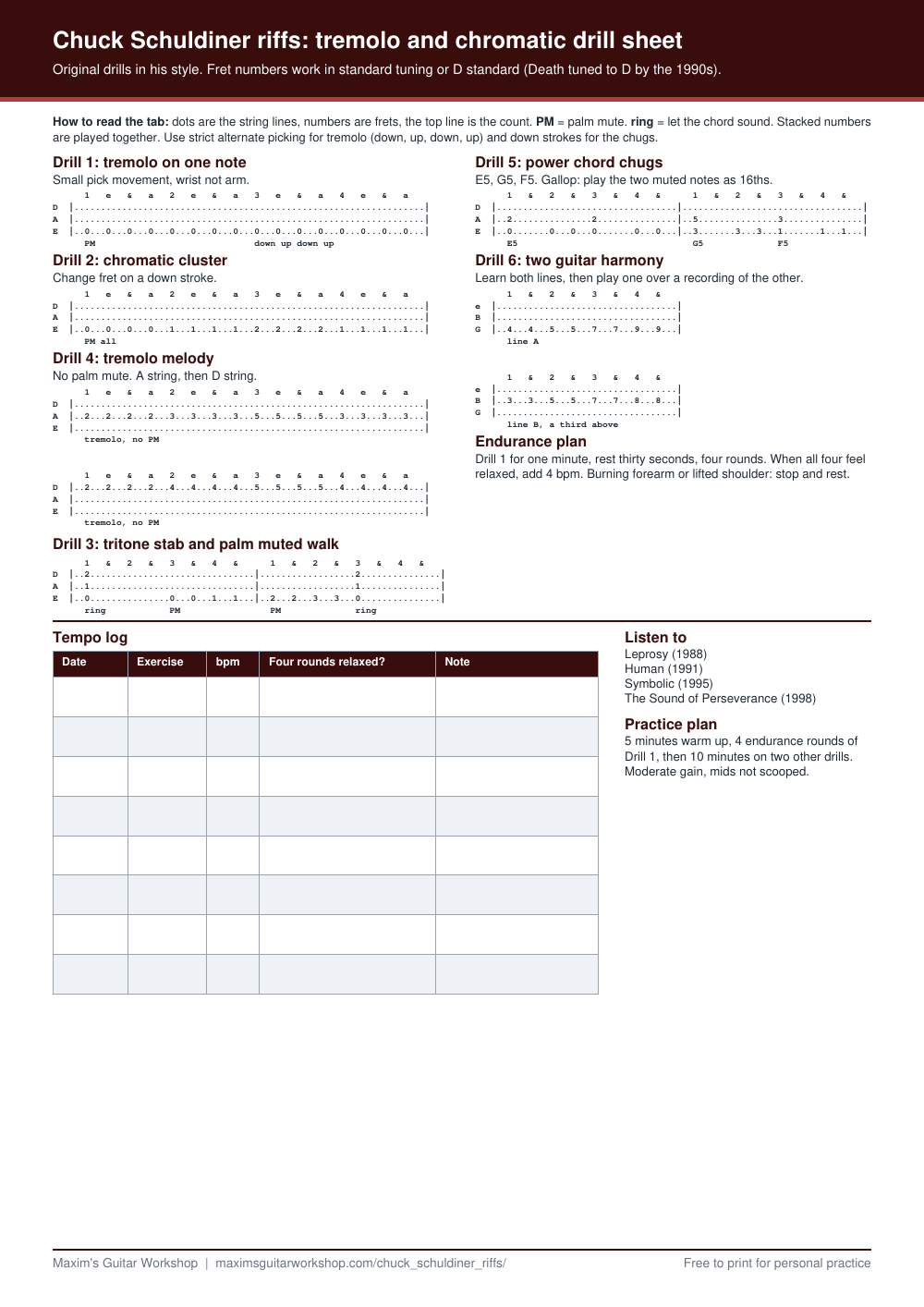
Download the free Chuck Schuldiner riffs drill sheet (PDF)
Essential listening
- Leprosy (1988): the classic early sound.
- Human (1991): the progressive turn.
- Symbolic (1995): melodic tremolo lines and harmonies.
- The Sound of Perseverance (1998): his final Death album.
- Control Denied, The Fragile Art of Existence (1999).
For his own words, the fan archive Empty Words collects interviews in which he talks about his band mates, his tuning and his approach.
Chuck Schuldiner FAQ
What tuning did Death use?
By the 1990s Death tuned to D standard, a whole step below standard tuning. Chuck said in an interview that D tuning was perfect for the band.
What guitar did Chuck Schuldiner play?
He was best known for the B.C. Rich Stealth, and he used Marshall Valvestate amps from Individual Thought Patterns onwards.
Was Chuck Schuldiner self taught?
Mostly, yes. He had only a few lessons and learnt mainly by ear from records.
Is he really the father of death metal?
He is often called that. Several bands helped create the style, but Death’s early albums were among the first and most influential.
How do I get faster at tremolo picking?
Short daily rounds with a metronome, small pick movements and a relaxed wrist. Raise the tempo only when four rounds feel easy.
Chuck Schuldiner’s legacy
Death influenced countless metal bands, and many players say his later albums showed them that extreme music could also be melodic and thoughtful. If you enjoy fast, technical guitar, my lesson on Shawn Lane technique covers a very different kind of speed. You might also enjoy what is highway metal and my overview of rock guitar techniques today.
For guitarists today, Chuck Schuldiner riffs are a lesson in honesty and growth: start with the basics, keep every note clean and let your music change as you do. For a punk take on chromatic noise, see our lesson on Greg Ginn guitar style.
If you are new to guitar, my online beginner course builds the picking and fretting basics that these drills rely on.
Sources
- Guitar World, Chuck Schuldiner feature
- Empty Words, Chuck Schuldiner interviews
- Wikipedia, Chuck Schuldiner
- Wikipedia, Death (metal band)
If you want to write your own riffs in this spirit, see our guide on how to write a metal riff.
If you want to write your own riffs in this spirit, see our guide on how to write a metal riff.