
Students still ask for Paul Gilbert guitar techniques when they want alternate picked clarity, athletic string crossing, and rock melodies that still sound like songs. The posters show speed. The better lesson is quieter: metronome built right hand control, outside picking for repeating patterns, string skipping arpeggios people keep calling sweeps, wrist driven vibrato after the run, and a lifelong pivot toward melody, timing, endings, and vocal phrasing.
This Maxim's Guitar Workshop guide puts craft and sound in one long read. You get documented practice habits, right hand reality, left hand and vibrato notes, scales and songcraft, then tone eras from Laney years through Marshall Vintage Modern into clean platforms with pedal dirt. Where teachers analyse songs or mechanics, we label ANALYSIS. Where Gilbert spoke, we attribute. We do not invent quotes.
For the wider rock toolkit beside this language, see rock guitar techniques still used today. For a blues feel contrast to athletic alternate picking, keep Slash guitar techniques open while you practise.
What students should steal from Paul Gilbert (and what not to copy blindly)
Steal the daily curiosity ethic from his formative years. In Guitar World's Art of Shred feature (December 2010 issue, later archive republish), Gilbert said: "My goal was to learn one new thing every day, with no days off." That new thing could be a chord, a bend, a phrase, or a Beatles song. Quantity of hours matters less than the habit of adding one honest brick.
Steal the metronome story without turning BPM into identity. In Dale Turner's Intimate Audio Psycho Licks 101 interview (1 November 1999), Gilbert said the right hand picking stuff did not come naturally to him, and "what it took was learning to use the metronome": slow, perfect repeats, then gradual speed. Guitar World's May 2023 "12 guitarists who shaped his sound" piece ties the return to metronome picking to hearing Yngwie via Mike Varney on the phone in his mid teens. Tools build skill. Screenshots of tempo numbers do not equal musicianship.
Steal timing and endings. Premier Guitar's August 2010 Mr Shred Jangles feature has him noting that clinics and private lessons keep circling the same student needs: play in tempo, and finish a solo so the band knows you landed. Guitar World's August 2024 teaching feature has him reacting when students bring up BPMs with an "Oh no!" and calling that mindset not a musical mindset. The same feature states he is not teaching people how to be a guitar player; he is trying to teach them how to be a musician (groove, hear melody, move the body to tempo, sing harmony).
Steal the shelf advice. In that same May 2023 Guitar World influences list, he models putting a technique on a shelf when it is not working, without beating yourself up, then returning later. His own Yngwie sparked picking return is the proof story.
Steal vibrato seriousness after athletic lines. The Guitar World GIT lesson under his byline walks wrist driven rock vibrato, pinky support so you do not dump full wrist energy into one finger alone, and a fix for bad vibrato: do not start fast then freeze; start slow or with no vibrato, then gradually speed, then exit with style (slide, scratch, stop, mute).
Do not copy blindly: teenage all day grind with no rest as a current baseline; forcing sweeps because a tab looks sweepy; chasing .0085 or .007 strings before calluses and bends are ready (he changes gauges with calluses on Ernie Ball String Theory, and recent Premier Guitar WROC coverage notes very light sets with relatively high action as personal); gear shopping as if one Ibanez into one Marshall equals every era; treating humour props (drill, Airplane Flanger dives, pop covers) as the whole craft story.
Also skip reckless load. Long hours without warmups or rest earn tendon and hearing trouble. Pair ambition with strain aware habits in health benefits of playing guitar. When you need a patience story after a setback, the Yngwie Malmsteen 1987 accident piece sits beside Gilbert's own "shelf the technique" advice.
Practice regimen: one new thing a day vs BPM chasing
Myth one: Gilbert never used a metronome, or hates metronomes. Documented habit: the metronome rebuilt his alternate picking after years of mostly legato playing. Myth two: he only shreds drills forever. Documented arc: after roughly age twenty two he widened into songwriting, vibrato, phrasing, and chord colour, and later practise talk centres on learning songs and melody.
Formative years are extreme curiosity, not a fixed hour count. Guitar World Art of Shred (2010 / 2013 archive) has him practising all the time for a long time with that one new thing daily rule. The same feature notes he took a day off around twenty two because he was tired of listening to himself, then added songwriting, vibrato, phrasing, thirds and sevenths chord knowledge, and piano pop ideas on guitar. Dear Guitar Hero and the Guitar World teaching features confirm the awkward start: first couple of years self taught, mostly middle finger fretting, mostly the low E string, mostly upstrokes, and he did not yet know how to tune the other strings. A teacher introduced one finger per fret across six strings. Big handed eleven year old habits later show up as 1 3 4 fretting on many three notes per string shapes (Guitar World GIT lesson).
Teenage warmups are concrete. The GIT lesson describes Van Halen's Spanish Fly over and over, trills between all fingers including three and four, and trills practised on bass around eighteen for stamina. Psycho Licks 1999 is the picking breakthrough primary: alternate picking did not arrive as a gift; a simple six note one string lick, metronome discipline, and small speed jumps got him fast in roughly a couple of weeks once the method clicked. Hearing Yngwie pushed him back to that tool after he had abandoned fast picking once (Guitar World May 2023).
Pick grip is a cautionary subplot. Art of Shred describes an early unusual grip with the thumb bent way back for about ten years, including Street Lethal era work. It hurt if over practised. Relearning a new grip took nine months. He still uses the old grip for strumming. Students: change grip with patience, not overnight cosplay.
Intense Rock (late 1980s REH / Alfred) made alternate picking, string crossing, string skipping, and three notes per string a public syllabus. Treat product fame as cultural fact. Treat Troy Grady style motion breakdowns as ANALYSIS unless Gilbert restates the method in a later interview.
Mature practice talk shifts toward learning songs (Premier Guitar 2010; Ordabai; Guitar World 2024; Premier Guitar WROC March 2026): Bach, sixties and seventies pop, blues vibrato, classical themes beside humour covers. Ordabai's interview has him fixing prior night mistakes at the next soundcheck, with more brainwork than teenage hand strength. Guitar World August 2024 and Premier Guitar WROC 2026 push vocal melodies, sing then play, improvising over changes, and slide as a new in tune voice. Mr Big short solos wrap ideas in roughly eight bars: fiery, not ridiculous (Guitar World August 2024).
Synthesis (not a Gilbert quote): formative years equal curiosity plus metronome rebuilt picking; clinics equal timing and endings; album and later years equal songs, melody, and anti BPM identity teaching. Frame all day teenage grind as history. Frame current honesty as musician first.

Right hand: alternate picking, outside picking, and string crossing
Gilbert's own words put strict alternate picking at the centre of fast lines, not economy or sweep as the main brand. Psycho Licks 1999 is the clearest primary on outside versus inside: he prefers outside picking for set repeating patterns and for string skips; full scales force both inside and outside strokes. Dear Guitar Hero restates related attack ideas: he learned a hard attack on unplugged guitar, then modified attack for clean versus dirty versus acoustic.
String crossing is the bottleneck he names. Psycho Licks and related lesson talk frame the hardest part of fast picking as going from string to string. That is why outside friendly patterns and skip shapes become teaching gold: the right hand learns a predictable path while the left hand handles wide shapes.
Economy myths belong next door in the string skipping section. Hybrid picking is not his signature claim. When Premier Guitar 2010 asked about muted lines on Fuzz Universe that sounded hybrid, he said it was all pick plus hammers and pull offs.
Picks: longstanding Dunlop Tortex preference. Premier Guitar 2010 gearbox talk cites around .60 mm; Premier Guitar WROC 2026 cites Tortex III .73 mm. Treat Tortex as constant and gauge as era drift. Do not freeze one millimetre number as eternal law.
ANALYSIS: Troy Grady and Guitar World Intense Rock motion pieces help teachers study mechanics; do not present them as Gilbert's classroom vocabulary.
Steal next: metronome micro wins on one string, then two string outside crosses, then wider skips, alternate rhythm intact when the left hand hammers neighbours. Outside preference does not erase inside strokes on full scales.
String skipping myths: arpeggios people call sweeps
This is the myth students bring into lessons most often. Guitar Player's classic shred lesson with Dale Turner (2006, later republished) has Gilbert clarifying that people confuse his string skipping arpeggios with sweep picking, and that he hardly ever sweeps. Psycho Licks examples (Poison Eyes outside picked skips; Bach and E minor classical helpers) show alternate picking plus legato on same string neighbours while the right hand keeps alternate motion across wider leaps.
ANALYSIS teaching frame used carefully in Guitar World "Gilbert style sequenced string skipping arpeggios" lessons: three notes per string sequences and triad or pent shapes with hammers and pull offs on same string pairs, right hand staying honest to alternate rhythm. Label that as teacher synthesis when you demonstrate it.
Racer X vocabulary (Street Lethal, Scarified, Technical Difficulties) and Get Out of My Yard era pieces such as Curse of Castle Dragon make the ear test easy: if the tab looks like a sweep map but the recording articulates alternate attacks and skip leaps, teach skips. Intense Rock made the skip arpeggio a public brand for a reason.
What not to do: rewrite every fast arpeggio as a sweep because the shape looks vertical. What to do: slow the figure, watch pick direction, keep alternate ghosts through the skip, and only add economy later if you choose it as a separate tool. Gilbert's documented preference stays alternate and skip first.
Left hand, vibrato, and melody first thinking
Finger independence starts with that teacher one finger per fret reset after middle finger only years (Guitar World GIT lesson). The 1 3 4 quirk on many three notes per string shapes is personal habit, not universal law: first, third, and pinky, often skipping the second finger on those races. Stretches and stamina: Spanish Fly daily in the teen story, finger trills, bass trills at eighteen, later humour about using sevenths when stamina jokes appear.
Legato origin story in Dear Guitar Hero is usefully anti precious: intuitive "good accidents" playing along to Eddie Van Halen "wrong," which produced his own patterns, later translated into string skip language. Tapping appears (Get Out of My Yard examples; MusicRadar has hosted tapping masterclass material) but is not the EVH clone centre of identity. Do not lead a Gilbert week with "you must tap."
Wrist and strap: GIT lesson describes wrist up rock wrist, thumb over the neck for vibrato power, and temporary classical tilt for barre or big low string stretches. Guitar World May 2023 influences list notes he copied Jimmy Page's low strap, which shaped wrist position; he wears higher now, but the technique was honed low. Teach strap height as ergonomics, not costume.
Vibrato drive is wrist based. Pinky vibrato should borrow help from other fingers so you never send full wrist energy into the pinky alone (injury risk named in the GIT lesson). Bad vibrato fix from the same lesson: start slow or with none, speed gradually, then stylish exit. B.B. King one finger bend and vibrato work took roughly six weeks of daily attention to build callus in a new place and "revolutionized" his vibrato (Art of Shred; Guitar World May 2023). That is melody school hiding inside shred fame.
Melody first thinking is the mature thesis. Premier Guitar WROC 2026 and Guitar World August 2024 push vocal melodies on guitar, sing then play, and slide as a new voice. Ordabai's maintenance story (soundcheck repairs) pairs with Mr Big's short solo lengths as composition constraints. ANALYSIS for students: athletic lines still respect chord tones and blues tensions; late advice is ear to sing to fret, not Roman numeral academia alone.

Scales, songcraft, and Mr Big length solos
Home base with very high confidence: minor pentatonic and blues vocabulary (Ace Frehley and Page lineage examples in the GIT lesson; Psycho Licks names an "Ace Frehley scale" idea as A minor pentatonic plus flat five plus major seventh colour). Three notes per string major and minor races are Intense Rock and Racer X identity. Dorian examples appear explicitly in the GIT lesson. Mixolydian plus what he names a Hip A7 hybrid (Mixolydian with flat three and flat five) is Gilbert naming in that same lesson. Harmonic minor chord building shows up on Get Out of My Yard material such as Curse of Castle Dragon (Guitar Player 2006). Classical sourcing (Bach, Haydn, Paganini) opens technique doors without turning him into a Yngwie clone (Psycho Licks; Guitar Player 2006; song learning interviews).
Pop and Beatles harmony is musical DNA, not a side hobby. Premier Guitar 2010 on Fuzz Universe talks min7b5 and 7sus4 missions, piano pop chords under athletic leads, and song first writing. Humorous blues rock songwriting on solo albums still frames instrumentals as songs. Chromatic motion in Psycho Licks talk is a step ladder into target notes, not endless chromatic shred for its own sake.
Song teaching map:
- Racer X Street Lethal / Scarified / Technical Difficulties. Three notes per string alternate, diad riffs, string skipping neoclassical colour. Audible catalogue plus Guitar Player / Guitar World lesson culture.
- Poison Eyes. Outside picked skips; pick most notes, legato descending on the high E (Psycho Licks).
- Mr Big Addicted to That Rush / Green Tinted Sixties Mind. Athletic rock inside pop song frames; short fiery solos.
- To Be With You. Restraint and song service: the anti shred stereotype killer.
- Intense Rock drills. Outside picking, string cross, skip arpeggios as instructional brand.
- Get Out of My Yard / Curse of Castle Dragon. Harmonic minor chords; skip arps mistaken for sweeps (Guitar Player 2006).
- Fuzz Universe. 7sus4 and min7b5 arpeggio intros; Phase 90 versus Airplane Flanger roles (Premier Guitar 2010).
- Vocal melody and slide era (Dio Album framing; WROC). Sing then play; slide as new voice (Guitar World 2024; Premier Guitar 2026).
Influences he names across Guitar World May 2023, Dear Guitar Hero, MusicRadar, and Premier Guitar include Jimmy Page (strap, wrist, Heartbreaker bend, vibrato fingerprint), Eddie Van Halen (Spanish Fly, legato accidents), Yngwie (metronome spark, still loved beside Bacharach), Randy Rhoads, Beatles and piano pop writers, Frank Marino (pedal psychedelia), Pat Travers and Pat Thrall, Robin Trower, Alex Lifeson, B.B. King (late vibrato reset), Tony Iommi, Hendrix, uncle Jimi Kidd, plus Art of Shred mind blowers such as Gary Moore, Shawn Lane, Eric Johnson, and Akira Takasaki. Dear Guitar Hero anti misconception: he rejects being boxed only with modern prog shredders; Page and Rhoads listening lineage still matters.
Sound and rig: Ibanez, DiMarzio, and amp eras without gear worship
Gilbert's philosophical constant in Dear Guitar Hero and Premier Guitar 2010 is hands and attack first, with pedals in front of the amp inspired by Frank Marino. Gear eras still matter so students stop shopping one frozen screenshot.
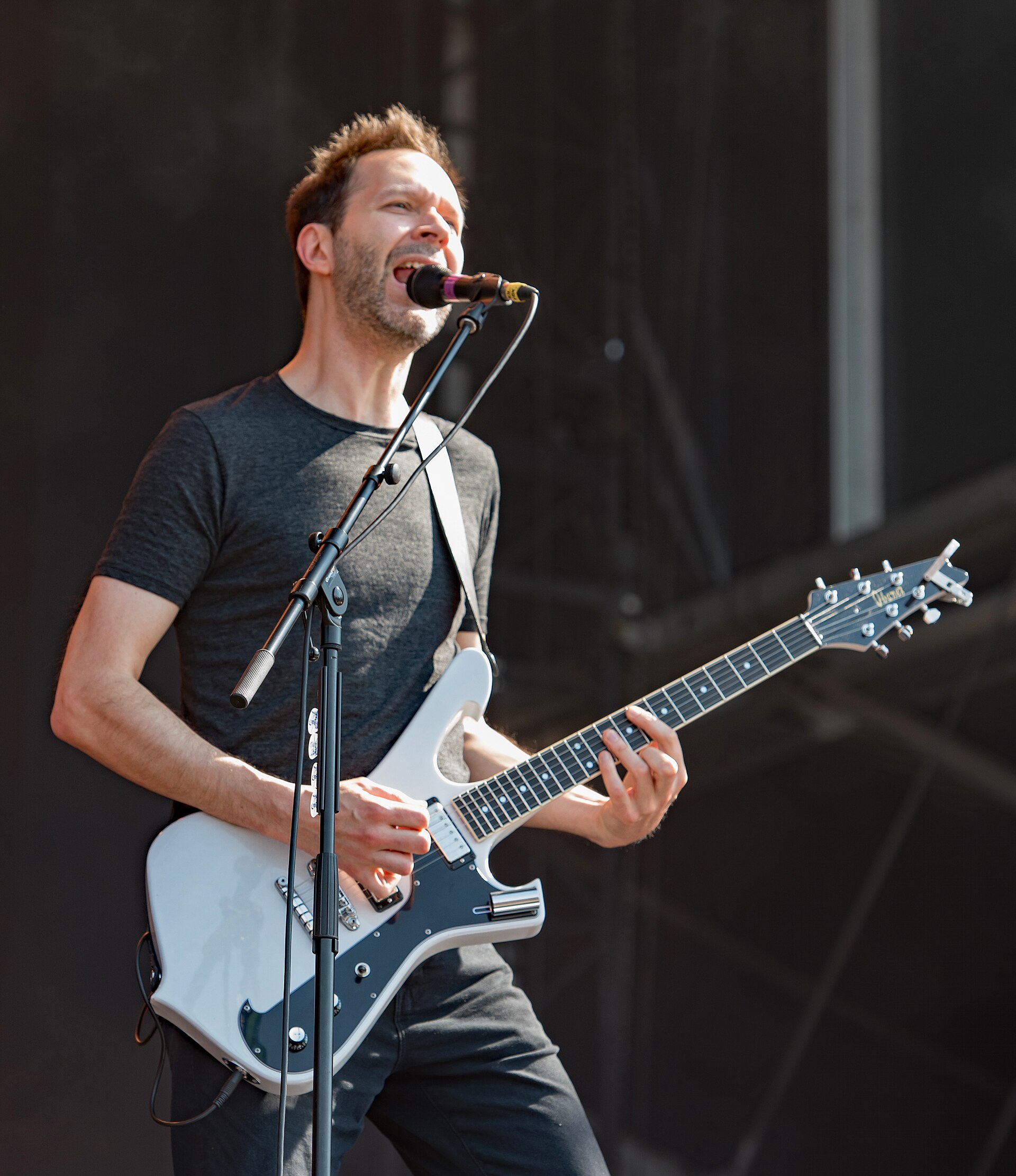
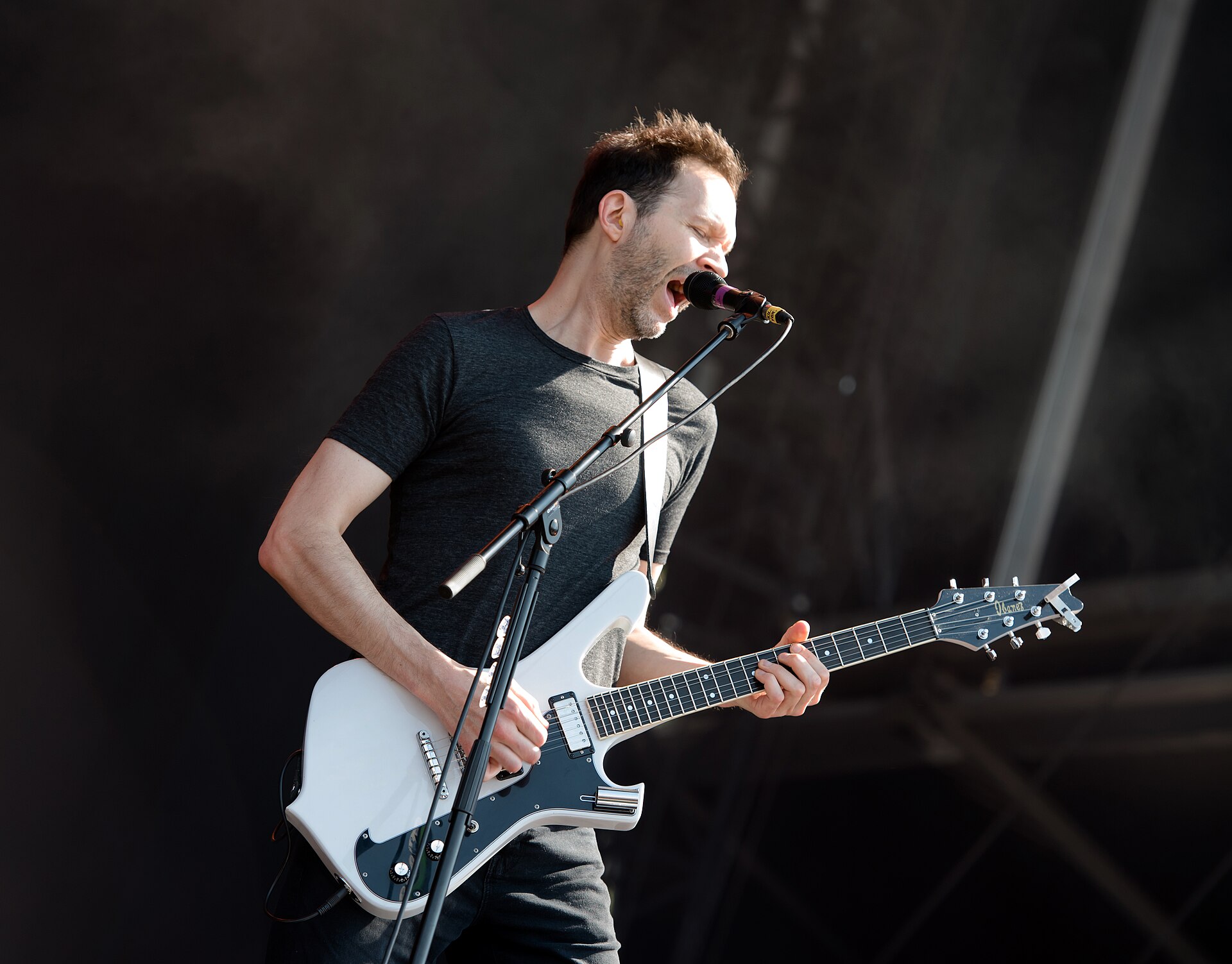
Guitars. Classic image: Ibanez PGM signature line (often Floyd, some fixed bridge mods later). From roughly 2010 onward the signature hero is the Ibanez Fireman (Iceman flipped): set neck, tall frets, knobs out of the way (Premier Guitar 2010; Ibanez materials; Premier Guitar Rig Rundown 2011). Modern live and WROC era mixes FRM350 (slide magnet feature claimed in darkstars Guitar Special 613), PGM50, vintage Ibanez pieces, and customs. Doubleneck experiments appear in Premier Guitar 2010. Myth to avoid: "always a Fireman" or "one guitar forever."
Pickups. Long DiMarzio association. Fireman: Injector hum cancelling singles plus Area 67 middle (Premier Guitar 2010; Rig Rundown 2011). Air Classic and Tone Zone also appear across guitars in secondary lists. Myth to avoid: active EMGs as the Gilbert tone.
Setup philosophy. Prefers light strings with relatively high action for grip, clear notes, sustain, and bends (darkstars 613; Premier Guitar WROC 2026 clinic story). That is the opposite of the low action shred cliché. Ernie Ball String Theory: gauges change with calluses, as light as eights after sweaty gigs, as heavy as elevens when needed. Recent live Mighty Slinky .0085 to .040 sets, often swapping the .040 for a .046; extreme light .007 high E admitted at an Ernie Ball NAMM day with Steve Morse (Premier Guitar WROC 2026). Older snapshots include .010 to .046 on Fuzz Universe sessions and Rig Rundown notes of elevens versus tens after a break. Do not assert one lifelong gauge.
Amps by era (flag confidence). Early Racer X to early Mr Big: ADA MP1 rack preamp lore is widely reported (MEDIUM confidence for exact studio chains). Long stretch roughly 1990s to mid 2000s: Laney GH100L / VC50, often straight in, praised for natural tube distortion (Hallebeek ~2001; Vintage Guitar). Post G3 2007 rethink: researched and bought Marshall Vintage Modern; Premier Guitar 2010 confirms Vintage Modern tracking with Hot Plate into iso cab, and the 2011 Rig Rundown shows related live Marshall worlds. Recent solo: clean Fender Vibrolux and Victoria Club Deluxe platforms with pedal dirt (Xotic AC Booster V2 as modern main dirt) per darkstars 613, Vintage Guitar Werewolves, and Premier Guitar WROC 2026. Tone Master experiments appear because he likes speakers moving air.
Confirmed pedal colours: MXR Phase 90, Ibanez Airplane Flanger, Majik Box Fuzz Universe era fuzz, Xotic AC Booster, later JHS colours, selective Boss CS3, Cry Baby 535Q on Fuzz Universe lists. Hearing protection headphones live are confirmed in Premier Guitar 2010. Teach protection, not volume bravado.

Tone myths cleared (studio vs live, light strings, pedal dirt)
Myth versus fact, fast:
His arpeggios are sweep picking. False as a default description. String skipping plus alternate and legato; he hardly ever sweeps (Guitar Player 2006).
He is only a shredder with no musicality. False. Beatles DNA, pop chords, short Mr Big solos, teaching musicianhood (Premier Guitar 2010; Guitar World 2024).
He never practised with a metronome or hates metronomes. False with nuance. Metronome built his picking; he rejects BPM as identity for students.
Low action plus heavy strings equal the Gilbert setup. False. Light strings with relatively high action (Premier Guitar 2026; darkstars).
Tone is just an Ibanez into a Marshall. False as history. ADA rack years (medium confidence detail) to long Laney years to Vintage Modern to clean Fender or Victoria with pedal dirt; attack and pedals matter.
Outside picking means he never plays inside strokes. False. Full alternate scales require both; outside preferred for patterns (Psycho Licks).
He does not use effects or is always straight in. False. Long pedal history (Phase 90, flanger, fuzz, vibe). Laney era was often simpler, not effect free forever.
Gilbert style equals Yngwie neoclassical clone. False. Yngwie sparked the picking return; Page, EVH, Travers, Trower, and Beatles weigh as much or more in his own lists.
Studio versus live: studio often one platform plus pedals, iso cab and dual mic habits historically (Premier Guitar 2010); live means multiple heads or combos, solo boost amp ideas, larger boards, soundcheck repairs, and tempo plan B arrangements when live tempos push (Guitar World 2024 Colorado Bulldog habit story). Settings folklore warning: a single jemsite emailed Vintage Modern Mid Boost snapshot is useful and single source. Do not universalise one email into every era law. EQ pedal as the secret Gilbert tone is weak folklore compared with attack, Phase 90 colour, and era amp platforms.
Light strings mandate warning: his .0085 world is callus dependent and paired with higher action. Copying the gauge without the touch will not unlock Intense Rock. Start where bends stay comfortable.
How to practise this at MGW tempo (warmups, injury aware load)
Week shape for a busy student, not 1980s all day cosplay.
Daily warmup (8 to 12 minutes): short Spanish Fly style stretch passes at low volume (teen story, adult duration), plus sixty seconds of fretting hand trills across finger pairs (1 2, 2 3, 3 4). Stop at sharp pain.
Skill block A (15 minutes): metronome micro wins. One string six note alternate pattern, perfect slow, tiny tempo bumps (Psycho Licks method). Two string outside crosses next. Record string crossing clarity before you chase speed screenshots.
Skill block B (15 minutes): string skipping arpeggio shapes (major and minor) with hammers on same string pairs; keep right hand alternate ghost motion (ANALYSIS drill frame). Name it a skip, not a sweep, unless you are truly sweeping.
Skill block C (15 minutes): vibrato and melody. Bend or sustain to pitch, then wrist vibrato with stylish exits (GIT lesson). Sing a four bar phrase, then play it. Once a week, practise a deliberate ending so the solo lands (clinic priority from Premier Guitar 2010).
Song block (20 minutes): rotate a Racer X athletic excerpt, a Mr Big short solo or song service tune such as To Be With You, a pop or Beatles harmony study, and one blues or B.B. King vibrato study. Mature Gilbert practice is song learning. Match it.
Tone block (10 minutes): same lick with hard unplugged attack, then clean amp, then mild pedal dirt. Learn attack continuum before blaming the Fireman you do not own. Phase 90 optional last as colour, not as a mask.
Cool down (5 minutes): slow fretting hand release, shoulders down, water, hearing check if you practised loud. Increasing hours after a lay off? Read health benefits of playing guitar and borrow patience from the Yngwie Malmsteen 1987 accident story. Ambition without recovery is not work ethic.
End with five minutes of improvisation over a blues or Dorian vamp, singing first. Guitar World 2024 musicianhood language fits here better than another BPM screenshot.
What not to copy blindly this week: ignoring timing while filming tempo; forcing sweeps; neglecting vibrato after runs; jumping to .007 strings; volume abuse (Gilbert has been honest about hearing loss).
FAQ
Does Paul Gilbert mostly sweep pick?
No. Guitar Player 2006: people mistake string skipping arpeggios for sweeps; he hardly ever sweeps.
Did he build speed with a metronome?
Yes. Psycho Licks 1999 centres that breakthrough. Guitar World May 2023 ties the return to hearing Yngwie. He still rejects BPM as student identity (Guitar World August 2024).
What should I steal from his practice ethic?
One new thing every day (Guitar World Art of Shred), then mature song learning, sing then play, soundcheck repairs, timing, and endings.
Is outside picking the only stroke he uses?
No. Outside for set patterns and skips (Psycho Licks). Full scales need both.
Are light strings required?
No. Callus dependent light gauges with relatively high action (Ernie Ball String Theory; Premier Guitar WROC 2026). Comfort first.
What amp era should I copy?
None as religion. Laney, Vintage Modern, and clean Fender or Victoria plus pedal dirt are chapters. Attack and song come first.
Is he only a shredder?
No. Pop harmony, short Mr Big solos, musicianhood teaching, vibrato, and slide sit beside Racer X athleticism.
What about tapping?
Useful tool, not the brand centre. Lead with picking, skips, vibrato, and melody.
How much of the tone is gear versus hands?
Hands and attack dominate. Pedals colour. Era amps change. Shopping will not replace metronome honesty and vibrato.
Soft CTA
If you want these Paul Gilbert guitar techniques coached in the room, book a free consultation or check tuition with Maxim's Guitar Workshop in Darwin. Bring a song goal, an honest practise week, and the lick that falls apart when you cross strings. We will tidy alternate picking, rebuild skips without fake sweeps, and put vibrato and endings back on athletic lines using the gear you already own.
Sources
Primary interviews and features (clean anchors; URLs only inside links):
View Guitar World Art of Shred archive (December 2010 / 2013 archive)
View Guitar World Dear Guitar Hero (2010 / 2014 archive)
View Guitar World 12 guitarists who shaped his sound (May 2023)
View Guitar World GIT lesson byline (fretting, Spanish Fly, vibrato, Hip A7)
View Guitar World teaching feature (August 2024)
View Intimate Audio Psycho Licks 101 (Dale Turner, 1 November 1999)
View Guitar Player classic shred lesson (Dale Turner 2006 / later republish)
View Premier Guitar Mr Shred Jangles (August 2010)
View Premier Guitar Rig Rundown Mr Big (2011)
View Premier Guitar WROC feature (March 2026)
View MusicRadar style and Beato framing (January 2024)
View Ernie Ball String Theory (string gauges and calluses)
View darkstars Guitar Special Vol 613 (clean amps, setup)
View Alissa Ordabai Paul Gilbert interview (soundcheck practice)
View Richard Hallebeek Laney era interview (~2001)
Pedagogy labelled as ANALYSIS: Troy Grady / Guitar World Intense Rock picking mechanics; Guitar World sequenced string skipping arpeggio lessons; MusicRadar tapping masterclass demos. Secondary caution: Equipboard lists, fandom ADA MP1 composites, and single source jemsite amp emails are not treated as lifelong universal law.
Maxim's Guitar Workshop long feature. Research 22 September 2026 ACST. SEO from mgw_paul_gilbert_seo.txt.