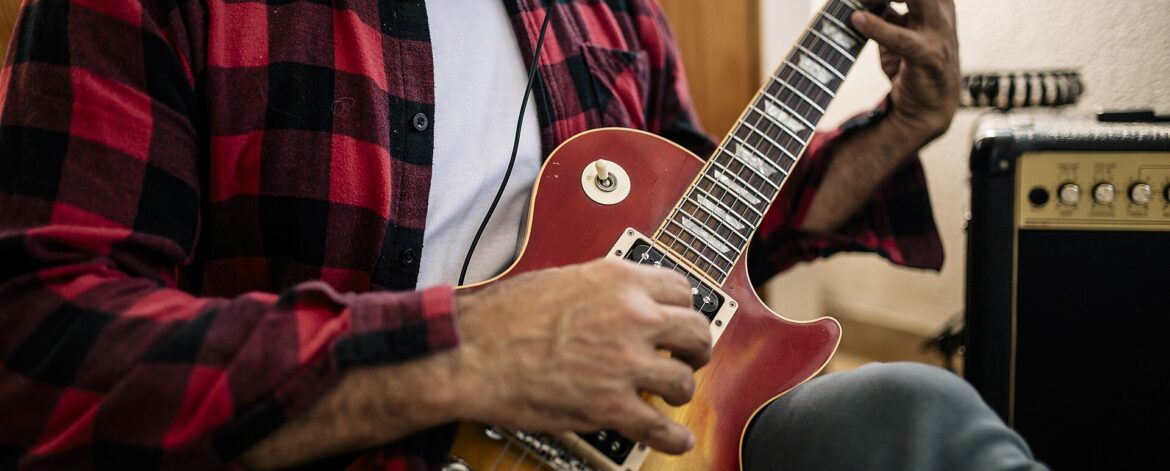
What time can I play music at home? It is one of the most common questions we hear from students who live in units, share a wall, or have a teenager with a new amp. The honest answer is that it depends on where you live: each state and territory sets its own rules for musical instruments at home, and a few have no set hours at all. This guide brings the official hours for guitar practice into one place, with a checker that tells you whether your time is inside them, a quiet practice plan, and a polite note for neighbours.
Quick answer
There is no single national curfew. NSW, Victoria and Tasmania set hours in law, WA allows one hour a day of louder practice in set hours, the ACT uses noise level limits, the NT EPA recommends hours, and Queensland and South Australia leave it to police to judge excessive noise. Use the checker below for your state, day and time. In every state, noise that is too loud can still be a problem inside the hours, and a headphone setup works at any hour. Hours checked against official pages on 20 November 2026.
What time can I play music at home?
Most of the rules have the same shape. They name musical instruments and amplified sound equipment, and they say when that noise should not be heard inside a habitable room of a neighbour’s home, such as a bedroom or living room. So the real test is not whether you are playing, but whether a neighbour can hear it indoors at a restricted time. An unplugged electric at low volume and a valve amp through a 2 x 12 cabinet are very different situations under the same rule.
This is general information, not legal advice. It summarises official state and territory pages as they read on 20 November 2026. Your local council, your lease, or your strata or body corporate rules can add their own expectations, so check those too, and always go back to the official source if the stakes are high.
How the guitar noise rules checker works
Pick your state or territory, the day and the time, and tick the public holiday boxes if they apply. The answer to what time can I play music at home then appears with the hours for that day, the rule behind it, and a link to the official page. “Use my clock now” fills in the day and time from your device. The checker remembers your state on your device only; nothing is sent anywhere.
Public holidays matter. In NSW and the NT, the late finish applies on a Friday, a Saturday and the day before a public holiday, so a Wednesday before a public holiday runs to midnight. In Victoria, a public holiday follows the Saturday hours. Tasmania and WA treat public holidays like Sundays.
Can I play guitar now? Noise hours checker
Pick your state or territory, the day and the time. The checker shows the official hours for musical instruments at home, whether your time falls inside them, and the source. Rules checked on 20 November 2026. Your state is remembered on this device only.
Hours by state and territory, with dated official sources
Here is how each state answers what time can I play music at home, as the official pages read when we checked on 20 November 2026. “Allowed” means the hours when instrument noise may be heard in a neighbour’s habitable room; even then it must not be offensive or unreasonable.
| Where | Musical instruments at home | Official source (checked 20 Nov 2026) |
| NSW | Not before 8am or after 10pm on most days; not before 8am or after midnight on a Friday, Saturday or the day before a public holiday. | NSW EPA (Noise Control Regulation 2026) |
| Victoria | Prohibited Monday to Thursday before 7am or after 10pm; Friday before 7am or after 11pm; Saturday and public holidays before 9am or after 11pm; Sunday before 9am or after 10pm. | EPA Victoria, Annoyed by noise? (Environment Protection Regulations 2021) |
| Tasmania | Permissible Monday to Thursday 7am to 10pm; Friday 7am to midnight; Saturday 9am to midnight; Sunday and public holidays 10am to 10pm. | EPA Tasmania |
| WA | An instrument may go over the assigned noise levels for no more than one hour a day, played reasonably, between 7am and 7pm Monday to Saturday or 9am and 7pm on Sundays and public holidays. Otherwise it must meet the assigned levels. | WA Government, regulation 14 fact sheet |
| ACT | No instrument specific hours. Residential zone limit 45 dB(A) from 7am to 10pm Monday to Saturday and 8am to 10pm Sundays and public holidays; 35 dB(A) at other times; 5 dB(A) lower in units and townhouses. | Access Canberra, noise standards |
| NT | Recommended (not fixed in law): not heard before 8am or after 10pm on most days, or before 8am or after midnight on a Friday, Saturday or the day before a public holiday. NT Police can act on music using the undue noise test. | NT EPA, neighbourhood noise factsheet |
| Queensland | No set hours. Instrument noise is not handled under the Environmental Protection Act nuisance provisions; complaints go to Queensland Police. | Queensland Government fact sheet |
| South Australia | No set hours. Domestic noise that is mainly music or voices, including musical instruments, goes to SAPOL rather than council. | EPA South Australia |
NSW in more detail
If you searched for noise hours musical instruments NSW, the NSW EPA table says musical instruments and electrically amplified sound equipment should not be heard in a residential room of a neighbour’s home before 8am and after midnight on any Friday, Saturday or the day before a public holiday, and before 8am and after 10pm on any other day. Councils and police can still act on offensive noise outside those times. The EPA lists a $400 fine for an individual who keeps making noise after a warning.
Darwin and the NT
In the NT, the hours above come from the NT EPA’s neighbourhood noise factsheet, which calls them recommended prohibited times. For music, the factsheet says NT Police can have it turned down or off under the undue noise test in the Summary Offences Act. For an ongoing dispute with a neighbour, the Community Justice Centre offers free mediation on 1800 000 473. In a Darwin build up, with windows open and air con running, sound travels further than you think, so close up before you turn up.
Units, apartments and renters
In a unit, what time can I play music at home is only half the question; how loud is the other half. Shared walls change everything. The ACT is the only place in our table that writes this into the numbers, with a limit 5 dB(A) lower for units and townhouses, but the same logic applies everywhere: the closer your neighbour, the more likely they can hear you indoors. Guitar practice neighbours notice most is low end through floors and walls, so an amp sitting on a timber floor is the worst case.
- Set up against an outside wall, not one you share with a bedroom next door.
- Lift a small amp off the floor onto a stand or a chair, and put a rug under you.
- Close windows and doors, and turn the bass control down before the volume.
- Read your lease and any strata or body corporate by laws. They can be stricter than the state hours, and for tenancy questions your state’s tenancy authority is the place to ask.
Quiet practice options that work at any hour
In our 20 years of teaching, we have taught plenty of students in units and busy family homes, and the ones who keep progressing are the ones who set up a quiet option they can use any night, rather than waiting for the right hours. A good quiet setup also takes the stress out of asking what time can I play music at home, because the answer becomes “any time, through headphones”. Keep headphone volume sensible too; our hearing protection guide shows how loud is too loud.
- Headphone amp. A small unit that plugs straight into an electric guitar and drives headphones. Cheap and simple.
- Modeller or multi effects with a headphone output. More sounds, and many have drum patterns built in.
- Audio interface and amp software. If you already have a computer, our guide to a home recording setup for guitar covers interfaces and free amp simulators.
- Unplugged electric. Quiet enough for most late chord and scale work, though not silent.
- Acoustic at night. Play with your fingers or a thin pick and a lighter touch. Some makers sell silent or travel guitars with a headphone output. A soundhole cover mainly reduces feedback, so do not expect it to make an acoustic quiet.
No mute or setup makes you inaudible through a thin wall, so use the quiet options for late sessions and save full volume for the allowed hours. Headphone practice still counts: our looper pedal practice exercises and drum loop practice both work well through headphones, and a structured guitar practice routine helps you use the loud hours well.
A polite note you can send to neighbours
A short, friendly note before there is a problem does more than any regulation, and it lets your neighbours answer what time can I play music at home for their own building. Edit this to suit, and leave it in their letterbox or send it through your building manager.
Hi, I’m [name] from [unit or house number]. I’m learning guitar and usually practise between [times] on [days], and I use headphones outside those hours. If you can ever hear it at a bad time, for example a baby’s nap or a night shift, please let me know on [phone or email] and I’ll work around it. Thanks, [name]
Keep your promise once you have made it. If you say you finish at 9pm, finish at 9pm, even if your state’s hours run later.
If you already have a complaint letter
Stay calm, and do not argue in the stairwell. Then work through these steps:
- Check the actual rule for your state and day with the checker, and read the official page it links.
- Look at what the complaint says. Is it about the time, the volume, or the low end coming through the floor?
- Switch late practice to headphones straight away, and move the amp off the floor and away from shared walls.
- Keep a simple practice log: date, start and finish time, and what you used (amp, headphones, unplugged). The free PDF has one.
- Reply politely in writing with the hours you will keep. If it does not settle, use the official paths: council, police or your building manager, and in the NT the Community Justice Centre for free mediation.
Download the quiet practice plan
The free PDF puts this on two printable pages: the state and territory hours with their sources and the date we checked them, a quiet practice setup checklist, where to set up in a flat or unit, the neighbour note template, and a two week practice log you can show if anyone asks.
Download the free Quiet Practice Plan (PDF)
FAQ
Does the time change on weekends and public holidays?
Yes, in most states with set hours. NSW and the NT allow a later finish on Friday, Saturday and the day before a public holiday. Victoria has later starts on weekends and public holidays, and Tasmania starts at 10am on Sundays and public holidays. WA uses 9am to 7pm on Sundays and public holidays. Tick the public holiday boxes in the checker and it adjusts.
Is an unplugged guitar treated the same as an amplifier?
The rules are about musical instruments, so an acoustic or unplugged electric is covered too. What matters is whether the sound can be heard in a neighbour’s habitable room at a restricted time, or is unreasonable. An unplugged electric is much quieter than an amp, but it is not silent through a thin wall.
What are the noise hours for musical instruments in NSW?
For noise hours musical instruments NSW residents need, the NSW EPA says instruments should not be heard in a neighbour’s residential room before 8am or after 10pm on most days, and before 8am or after midnight on a Friday, Saturday or the day before a public holiday. We checked this on 20 November 2026 under the Noise Control Regulation 2026.
What if my lease or strata rules are stricter than the state hours?
Treat the stricter rule as the one you live by. A lease or strata by law can set expectations about noise in the building, and breaking them can cause tenancy or strata problems even when you are inside the state hours. For tenancy questions, contact your state’s tenancy authority.
Can I practise with headphones or a mute after the usual hours?
Headphone practice through a headphone amp, modeller or interface is the practical answer to what time can I play music at home after hours, because nothing goes into the room except the sound of the strings. A practice mute or unplugged guitar is quieter, not silent, so keep it light late at night.
What should I do if a neighbour has already complained?
Check your state’s hours, switch late sessions to headphones, move the amp off the floor and away from shared walls, keep a practice log, and reply politely with the hours you will keep. If it still does not settle, use council, police, your building manager or a mediation service rather than arguing.
Keep playing, and keep the peace
So, what time can I play music at home? Inside your state’s hours, at a volume your neighbours cannot hear indoors at night, and any time at all through headphones. Set up a quiet option once and you will never lose a practice session to the clock. If you play in public too, our guide to the busking permit rules in Australia covers the street side. For help with your playing, we offer guitar lessons in Darwin, and our online beginner course works well through headphones at your own pace.
Sources (all checked 20 November 2026)
- NSW EPA. Preventing neighbourhood noise (Protection of the Environment Operations (Noise Control) Regulation 2026 time restrictions). NSW EPA
- EPA Victoria. Annoyed by noise? Prohibited times table (Environment Protection Regulations 2021). EPA Victoria
- EPA Tasmania. Residential noise and hours of use. EPA Tasmania
- WA Government. Noise regulations fact sheet: regulation 14, residential equipment. WA Government
- Access Canberra. Noise standards. Access Canberra
- NT EPA. Neighbourhood noise factsheet. NT EPA
- NT Government. Contact the Community Justice Centre. NT.GOV.AU
- Queensland Government. Noise regulation under the Environmental Protection Act 1994 (fact sheet). Queensland Government
- EPA South Australia. Neighbourhood nuisance and noise. EPA SA
Image credits
Musician plays electric guitar indoors while wearing headphones in a cozy, well lit room, by Shixart1985, Wikimedia Commons, CC BY 2.0. Quiet practice plan preview by Maxim’s Guitar Workshop.