
Guitar practice with drum loops is one of the easiest ways to make your timing feel like real music instead of a lonely click. In this guide you will learn when to use a loop, when to simply tap your foot and count, which grooves to choose for each style, and how to check your timing with a phone recording. There is a free printable Groove Practice Sheet at the end.
Quick answer
Pick a free drum loop in the style you want to play, start slow, and play your riff over it until it is clean three times in a row, then raise the tempo a little. Mix this with foot tapping and counting aloud so you can keep time without any backing. Record yourself to check you are not rushing or dragging.
Click, loop or tap: what each trains
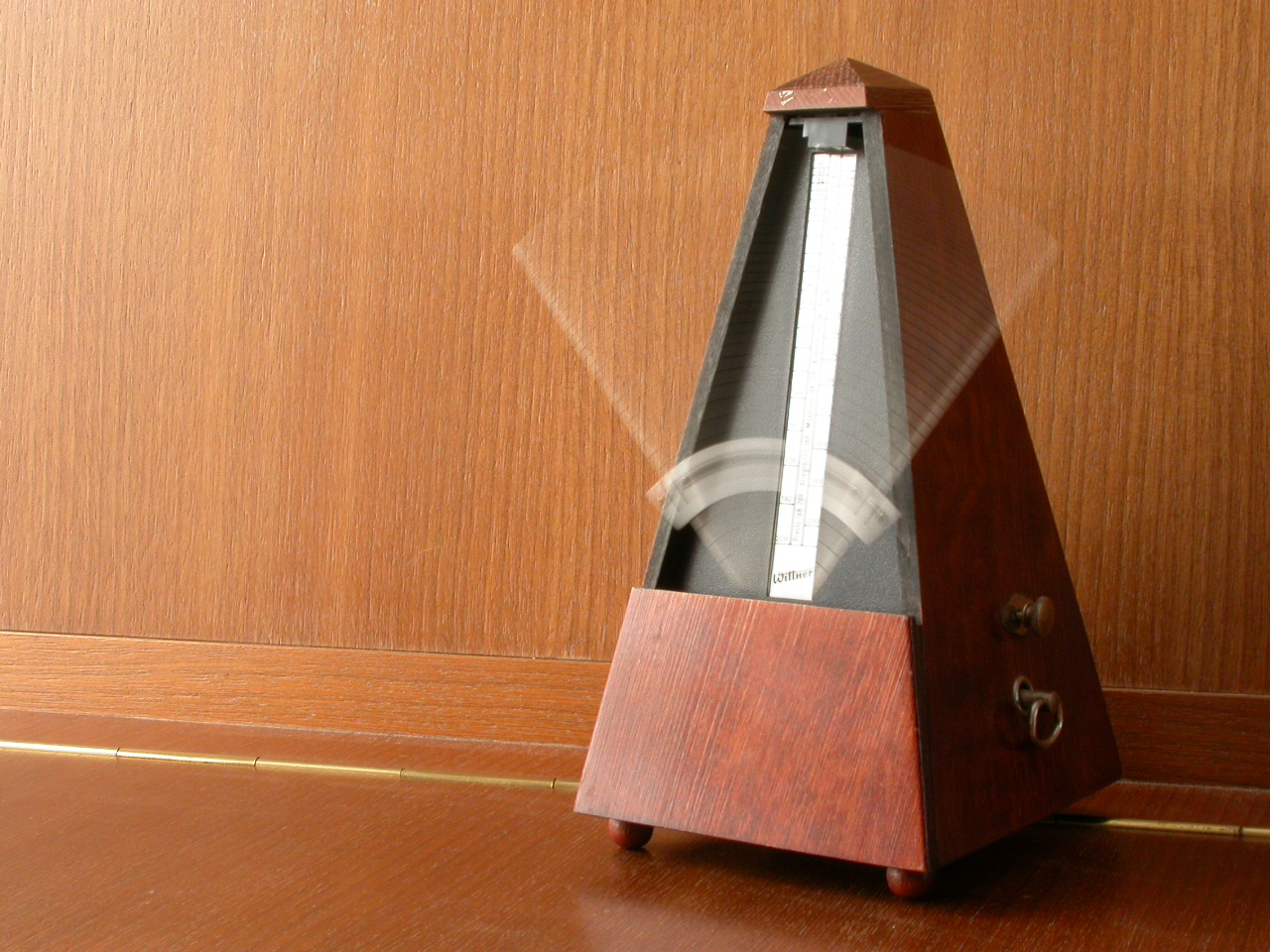
A metronome click gives you a bare pulse. It is useful, but as we explain in why we do not lean on a metronome when practising guitar, it can also become a crutch. A drum loop adds feel: the kick, snare and hi hat tell you where the strong beats are and whether the groove is straight or swung. Foot tapping trains your own internal clock, which is what you rely on when nobody else is playing.
Guitar practice with drum loops sits between the two. You still have an outside reference, but it sounds like a drummer, so you learn to lock in with a band. Research on tapping in time backs up the idea that steady time is a trainable skill. A review by Bruno Repp found that practised musicians tend to tap with less timing variation than novices, around 2% of the beat interval in many studies, with percussionists often tighter still (Repp, 2005, Psychonomic Bulletin and Review). Results vary between studies, so treat this as a general trend rather than a promise.
| Tool | What it trains | Best for |
|---|---|---|
| Click | Bare pulse and tempo accuracy | Checking a precise tempo, technical drills |
| Drum loop | Groove, feel, locking with a band | Riffs, strumming patterns, songs |
| Foot tap and count | Your internal clock | Playing alone, busking, writing |
If the terms beat, tempo and pulse feel fuzzy, read our guide to the difference between beat, meter, tempo and pulse first.
Foot tapping and counting aloud
Foot tapping timing on guitar is the skill most beginners skip, and it shows. Tap your heel or toe on every beat and count “1 2 3 4” out loud for two bars before you play. For eighth notes count “1 and 2 and”, and for sixteenths count “1 e and a”. In our teaching experience, counting aloud is the fastest way to notice exactly where you rush, usually on chord changes or right after a fill.
Once tapping feels automatic, try practice without a metronome for short spells: play four bars with a loop, mute it for four bars while you keep tapping, then bring it back and see if you are still together. This is the heart of the tap test on the free sheet.
Picking drum beats for guitar practice by style
The groove you choose should match the music you want to play. Here are some common drum beats for guitar practice, with rough tempo ranges. The tempos are estimates to start from, not rules.
| Style | Typical tempo (BPM, estimate) | What to listen for |
|---|---|---|
| Rock straight 8ths | 80 to 140 | Snare on 2 and 4; match your downstrokes to the hi hat |
| Shuffle | 70 to 130 | Swung triplet feel; long short eighths |
| Half time | 60 to 90 feel | Snare only on beat 3; keep your eighths even |
| Metal gallop | 100 to 180 | Eighth plus two sixteenths; tight palm mutes |
| Metal blast beat | 160 to 240 | Very fast; start at half speed |
A shuffle is built on triplets, so our lesson on understanding triplets in music will help. Funk and reggae loops push accents off the beat, which ties in with our guide to the basics of syncopation. For metal players, guitar practice with drum loops is a natural fit for gallops and palm muted riffs, and it slots straight into our rock and metal practice routine.
Free sources for guitar practice with drum loops
You do not need to pay for loops, and you should avoid ripped tracks or loops of unclear origin. These options are free and legal to use for practice:
- GarageBand Drummer: a free Apple app on iPhone, iPad and Mac with virtual drummers you can set to any style and tempo.
- Hydrogen: a free, open source drum machine (GPL licence) for Windows, macOS and Linux. You can program your own patterns.
- Freesound: a library of Creative Commons sounds, including many drum loops. Licences vary between CC0, attribution and non commercial, so check each loop and credit the creator if you publish anything with it.
- Audacity Rhythm Track: a free tool in Audacity that generates a click or simple rhythm track, handy as one of the metronome alternatives for guitar when you want accents on chosen beats.
Most of these can also slow down or speed up without changing the feel, which makes them ideal for the tempo ladder below.
Tempo ladder method
The tempo ladder is simple. Pick one riff and a loop. Start at a tempo where you can play it perfectly, even if it feels slow. When you play it cleanly three times in a row, go up by about 5 to 10 BPM. If it falls apart, drop back two steps and rebuild. Write each rung on the sheet so you can see progress across the week.
Keep each ladder short, around 10 minutes, and use guitar practice with drum loops for the first half and foot tapping alone for the second. Teacher view: students who swap between the two tend to hold time better when the backing disappears, because they are not leaning on any single reference.
Record and check your timing
Your ears lie while you are playing, so guitar practice with drum loops works best when you check it. Record a take on your phone, then listen back with the loop at the same tempo. Notice where you pull ahead or fall behind. Common trouble spots are chord changes, the first beat after a rest and fast picking runs. Write them in the log on page 2 of the sheet, and pick one fix for your next session.
Recording is also a good habit when you learn full songs; our guide on how to learn a song on guitar uses the same idea, and so does our lesson on how to transcribe a guitar solo by ear.
Free practice sheet
The Groove Practice Sheet is a two page A4 printable to support guitar practice with drum loops. Page 1 has a tempo ladder grid, a groove menu and a counting warm up. Page 2 has an 8 bar tap test with a score box, a record and check log, and QR codes for the free loop sources above.
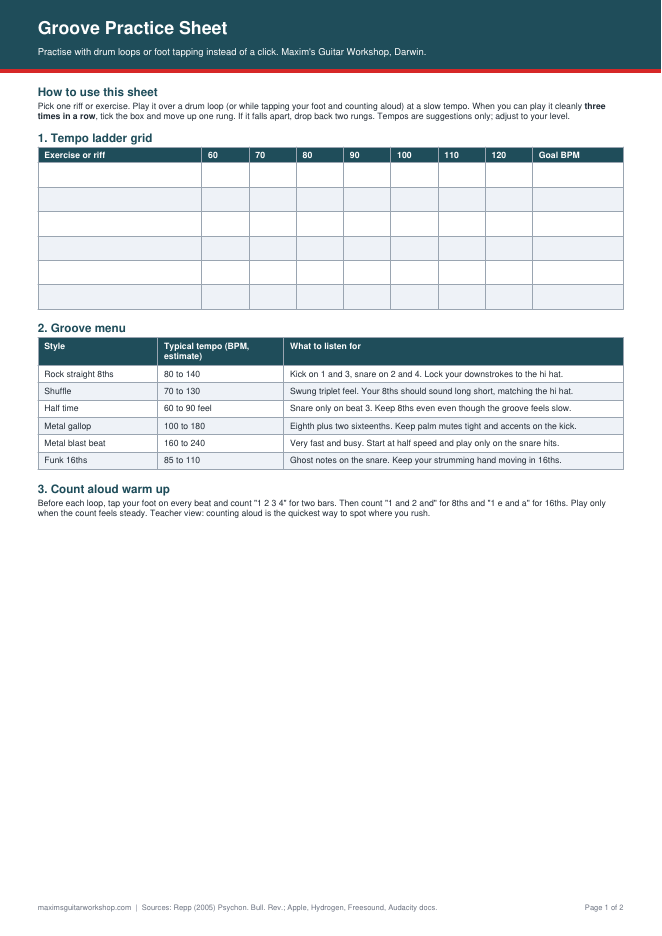
Download the free Groove Practice Sheet (PDF)
If you would like guided lessons that build timing, rhythm and technique step by step, take a look at our online beginner course.
FAQ
Is guitar practice with drum loops better than a metronome?
Not better for everything. A click is great for checking exact tempo, while loops teach groove and feel. Most players benefit from using both, plus foot tapping.
Are free drum loops legal to use?
Loops from apps like GarageBand and Hydrogen are fine for practice. On Freesound, check each loop’s Creative Commons licence, and credit the creator if you publish a recording that uses it.
What tempo should I start at?
Start where you can play the part perfectly, often 60 to 80 BPM for new material. Speed comes from clean repetitions, not from forcing a fast tempo.
How long should I spend on timing each day?
As an estimate, 10 to 15 minutes of focused guitar practice with drum loops and tapping is plenty for most beginners, inside a longer session.
Can I practise timing without any backing at all?
Yes. Tap your foot, count aloud and record yourself. Checking the recording against a loop afterwards shows how steady you really are.
Image credits
Drum kit: Mostafameraji, Wikimedia Commons, CC BY 4.0. Metronome: Paco from Badajoz, España, Wikimedia Commons, CC BY 2.0. Groove Practice Sheet preview: Maxim’s Guitar Workshop.