Musician hearing protection is the one piece of gear most guitarists buy last, usually after their ears have already rung for a day. A band rehearsal can easily be louder than a lawnmower, and you might be in that room for two or three hours, then play a gig on Saturday and practise with headphones in between. In 20 years of rehearsal rooms and stages, we have seen plenty of players notice the damage only when it was too late to undo. The free calculator on this page adds up your week and shows how close you are to the 85 dB daily limit, and how much earplugs would help.
Quick answer
Safe Work Australia’s workplace standard is 85 dB averaged over eight hours, and NIOSH in the US uses the same 85 dB limit. Every 3 dB louder halves the safe time, so 94 dB uses up a whole day’s limit in about an hour, and 100 dB in about 15 minutes. NIOSH measured school band rehearsals at 91 to 97 dB(A). For most guitarists, musician hearing protection means turning down, taking quiet breaks and wearing well fitted earplugs at every loud rehearsal and gig. Checked 20 November 2026.
This is general information, not medical advice. If you have ringing, muffled hearing or pain in your ears, see an audiologist or your GP.
How loud is your band, and why musician hearing protection matters
Noise damage to hearing usually builds up slowly and does not hurt, so it is easy to ignore. A NIOSH feature on musicians notes that most musicians do not seek help until they notice other symptoms, such as ringing or buzzing in the ears (tinnitus), distorted sounds, hearing the same note at different pitches, or everyday sounds becoming painfully loud.
How loud is band rehearsal? It depends on the room, the drummer and the amps, but it is often well above 85 dB. NIOSH measured sound levels of 91 to 97 dB(A) in school music classes and indoor marching band rehearsals, sometimes above 100 dB(A), and a band director’s average across six sessions was 92 dB(A). A rock band in a small room can be just as loud or louder, and guitarists often stand right next to the cymbals and their own amp.
Our guide to guitar injuries and how to prevent them covers the research on hearing loss in rock musicians. This page is about musician hearing protection in numbers: how much noise you get each week, and what would bring it down.
How the hearing safety calculator works
Add each loud thing you do in a normal week: home practice (see what time you can play guitar at home), band rehearsal, gigs, headphones or anything else. For each one, set the level in decibels, the hours per day, your earplugs, and tick the days you do it. Press Work out my week to see each day’s noise dose as a percentage of the daily limit, first without earplugs, then with the earplugs you chose, so you can see what your musician hearing protection is actually doing.
The starting levels are rough guesses, not measurements, so replace them with your own readings if you have a sound meter. A phone app is better than guessing, but NIOSH notes that sound measurement apps can give a measure of area noise but may not meet the requirements for a formal measurement. Your week saves only in this browser on this device. Nothing is sent to us.
Weekly noise dose calculator
Add each loud thing you do in a normal week, set its level, hours and earplugs, and tick the days. The levels start as rough guesses: replace them with your own sound meter readings if you have them. Your week saves only in this browser.
Add an activity:
Typical levels: home practice, rehearsal, gigs, headphones
Every band and room is different, so measure if you can. These are the starting values the calculator uses, and where they come from:
- Home practice: 80 dB. Our guess for a small amp at a moderate volume. A cranked practice amp in a small room can be much louder.
- Band rehearsal: 94 dB. The middle of the 91 to 97 dB(A) range NIOSH measured in school band rehearsals. Small rock rooms can be louder.
- Gig on stage: 100 dB. Our guess for a loud pub or club stage. NIOSH reported sound levels above 100 dB(A) at times even in school rehearsals.
- Headphones: 85 dB. A placeholder only. Headphone levels vary hugely with the volume setting, so turn it down if in doubt.
Stage volume is often driven by the loudest amp in the room. If your amp only sounds right when it is cranked, our guide to understanding tube amps explains why, and a lower wattage amp or an attenuator can help you get that tone at a lower level.
The 85 dB over 8 hours standard, in plain words
Safe Work Australia says workers must not be exposed to noise above 85 decibels, averaged over eight hours. The limit trades level against time: Safe Work Australia’s own example is that 91 decibels for two hours carries the same risk as 85 decibels for eight hours. It also sets a peak limit of 140 decibels, because a single sound that loud could damage hearing instantly (checked 20 November 2026).
NIOSH uses the same 85 dB(A) over 8 hours, with a 3 dB exchange rate: every 3 dB louder halves the allowed time. Its table runs like this:
- 85 dB(A): 8 hours
- 88 dB(A): 4 hours
- 91 dB(A): 2 hours
- 94 dB(A): 1 hour
- 97 dB(A): 30 minutes
- 100 dB(A): 15 minutes
The calculator uses that rule. A dose of 100% means you have had the equivalent of 85 dB for 8 hours that day. These are workplace limits, set for workers exposed over a working life, so treat them as a sensible yardstick for your hobby or gigging rather than a guarantee of safety. Good musician hearing protection aims to keep you comfortably under it. NIOSH notes musicians’ irregular schedules mean the limits may need adapting for them.
Earplugs and how much attenuation might bring you under the limit
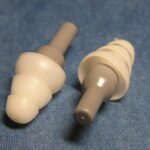
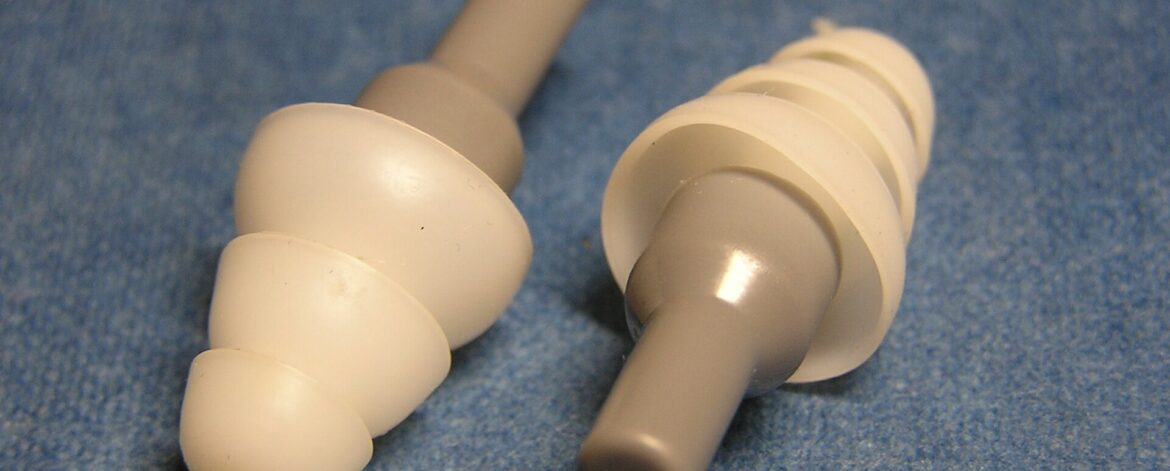
Earplugs for guitarists come in three broad types. Foam plugs are cheap and expand to fit your ear canal once rolled and inserted properly, but many players find the band sounds muffled through them. Pre formed plugs are reusable and easier to fit. Musicians’ earplugs, which NIOSH calls flat attenuation protectors, aim to reduce all frequencies evenly so the music still sounds clear. Audiologists can also make custom moulded ones with interchangeable filters.
How much reduction do you need? NIOSH says most workers need 10 dB or less, and almost any protector, fitted correctly, can give that. It suggests aiming to bring your exposure down to about 75 to 85 dB, and warns against overprotection, because people take plugs out when they cannot hear properly. For a band, that matters: if you cannot hear the singer, you will pull them out.
The catch is fit. NIOSH says research shows most workers get less than half of the noise reduction printed on the packet, and the gap varies with the plug and the shape of your ears. The calculator asks for the real reduction you expect, not the label. If you are unsure, halve the label figure and practise fitting them before the gig.
The results show how many decibels of real reduction would bring your loudest day down to the limit. If that number is small, turning down and well fitted plugs will do it. If it is large, cut the volume and the hours first, then look at better musician hearing protection, such as custom plugs fitted by an audiologist.
Want it on paper? Download the earplug options sheet and rehearsal volume plan (PDF) to keep in your gig bag or pin on the rehearsal room wall.
A rehearsal room volume plan
Earplugs work best alongside a quieter room, because musician hearing protection starts with the volume knob. Agree these with the band at your next session, and add them to the plan from our guide on how to run a band rehearsal:
- Set the level from the vocal. Start with the vocal at a comfortable level, then bring everyone else up to it, not the other way round.
- Point amps at ears. Tilt or raise your amp so you hear it at a lower volume, rather than blasting the backs of your legs.
- Use the quiet tools. Hot rods or brushes for the drummer on new songs, lower amp settings for working out parts, and a full volume run only near the end.
- Take quiet breaks. NIOSH recommends breaks in quiet areas. Step outside the room, not just away from your amp.
- Measure once. Take a phone reading from where you stand during a full song, then put that number into the calculator.
- Plugs in before the first song. Hearing protection only works if it is in for the loud parts, including soundcheck.
For your first shows, pack plugs with your spare strings and leads. Our guide on how to prepare for your first gig has a full gig bag checklist.
FAQ
How loud is band rehearsal?
Often louder than 85 dB. NIOSH measured 91 to 97 dB(A) in school band rehearsals, sometimes above 100 dB(A). A rock band in a small room can be as loud or louder. At 94 dB, a whole day’s limit is used up in about an hour.
What is the best musician hearing protection for guitarists?
The protection you will actually wear, fitted properly. Musicians’ earplugs reduce sound more evenly, so the band still sounds clear, and audiologists can make custom moulded ones. Foam plugs work too if you fit them well. We do not recommend any brand.
Are phone sound meter apps accurate?
They are fine for a rough idea, and better than guessing, but they are not a calibrated meter. Treat the results as a guide.
My ears ring after rehearsal. What should I do?
Ringing or muffled hearing after loud music is a warning sign. See an audiologist or your GP, especially if it does not settle, and protect your ears at every loud session from now on. NIOSH suggests musicians get a hearing test every year.
Where is my week stored?
Only in your browser on this device. Nothing is sent to us. Clear it any time with the Clear button.
Playing guitar is good for you, as our post on the health benefits of playing guitar shows, and musician hearing protection keeps it that way for decades. Add up your week, sort out your plugs, and turn the room down a notch. If you are just starting out, our online beginner course builds good habits from the first lesson, including sensible practice volume.
Sources (checked 20 November 2026)
- Safe Work Australia, Noise (85 decibels over eight hours, 91 decibels for two hours example, 140 decibel peak)
- NIOSH, Understanding Noise Exposure Limits (85 dB(A), 3 dB exchange rate, time table)
- NIOSH, Hearing Loss Strikes a Sour Note for Too Many Musicians and Turn it Down (rehearsal levels, symptoms, recommendations)
- NIOSH, Provide Hearing Protection and Understand Noise Exposure (types, 10 dB, overprotection, apps)
- NIOSH, Measuring How Well Earplugs Work (less than half the labelled rating)
Featured image: “Musicians earplugs” by Light current, Wikimedia Commons, licensed CC BY 2.5.