
Guitar care in dry weather is about one thing above all: stopping the wood from drying out faster than it can cope. Cold air holds little moisture, and heaters, fireplaces and air con pull indoor humidity down further. Solid wood guitars shrink as they dry, which can mean sharp fret ends, buzzing and, at worst, cracks. A hygrometer, a closed case and a guitar humidifier prevent most of it.
This guide covers what dry air and cold do to a guitar, the warning signs, the types of humidifier and how to use them safely, heating traps, bringing a cold guitar inside, and strings and tuning in winter. It pairs with our guitar care in humid weather guide, and at the end you can download our free Dry Weather Guitar Care Log, a two page printable for low readings, cold arrivals and cracks.
Quick answer
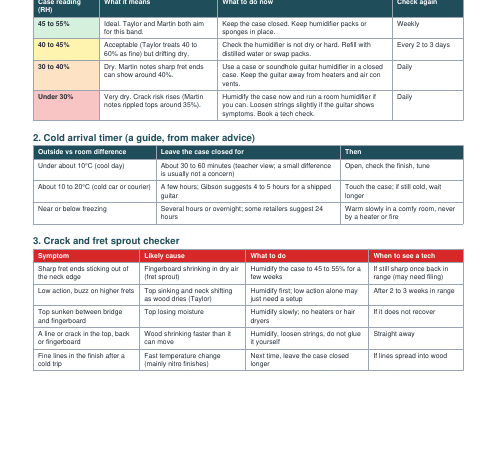
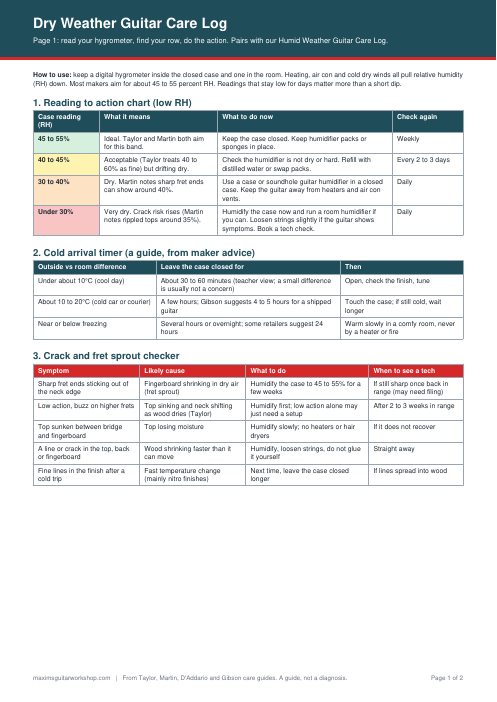
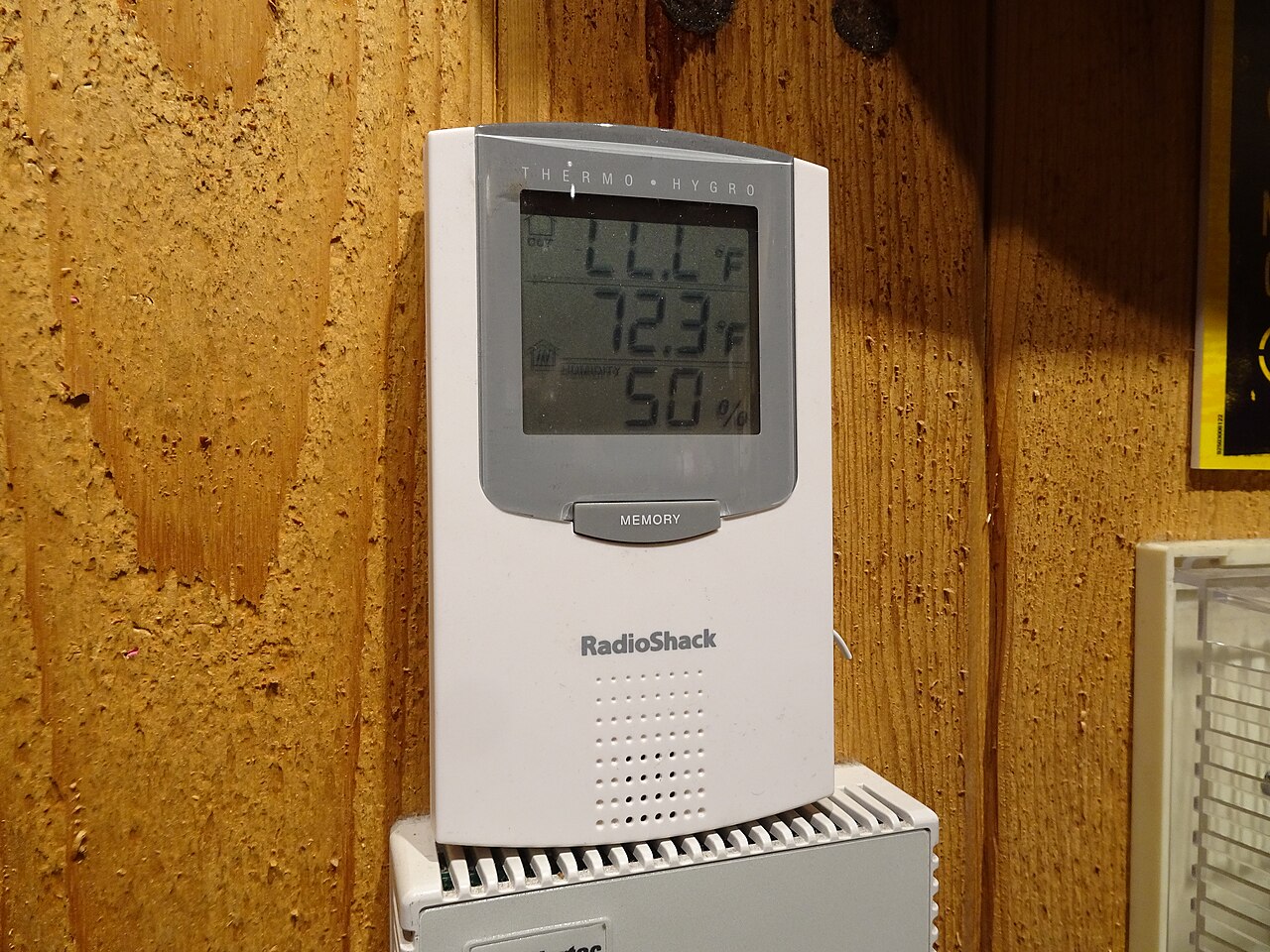
For guitar care in dry weather, aim for 45 to 55 percent relative humidity, the range Taylor Guitars and C. F. Martin recommend. Keep the guitar in a closed case with a guitar humidifier or two way packs, check a hygrometer, and keep it away from heaters and vents. After a cold trip, leave the case closed until it warms up. Act when readings stay under 40 percent for days.
Guitar care in dry weather: what dry air and cold do
Wood gains and loses moisture with the air around it. Martin’s Care and Feeding guide recommends 45 to 55 percent relative humidity (RH) at about 22 to 25 degrees Celsius. Below that, the thin top, back and fingerboard shrink, while the frets and glue joints do not shrink with them. Taylor Guitars warns in its article on the symptoms of a dry guitar that a guitar kept well under that range is in danger of cracking.
Heating makes it worse. Taylor explains that warming a room forces its relative humidity down, so a heated house in a cold, dry winter can read far lower than people expect. Jim D’Addario wrote on the D’Addario blog that winter RH in his own home can fall under 20 percent. D’Addario’s humidification guide calls humidity problems the number one cause of guitar repairs.
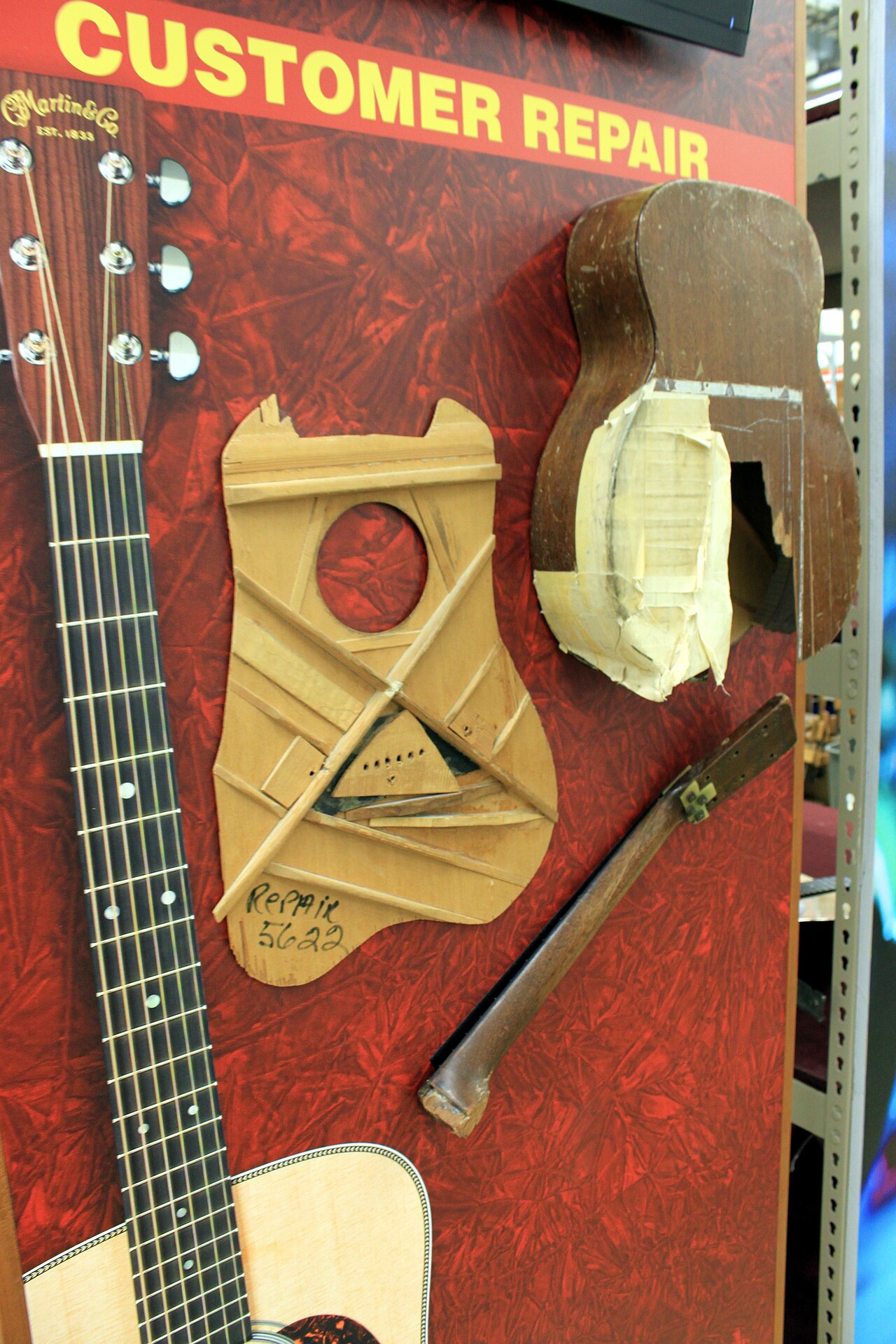
Cold adds a second risk: fast temperature change. Martin notes that rapid change or extreme cold can crack the finish, and Taylor’s page on how to treat an extremely cold guitar says cold can crack wood, weaken glue and harm electronics.
Signs of a dry guitar
Taylor and Martin list similar symptoms. One sign on its own may mean nothing, but several together, in a dry season, point to a guitar that needs moisture. Martin’s humidity bulletin says sharp fret ends can appear around 40 percent and tops can look rippled around 35 percent.
- Sharp fret ends (fret sprout). The fingerboard shrinks and the metal frets poke out at the edges of the neck. Your hand catches on them as you slide.
- Low action and buzz. Taylor notes buzzing on the higher frets and a thinner, brighter tone. Low action alone may just need a setup.
- A sunken top. The top dips between the bridge and fingerboard, and the back can flatten.
- Cracks. A fine line in the top, back or fingerboard, often running with the grain. Martin mentions fingerboard extension cracks near the 12th or 14th fret.
- A lifting bridge. A gap at the back edge of the bridge means the glue joint is under stress. Loosen the strings and see a tech.
Good guitar care in dry weather means catching these early. Taylor’s spot and fix a dry guitar page says frets may stay sharp even after the guitar recovers and may need filing by a tech. Never glue a crack yourself; humidify first, then get it looked at.
Humidifiers: soundhole, case, two way and room guitar humidifier options
There are four main kinds of guitar humidifier, and each suits a different job. All of them work best inside a closed case, because a small space is far easier to keep steady than a whole room.
Soundhole humidifiers
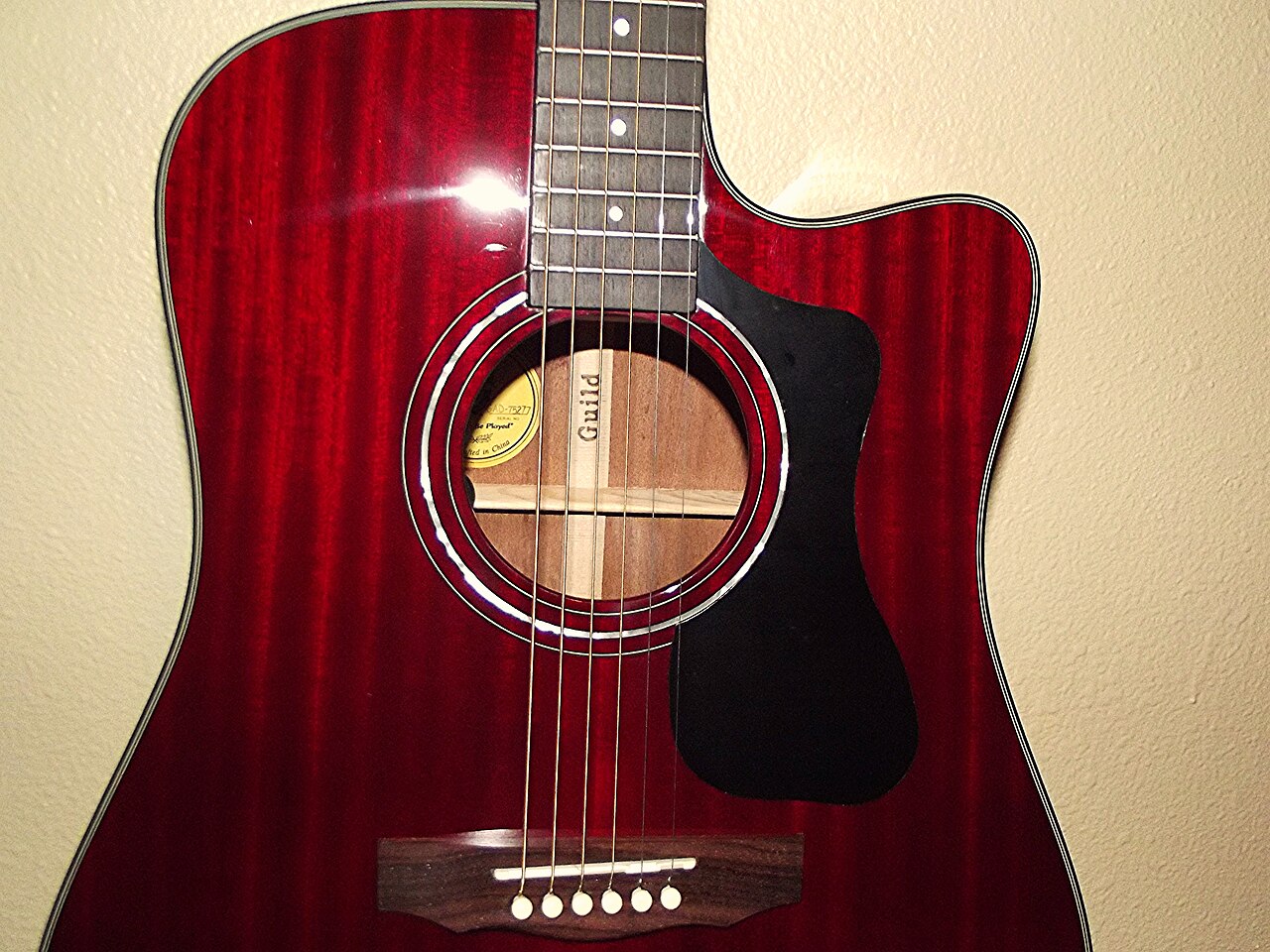
These hang between the strings over the soundhole and release moisture inside the body, where the wood needs it most. D’Addario’s Humidifier Pro page says a sponge lasts from a couple of days to a couple of weeks, to use distilled water, and to stop using it if the case reads above 60 percent. Taylor’s guide to using a guitar humidifier advises against types that seal off the soundhole unless a second one sits near the headstock.
Case humidifiers
These sit in the headstock area or accessory pocket and keep the neck and fingerboard from drying. Taylor notes a humidifier does not have to sit in the soundhole; an open area of a closed case also works. Pairing a case unit with a soundhole unit covers both the body and the neck.
Two way packs
Two way packs add or absorb moisture to hold a set level. D’Addario says its packs target 45 to 50 percent, and Taylor says they bring a guitar to about 47 percent. Taylor adds that you may see a change within 3 days, that full recovery can take a few weeks, and that a stronger humidifier is worth trying if nothing changes in 10 days. D’Addario’s Which Humidipaks guide suggests Restore packs when the case reads 40 percent or lower.
Room humidifiers
A room humidifier helps if you keep several guitars on stands. Run it with a hygrometer, aim for the 45 to 55 percent band, and keep the mist away from the guitars. Over humidifying is possible, so Taylor suggests checking daily at first.
Heating, fireplaces and air con traps
Heat sources are the classic winter mistake. Martin warns against storing a guitar near heaters, radiators or fireplaces, and against exterior walls in winter, which can be colder and drier. Taylor makes the same point about fireplaces when warming a cold guitar.
- Do not hang a guitar above a heater, fireplace or ducted heating vent.
- Keep it out of the path of reverse cycle air con on heat mode, which dries air quickly.
- Avoid sunny windows; direct sun heats the case and the guitar.
- Never leave it in a car overnight in winter, or in summer.
In our teaching experience, the guitar that cracks is often the one left on a wall stand in a heated lounge all winter. A closed case in a cooler interior room is a simple fix, and the core of guitar care in dry weather.
Bringing a cold guitar inside
When a guitar arrives cold, from a car, a courier or an outdoor gig, leave it in its closed case so it warms slowly. Taylor says to let it come up to temperature in its case in a comfortable room, not next to a heater or fire. The Gibson Gazette suggests leaving a shipped guitar in its box for 4 to 5 hours, then touching the case and waiting longer if it still feels cold.
Advice on timing varies, so treat these as guides. Southern Vintage Guitars, a retailer, suggests keeping the case closed for 24 hours after a very cold delivery, while noting a small temperature difference is probably not a concern. Patience is part of guitar care in dry weather, and our printable log includes a cold arrival timer that sums this up.
Finish checking
Gibson notes quick temperature changes can crack nitrocellulose finishes, giving fine lines called finish checking. Taylor says this advice mainly applies to nitro finishes and that its own guitars have used polyester or polyurethane finishes since 1995. If you do not know your finish, waiting is the safe choice. For more on how build affects a guitar, see guitar design and its effect on the tone.
Strings and tuning in winter
Cold strings contract and a drying neck moves, so expect to retune more often in winter, especially after moving between rooms. Let the guitar settle for a few minutes before tuning. If you tune by ear, our guide on how to tune a guitar by ear walks you through it.
Martin recommends loosening the strings if you store a guitar for a long time. As a teacher view, there is no need to detune a guitar you play every week; keeping it humidified matters more. If you see a crack or lifting bridge, loosen the strings straight away to reduce tension until a tech has a look.
Solid wood acoustics are the most sensitive. Laminate acoustics and solid body electrics cope better, but their fingerboards can still shrink and sprout frets. Our overview of the different kinds of guitars explains how they differ, so even an electric benefits from guitar care in dry weather.
Free dry weather care log
We wanted one sheet that turns a low hygrometer reading into an action and also covers cold arrivals and crack checks, so we made one. Page 1 has a reading to action chart for low RH, a cold arrival timer card (a guide based on maker advice) and a crack and fret sprout checker. Page 2 is a 13 week winter log for room RH, case RH, action, fret ends and humidifier refills.
Print it on A4, keep it in your case pocket and fill in one row a week. It pairs with our humid weather log, so you can track your guitar right through the year and make guitar care in dry weather a simple habit.
Download the free Dry Weather Guitar Care Log (PDF)
FAQ
What humidity is too dry for a guitar?
Taylor treats 40 to 60 percent as acceptable and 45 to 55 percent as ideal. Readings that stay under 40 percent for days are a reason to humidify.
Do I need a guitar humidifier in winter?
If your case or room reads under about 40 percent, yes. Use a hygrometer first so you do not over humidify, and stop if the case goes above 60 percent.
How long should a cold guitar stay in its case?
Gibson suggests 4 to 5 hours for a shipped guitar, longer if the case still feels cold. Some retailers suggest 24 hours after freezing conditions.
Can a cracked guitar be fixed?
Usually, by a qualified tech. Humidify the guitar first, loosen the strings and do not glue it yourself.
Why are my fret ends sharp?
The fingerboard has shrunk in dry air. Humidify for a few weeks; if they stay sharp, a tech can file them.
Guitar care in dry weather comes down to steady habits, and playing regularly helps you notice changes early. If you would like a guided start on the playing side, have a look at our online beginner course.
Image credits
Martin customer repair display: Joseph Brent, Wikimedia Commons, CC BY SA 2.0. Acoustic guitar soundhole: rlb9682, Wikimedia Commons, CC BY 2.0. Guitar room humidified in winter: B137, Wikimedia Commons, CC BY SA 4.0. Care log preview: Maxim’s Guitar Workshop.