Bass guitar for beginners in Australia comes down to three things: a comfortable four string bass, a small amp or headphone amp, and a proper setup. On 26 October 2026, a playable new beginner bass cost about A$360 to A$500 at Australian retailers, a practice amp about A$240, and you can start for well under A$700 all up. This guide shows you what to look for, real models with dated prices, how to buy second hand safely, and what to practise in your first month. There is also a free one page buying checklist to print and take to the shop.
If you are still deciding which instrument suits you, our guide to the different kinds of guitars is a good place to start.
What to look for in a first bass
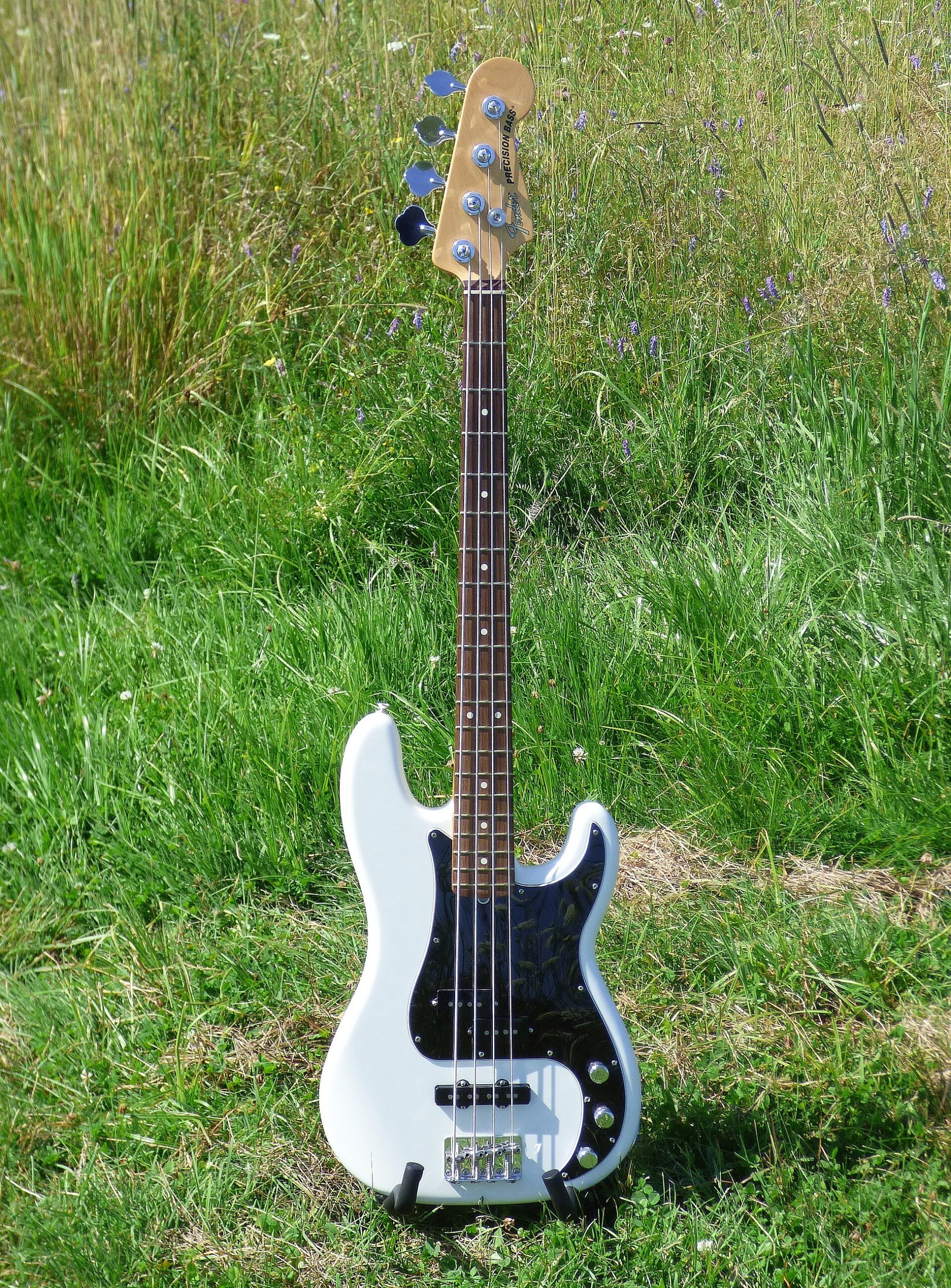
Most beginner basses are now made well enough to learn on. The differences that matter most for a new player are comfort and how easy the bass is to play, not the brand on the headstock.
Scale length: long scale or short scale
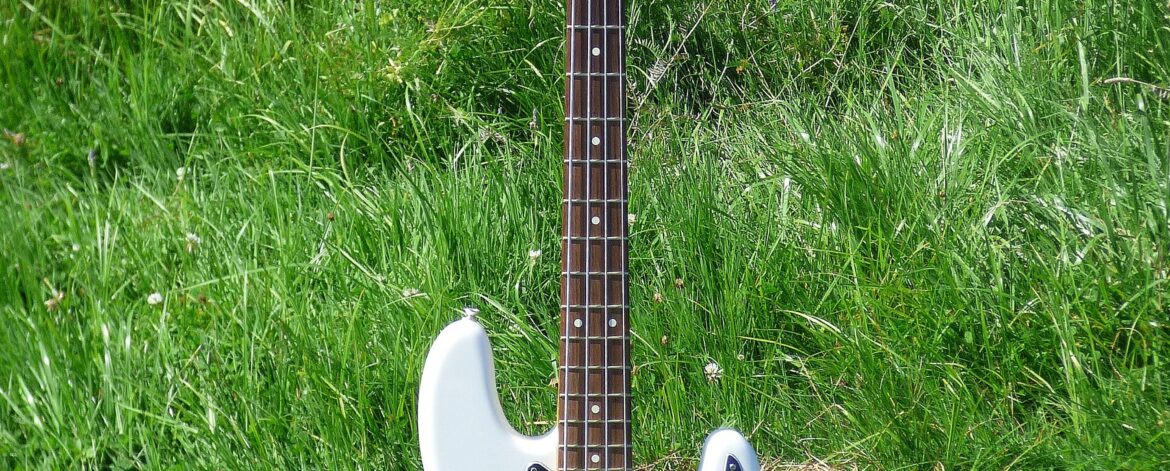
Scale length is the distance from the nut to the bridge. According to Fender, the 1951 Precision Bass set the standard long scale of 34 inches, and short scale basses sit at around 30 inches. A short scale bass has the frets closer together and lower string tension, which makes it easier for smaller hands and shorter arms. The trade off is a looser string feel and a rounder, fatter tone. Long scale is still the most common, and most method books and teachers assume it.
Our honest advice: if you are an adult of average height with average hands, a 34 inch bass is usually fine. If you are a younger teen, have small hands, or found the stretch uncomfortable in the shop, try a short scale before you rule it out.
Four strings to start
A four string bass (tuned E A D G) covers nearly all the songs a beginner will learn. Five string basses add a low B string, which is great for some metal and modern styles, but the neck is wider and muting the extra string is one more job. Start on four. You can add a five string later if your music needs it.
Weight and balance
Basses are heavier than most guitars, and weight varies from one bass to the next, even within the same model. If you can, try the bass on a strap while standing. Check that the neck does not dive towards the floor when you let go. A bass that balances well is much easier to practise with for 30 minutes.
Neck shape and nut width
The nut width (how wide the neck is at the headstock end) changes how the bass feels. Retailer specs we checked range from 38 mm on the Ibanez GSRM20B Mikro and the Yamaha TRBX304, to 41.3 mm on the Squier Affinity Precision Bass PJ and 42.8 mm on the Squier Classic Vibe 60s Precision Bass. Narrow necks often suit smaller hands. Neither is better; it is about what feels natural to you.
Active or passive pickups
Passive pickups need no battery. You get volume and tone controls, and that is it. Active basses have a small preamp powered by a 9 volt battery, giving you more EQ control and a stronger output. The Yamaha TRBX304 and the Sterling StingRay Ray4 are active, while the Squier and Ibanez beginner models in our table use passive pickups. For a first bass, passive is simpler and there is no battery to go flat before a lesson. Active is fine too; just keep a spare battery in your case. For more on how body, pickups and wood choices shape sound, see guitar design and its effect on tone.
Budget tiers in AUD: real models and prices
Every price below was read from the live retailer page on 26 October 2026, in Australian dollars including GST. Prices and stock change often, so treat this as a snapshot and check the link before you buy. We have no affiliate deals with any of these stores. If you are choosing a bass guitar for beginners on a budget, start with the tier that matches what you can spend comfortably, not the dearest model.
| Tier | Model | Scale | Retailer | Price | Date checked |
|---|---|---|---|---|---|
| Under A$400 | Yamaha TRBX174 | 34 inch | Mannys | A$359 | 26 Oct 2026 |
| Under A$400 | Squier Sonic Bronco Bass | 30 inch (short) | World of Music | A$389 | 26 Oct 2026 |
| A$400 to A$800 | Ibanez GSRM20B Mikro | 28.6 inch (short) | Sky Music | A$439 (Sky Music shows a Product ETA line, so check stock before you buy) | 26 Oct 2026 |
| A$400 to A$800 | Ibanez GSR200 | 34 inch | Sky Music | A$469 (Sky Music says call for ETA, so check stock before you buy) | 26 Oct 2026 |
| A$400 to A$800 | Squier Affinity Precision Bass PJ | 34 inch | The Bass Centre | A$499 (low stock when checked, check stock before you buy) | 26 Oct 2026 |
| A$400 to A$800 | Yamaha TRBX304 (active) | 34 inch | The Bass Centre | A$599 (low stock when checked, check stock before you buy) | 26 Oct 2026 |
| A$400 to A$800 | Squier Classic Vibe 60s Precision Bass | 34 inch | Woods Music | A$699 (shown as available to order, check stock before you buy) | 26 Oct 2026 |
| A$800 to A$1500 | Sterling by Music Man StingRay Ray4 (active) | 34 inch | Mall Music | A$949 (listed as in stock, check stock before you buy) | 26 Oct 2026 |
| A$800 to A$1500 | Fender Player II Precision Bass | 34 inch | The Bass Centre | A$1,199 (low stock when checked, check stock before you buy) | 26 Oct 2026 |
For context, the Fender Australia list prices, checked on 26 October 2026, were A$579 for the Squier Affinity Precision Bass PJ, A$479 for the Squier Sonic Bronco Bass and A$1,349 for the Fender Player II Precision Bass, so the store prices above were below the brand list price. Overseas sellers such as Thomann also ship to Australia, but we could not confirm a current freight cost or delivery time to Darwin, so we have left them out of the table. According to Thomann information for customers outside the EU, prices shown to Australian customers include GST and customs on orders under A$1,000. On orders over A$1,000 the GST is removed and Australian customs may charge fees separately. Check the freight and the final total at checkout before you decide.
Which tier makes sense?
- Under A$400: enough for a real start. The TRBX174 is a long scale bass with P and J style pickups; the Sonic Bronco is a simple short scale with one pickup.
- A$400 to A$800: the sweet spot for most adult beginners. You get better hardware and finish, and the Precision Bass style gives you a classic, punchy sound that sits well in rock, pop and soul.
- A$800 to A$1500: worth it if you are sure you will stick with bass, or you want an instrument you will not feel the need to replace. It will not make you learn faster on its own.
Do you need an amp?
An unplugged electric bass is very quiet, so you need some way to hear it. You have three sensible choices.
Small practice amp
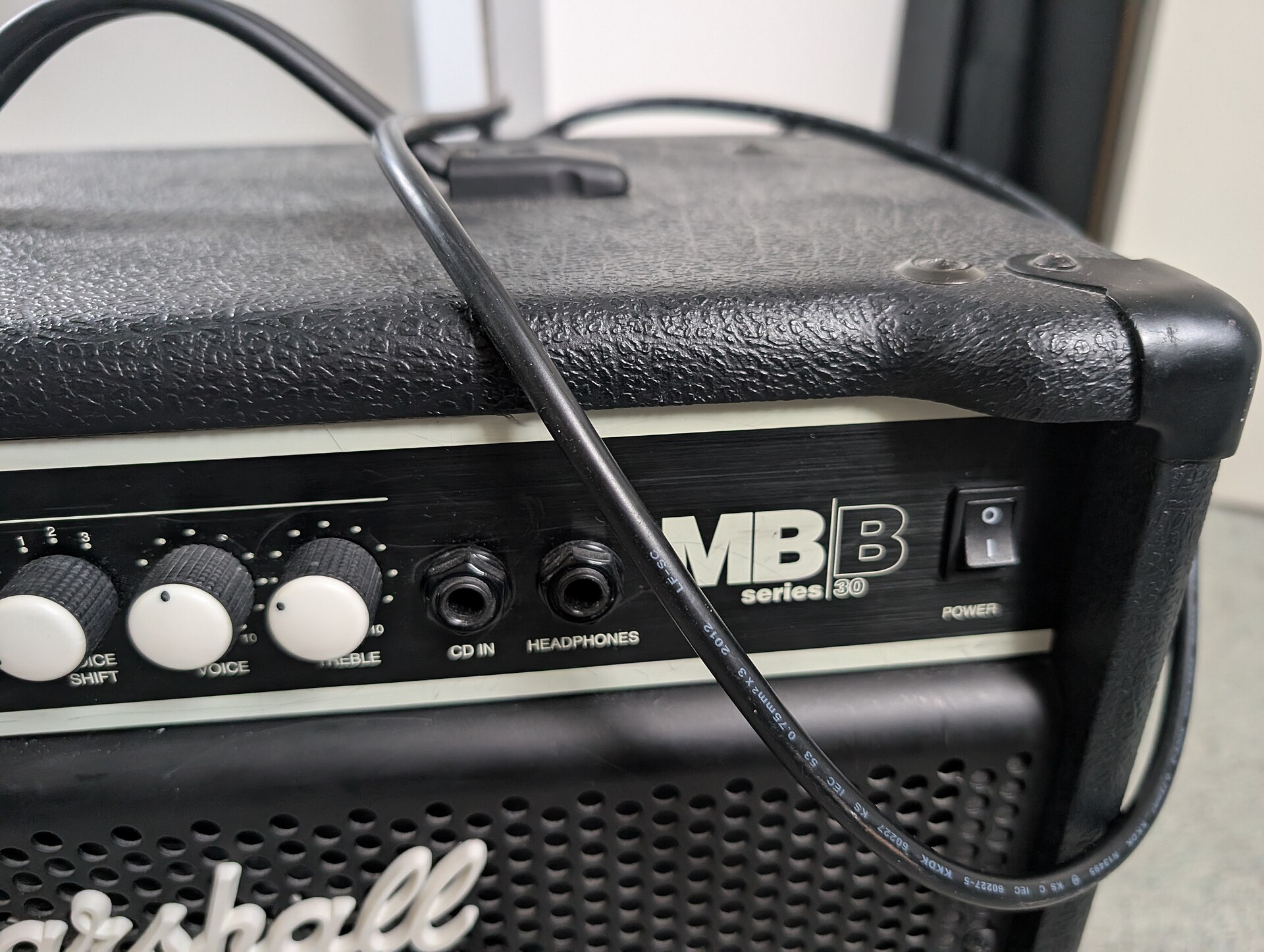
A practice combo is the easiest option. The Fender Rumble 25 (25 watts, one 8 inch speaker, with a headphone output and an aux input for playing along to songs) was A$239 at The Bass Centre on 26 October 2026. That is plenty for a bedroom or lounge room. If you expect to jam with a drummer soon, the Boss Katana 110 Bass (60 watts, 10 inch woofer plus tweeter, with headphone, recording and USB outputs) was A$607 at Sky Music on the same day (Sky Music asks you to call for current stock, so check stock before you buy). A small 25 watt amp will struggle against a drummer, so be honest about where you will play.
Headphone amp
A headphone amp plugs straight into the bass. The Vox amPlug 2 Bass was listed at A$84.99 at Woods Music on 26 October 2026 (shown as available to order, check stock before you buy). It is cheap and quiet, and ideal for flats, shift workers or late night practice. Use decent headphones, as cheap earbuds lose most of the low end.
Audio interface
If you already have a computer and headphones, an audio interface lets you use free or low cost amp software and record yourself. The Focusrite Scarlett Solo 4th Gen was A$239 at Sky Music on 26 October 2026 (Sky Music asks you to call for current stock, so check stock before you buy). This suits people who want to record, but there is more to set up than a simple amp.
New or second hand in Australia
Second hand can save money, and basses are tough instruments. Facebook Marketplace, Gumtree and Cash Converters all regularly list beginner basses. The catch is your consumer rights. The ACCC explains that most consumer guarantees do not apply to one off private sales, such as an individual selling on Gumtree or Facebook Marketplace. Only the guarantees about clear title, undisturbed possession and no hidden debts still apply. When you buy from a business, including one that sells used goods, the consumer guarantees apply, although the age and price of a second hand item are taken into account when judging quality.
What to check on a used bass
- Look down the neck from the headstock. It should be close to straight, with no twist.
- Play every fret on every string. A little buzz is normal; dead notes or loud rattles are not.
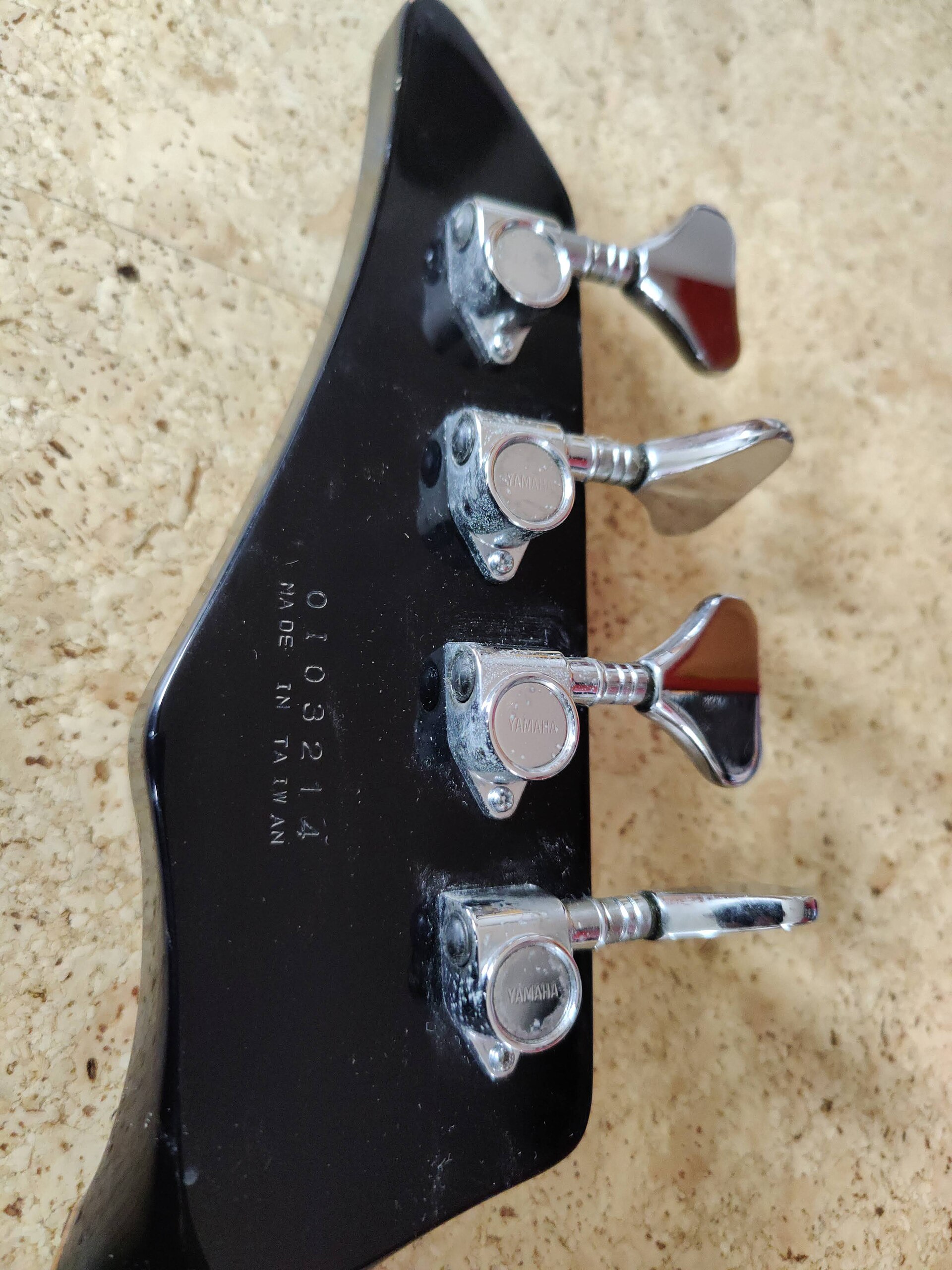
- Turn each tuner. They should move smoothly and hold the note.
- Plug it into an amp. Wiggle the cable at the jack and turn every knob. Crackles usually mean cleaning or a repair.
- If it is active, ask for a fresh 9 volt battery before you test it.
- Check for cracks where the neck meets the body and around the headstock.
- Ask why it is being sold and whether it has had a setup recently.
Scamwatch advises inspecting items in person before paying, using the payment methods the platform recommends, and checking that the payee name matches the seller. A bass offered at an unbelievably low price by a brand new profile is a warning sign. If you cannot play it before you pay, walk away.
Setup and strings
A setup is a service where a technician adjusts the neck relief, string height (action), intonation and pickup height. Some new basses, especially cheaper ones, can leave the factory with the action set high, which makes them harder to play. Two Australian workshops we checked on 26 October 2026 listed a standard four string bass setup at A$110 (Mallaby Guitars) and A$130 plus strings (Dire Wolf Guitar Workshop). Ask your retailer whether they include a basic setup with the sale. Some do.
Bass strings can last a good while, but they do go dull. Fender setup guide says to change them when you run a finger underneath a string and feel dirt, rust or flat spots. A set of Ernie Ball Regular Slinky bass strings (gauges 50 to 105) was A$49 at Volaris Music on 26 October 2026. Check that the strings match your scale length: short scale basses need short scale strings.
First month practice tips
Bass is a rhythm instrument first. Your job in a band is to lock in with the drums, so timing matters more than speed. A realistic first month, practising about 20 to 30 minutes most days, looks something like this. It is a guide, not a promise; everyone moves at their own pace.
- Week 1: learn to tune, hold the bass, and pluck with two fingers (index and middle) alternating. Play open strings in time with a metronome at a slow tempo.
- Week 2: learn the notes on the E and A strings up to the fifth fret. Practise muting the strings you are not playing.
- Week 3: play root notes along with simple songs. Many pop songs use the same few chord progressions, and our songs with common chord progressions library is a handy place to find them.
- Week 4: add simple root and fifth patterns, and record yourself on your phone to check your timing.
Short daily sessions tend to beat one long weekend session. For a structured plan, our rock and metal practice routine includes a free practice log that works just as well for bass. And if you are wondering about the bigger picture, our post on how long it takes to learn guitar gives honest timelines that apply to bass too.
Free one page bass buying checklist
Print this checklist and take it to the shop or to a second hand inspection. It covers fit and comfort, the playing test, electronics, budget extras and second hand safety, with tick boxes for each step.
Download the free bass buying checklist (PDF)
FAQ
Is bass easier than guitar?
Bass is often easier to start because you usually play one note at a time, so there are no chord shapes to learn in the first weeks. It is not easier to play well. Good bass playing needs steady timing and a strong feel for rhythm, and the thicker strings take some getting used to.
Short scale or long scale?
Long scale (34 inch) is the standard and suits most adults. Short scale (about 30 inch) suits smaller hands, younger teens and anyone who finds the stretch uncomfortable. Try both in a shop if you can.
How much should a bass guitar for beginners cost in Australia?
On 26 October 2026 we found playable new beginner basses from A$359 to about A$500 at Australian retailers, plus about A$85 for a headphone amp or A$239 for a small practice amp. Second hand can cost less, but inspect it carefully and budget for a setup.
Can I learn bass online?
Yes, many people learn the basics online, and video makes technique easy to see. The main limit is feedback: nobody is there to spot a tense hand or rushed timing. Recording yourself and comparing it with the original helps.
Do I need lessons?
You do not need lessons to start, but a teacher can catch bad habits early and give you a clear plan, which often saves months of trial and error. Many people mix lessons with self study.
If you would like Maxim to guide your first steps, start with the online beginner course.